



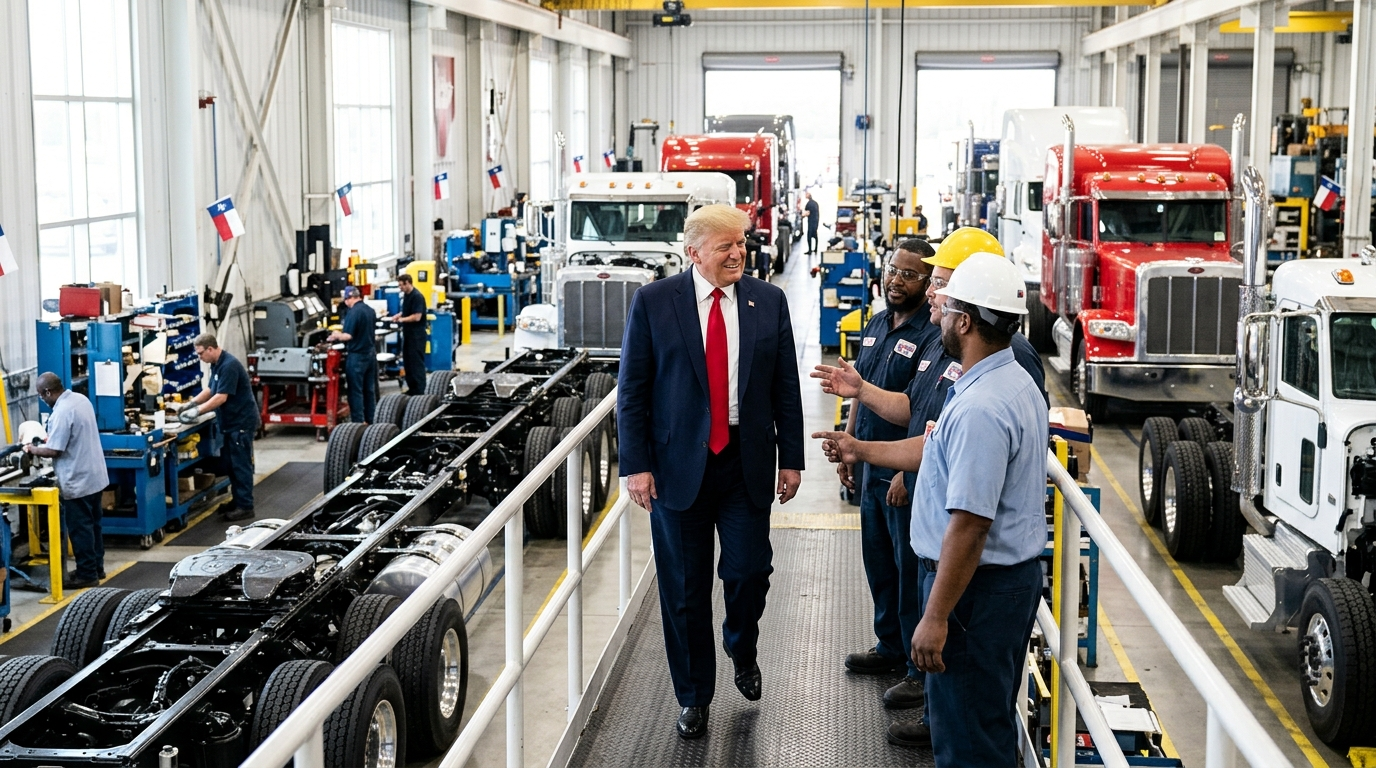
President Donald Trump visited Peterbilt Motors’ facility in Denton, Texas, to promote domestic manufacturing and link the truck plant’s growth to his administration’s economic policies.
The appearance placed heavy industry at the center of the White House’s economic message. It also brought attention to a sector shaped by freight demand, borrowing costs, trade policy, and access to skilled workers.
A Showcase for American Production
Peterbilt builds heavy-duty trucks used by freight carriers, construction companies, and other commercial operators. Its Denton operation offers a visible example of large-scale manufacturing in the United States.
By choosing the facility, Trump sought to highlight domestic production and industrial employment. The visit reflected his broader focus on encouraging companies to build products inside the country.
Truck manufacturing also carries wider economic importance. New truck orders can show whether freight companies expect stronger demand. Lower orders may signal weaker shipping activity or caution among fleet operators.
The Denton plant therefore provided more than a backdrop for a policy speech. It connected the administration’s economic agenda with supply chains, transportation, and factory jobs.
Economic Claims Face a Wider Test
The administration presented the facility as evidence of manufacturing growth. Assessing that claim, however, requires more than activity at one plant.
Economists and industry leaders often examine several measures to judge factory conditions:



- Manufacturing employment and average wages
- Factory output and new equipment orders
- Business investment and construction spending
- Export demand and the cost of imported materials
A plant may expand while the broader sector slows. The reverse is also possible. Regional investment can rise even when national employment remains flat because modern factories use more automation.
The visit did not provide specific production, hiring, or investment figures. That limits direct comparisons between Peterbilt’s performance and national manufacturing trends.
Trade Policy Creates Benefits and Risks
Trump has long argued that policies favoring American production can protect jobs and reduce reliance on foreign suppliers. Supporters say tariffs and domestic purchasing rules can encourage investment inside the United States.
Manufacturers may benefit if such policies reduce competition from lower-cost imports. Local suppliers and workers can also gain when companies expand domestic operations.
Critics point to possible costs. Truck makers depend on steel, aluminum, electronics, engines, and many other parts. Tariffs or supply restrictions can raise input prices, which may increase the cost of finished vehicles.
Higher truck prices can affect small carriers more sharply than major fleets. Smaller companies often have less access to financing and fewer options for spreading costs across large operations.
Denton’s Role in the Industrial Economy
The Texas visit also highlighted the role of communities that host major factories. Manufacturing plants support direct jobs, but their influence reaches suppliers, transport firms, restaurants, and local service providers.
Those benefits can place pressure on local housing, roads, and technical training programs. Sustained industrial growth often depends on whether an area can prepare enough welders, technicians, engineers, and production workers.
For Peterbilt and other truck manufacturers, future demand will depend partly on freight volumes and fleet replacement cycles. Interest rates will matter because commercial vehicles are expensive and frequently financed.
Trump’s visit delivered a clear political message: the administration wants manufacturing to serve as a measure of economic strength. The larger test will be whether that message is supported by lasting gains in output, wages, and investment.
Future factory data, truck orders, and company hiring plans will show whether the Denton appearance reflects broad industrial growth or a narrower success. Trade costs and workforce availability will remain central issues for both manufacturers and their employees.