



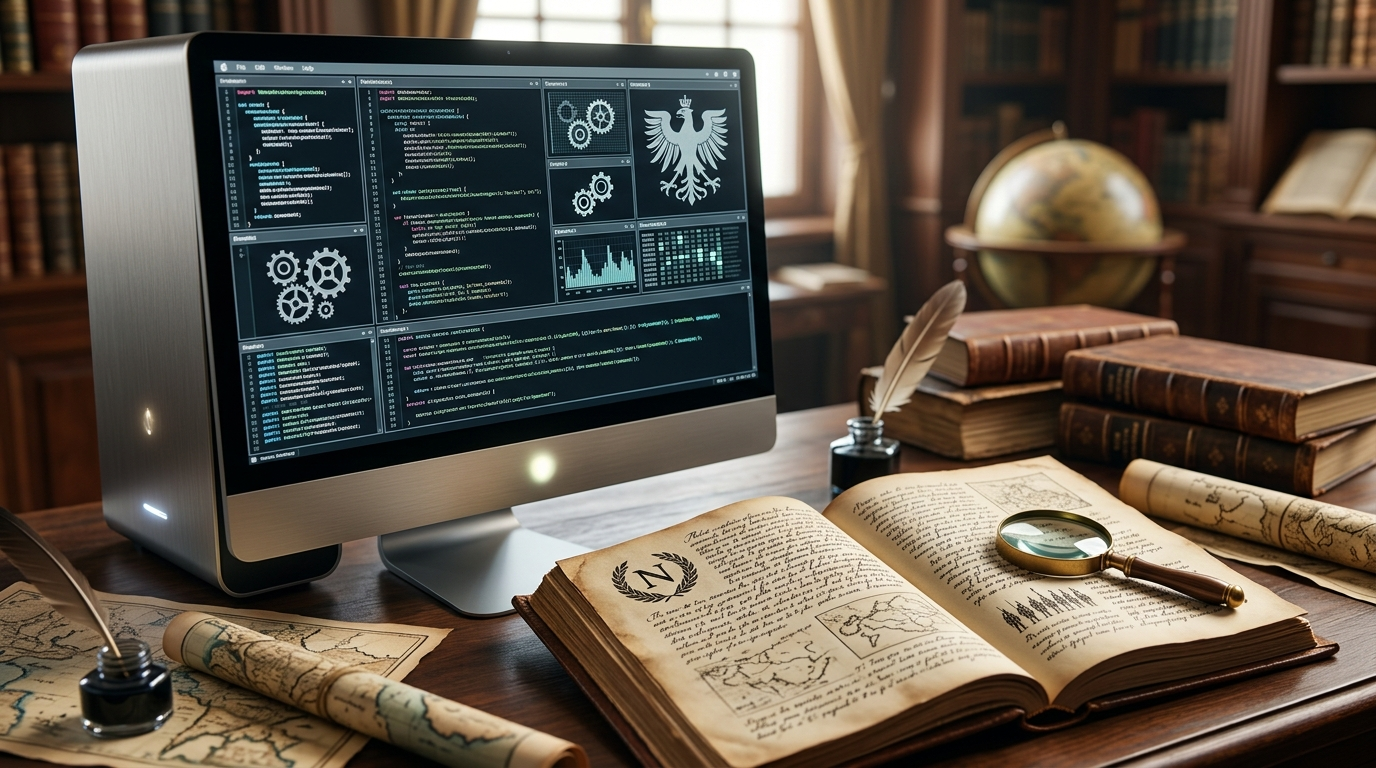
GPT-6 Astra has reportedly solved a centuries-old cipher used to carry strategic information between Napoleon’s troops. The result could give historians fresh access to military communications from the early 19th century.
The reported breakthrough links modern artificial intelligence with a long-running historical challenge. Yet key facts remain undisclosed, including the document’s origin, the cipher method, and how researchers verified the decoded message.
A Window Into Napoleonic Warfare
Napoleon Bonaparte’s forces fought across Europe from the late 1790s until his defeat in 1815. Their campaigns depended on orders moving between commanders across great distances.
Military correspondence could reveal troop positions, supply needs, planned attacks, or political instructions. Such information was valuable to opposing armies, which made coded communication an important security tool.
Ciphers from that period often replaced letters, words, names, or phrases with numbers and symbols. Some systems used codebooks shared by senders and recipients. Others changed the substitution pattern to make interception less useful.
The decoded material was described as a cipher used to “convey strategic military information between Napoleon’s troops.” No date, battlefield, sender, recipient, or message text was provided.
How AI Can Assist Historians
Historical codebreaking requires more than finding repeated symbols. Researchers must account for damaged pages, old spelling, abbreviations, handwriting, and several possible languages.
An AI model may help by testing patterns quickly and comparing possible readings with period vocabulary. It could also examine whether proposed words fit military language and the historical setting.



GPT-6 Astra’s reported role may have included several tasks:
- Identifying repeated signs or number groups.
- Testing possible substitutions for letters and words.
- Comparing results with military terms from the period.
- Checking whether a proposed message forms a consistent text.
Such methods can speed up work that once demanded long manual searches. They do not remove the need for specialists, however. A fluent result can still be wrong if the model fills gaps with plausible language.
Verification Will Decide Its Historical Value
The central issue is whether independent experts can reproduce the solution. Researchers would need access to images of the original document, the full transcription, and the steps used to decode it.
Historians could then compare names, places, ranks, and dates with military records. Cryptography experts could test whether the same key works across the entire message, rather than only selected passages.
The lack of published supporting evidence limits firm conclusions. There is also no disclosed accuracy score or comparison with earlier attempts. Those details would show whether Astra found a unique solution or one of several possible readings.
Potential Impact on Historical Research
If confirmed, the result may encourage archives to revisit unresolved coded documents. Many collections contain letters that remain unread because of incomplete keys, damaged text, or unusual notation.
AI-assisted decoding could help scholars sort these materials and identify promising documents. The strongest process would pair machine analysis with archival research, language expertise, and formal cryptographic testing.
For now, the reported solution offers an intriguing connection between a modern AI system and Napoleon’s wartime communications. Publication of the cipher, decoded text, and verification method will determine whether the claim becomes a useful historical finding.