



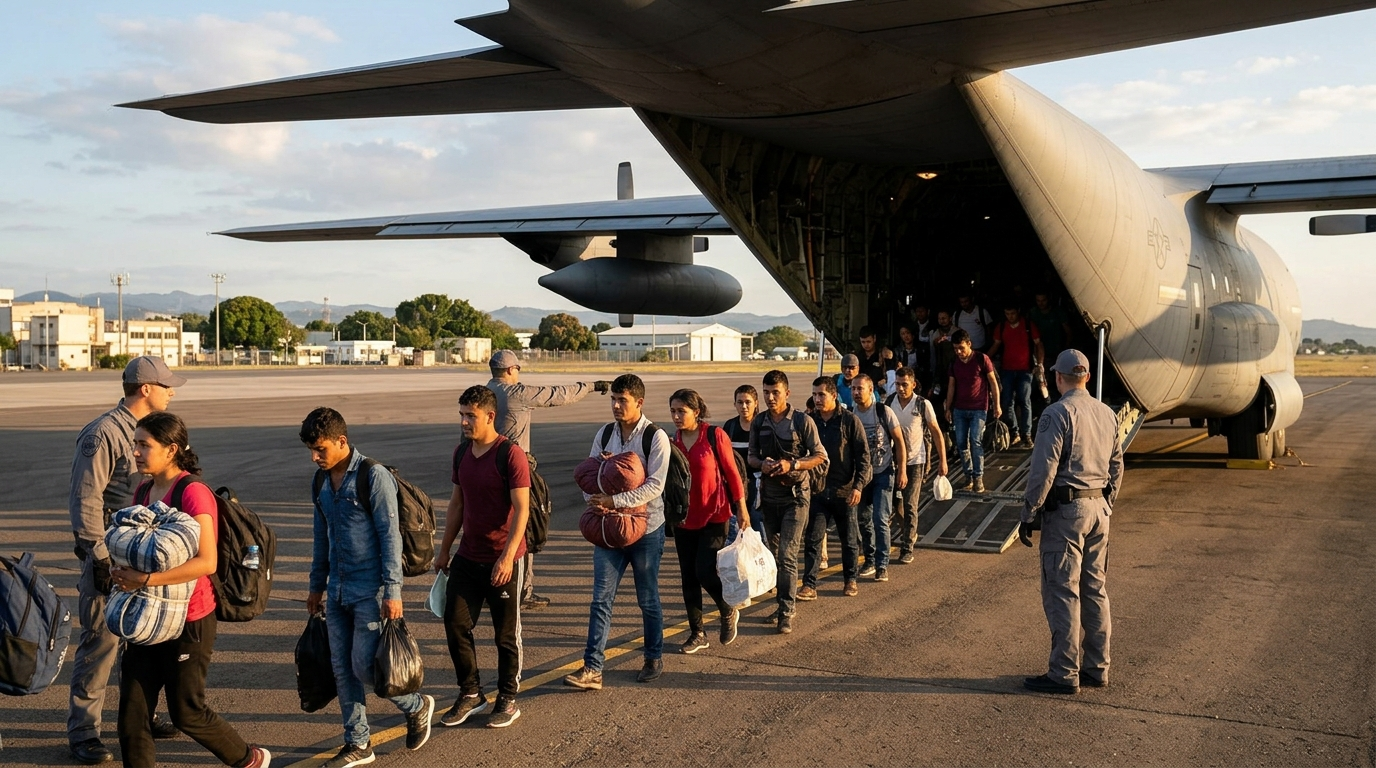
The Trump administration is increasingly sending migrants to countries including Liberia, Eswatini and Paraguay under agreements facing legal challenges. The policy widens the government’s use of third countries as destinations for people removed from the United States.
The transfers carry major consequences for migrants who may have no connection to the receiving nation. They also place distant governments at the center of Washington’s immigration enforcement strategy.
Third Countries Take a Larger Role
Deportations usually return people to their country of citizenship. Third-country transfers instead send them to another nation that has agreed to receive them.
Such arrangements can be used when a person’s home country refuses repatriation or when direct removal is difficult. Under the Trump administration, their use has grown to include agreements involving several regions.
The destinations named in connection with the policy include:
- Liberia, in West Africa
- Eswatini, in southern Africa
- Paraguay, in South America
The geographic spread shows how immigration enforcement is becoming tied to wider diplomatic negotiations. Receiving countries may face new duties involving detention, legal status, housing and possible return travel.
Legal Challenges Focus on Due Process
The agreements have drawn court challenges over whether federal officials may send migrants to countries where they have never lived. The central questions concern notice, access to lawyers and protection from mistreatment.
Such agreements, “whose legality has been challenged,” are increasingly common under the administration.
A key issue is whether migrants receive a real chance to object before removal. A person could argue that transfer creates a risk of persecution, torture or other harm.



U.S. immigration law gives the executive branch broad authority to carry out removals. That authority is still limited by federal statutes, constitutional protections and international obligations.
Legal disputes may also examine the terms of each agreement. Courts could consider whether receiving governments offer adequate safeguards and whether U.S. agencies followed required procedures.
Administration Seeks More Removal Options
From the administration’s perspective, third-country agreements can prevent stalled deportations. Officials have long faced cases involving governments that delay or reject the return of their citizens.
More receiving partners give immigration authorities added options. The policy may also support the administration’s broader effort to increase removals and deter unauthorized migration.
Critics argue that efficiency cannot replace individual review. They warn that migrants could be sent to unfamiliar countries without family ties, language skills or a clear legal status.
Supporters of stricter enforcement counter that removal orders must have practical consequences. They view international agreements as a lawful tool when return to a migrant’s home nation is not available.
Receiving Nations Face New Pressures
The policy’s effects will not stop at the U.S. border. Liberia, Eswatini and Paraguay may need to explain how transferred migrants will be treated after arrival.
Public details will matter. Key issues include whether migrants may work, seek asylum, remain temporarily or face another deportation. Oversight will also depend on access for lawyers, journalists and humanitarian groups.
The durability of the strategy now rests on two tests. Courts must decide whether the transfers meet legal requirements, while participating countries must show they can protect those they receive.
As additional agreements emerge, attention will center on transparency and due process. The outcome could shape how far a U.S. administration may extend immigration enforcement through partnerships with foreign governments.