



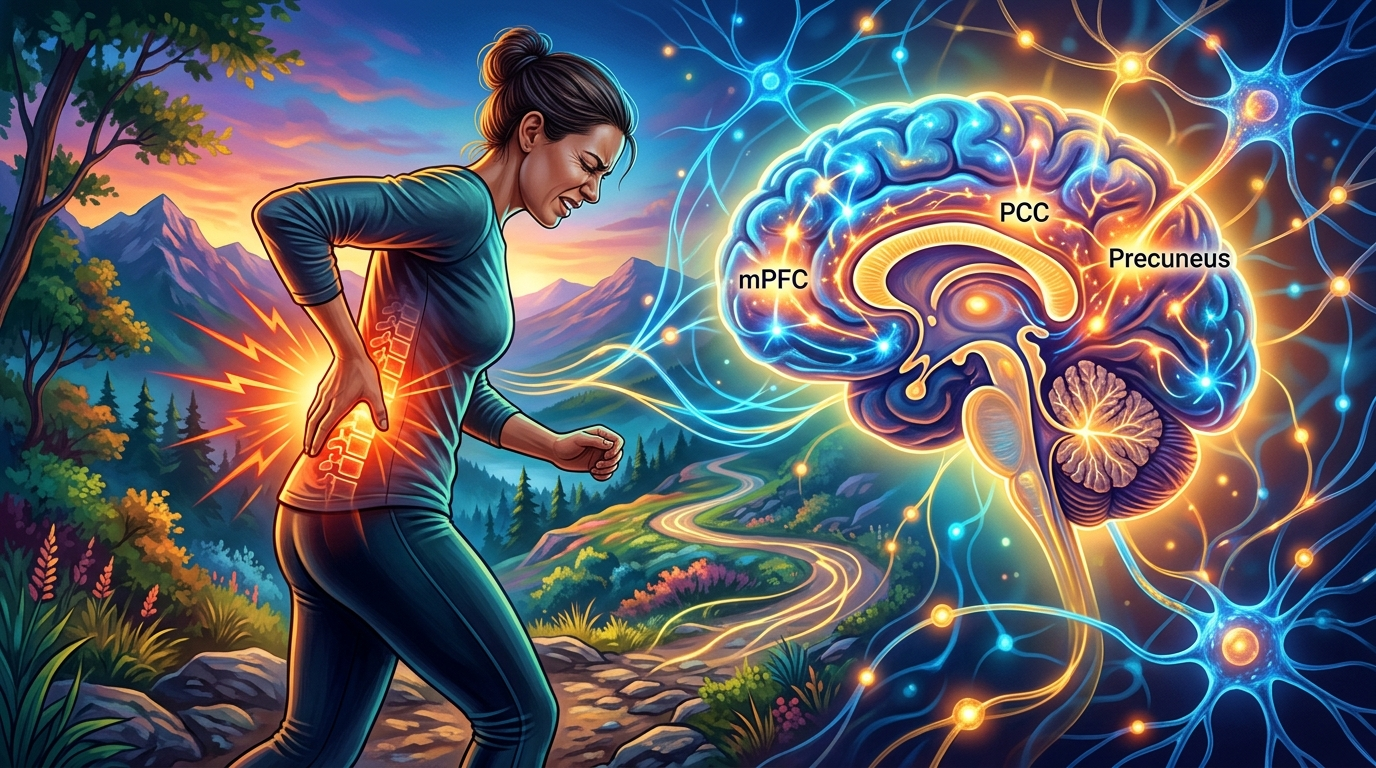
Movement-triggered flares of chronic back pain activate brain regions tied to self-reflection, suggesting the brain may process persistent pain differently from a sudden injury.
The finding adds to evidence that chronic pain is not simply acute pain that lasts longer. Instead, ongoing pain may involve brain systems linked to identity, attention, memory, and thoughts about oneself.
“Movement-induced flares in chronic back pain activate brain regions involved in self-reflection, suggesting chronic pain may be processed differently than acute pain.”
Why Movement-Triggered Pain Matters
A pain flare is a temporary increase in symptoms. For people with chronic back pain, bending, walking, lifting, or changing posture can cause such episodes.
These flares can disrupt work, sleep, exercise, and daily tasks. Fear of another painful episode may also lead people to avoid movement, even when activity could support recovery.
Studying pain during movement can provide information that resting brain scans may miss. It places symptoms closer to the conditions patients face outside a clinic.
The reported brain activity is important because self-reflection regions help people assess personal experiences. They may support thoughts about whether pain is threatening, what it means, and how it affects daily life.
Chronic and Acute Pain May Differ
Acute pain often serves as a warning. It can signal tissue damage from an injury, illness, or surgery. The sensation usually eases as the body heals.
Chronic pain persists for months or longer. In some cases, it continues after damaged tissue has healed. Its severity may not closely match findings from scans of the spine.



That gap does not mean symptoms are imaginary. Pain is produced through signals and interpretation across the nervous system. Brain activity is part of the biological experience of pain.
The latest observation suggests a movement-related flare may draw on systems used for more than detecting harmful physical input. Chronic pain could also involve how a person evaluates the sensation and connects it to past experiences.
Clinical Meaning Requires Caution
Activity in a brain region does not prove that one mental process caused the pain. Most regions serve several functions, and brain imaging usually shows association rather than cause.
The finding also does not establish that every person with chronic back pain has the same neural response. Symptoms can differ by injury history, stress, sleep, medication use, physical condition, and other health issues.
Key questions for further research include:
- Whether the response appears across larger and more diverse patient groups
- How it differs from brain activity during acute back pain
- Whether treatment changes the pattern
- Whether brain activity can predict future flares or disability
Without details about sample size, scanning methods, or participant selection, the strength and reach of the result cannot be fully assessed. Replication and direct comparisons with acute pain will be needed.
Possible Effects on Pain Care
If confirmed, the research could support treatment plans that address both physical movement and the brain’s interpretation of symptoms. Such care may include supervised exercise, education, medication, and psychological support.
This approach should not replace checks for fractures, infections, nerve damage, or other medical causes. It may instead help explain why chronic back pain often needs more than a single treatment.
The central takeaway is that persistent pain may change how movement is experienced and evaluated. Future studies should test whether these self-reflection networks are a result of chronic pain, a factor that sustains it, or both.
For patients, the result offers a biological explanation for the complex nature of pain without reducing it to either body or mind. For clinicians, it supports closer study of what happens during real pain flares, not only while patients rest.