




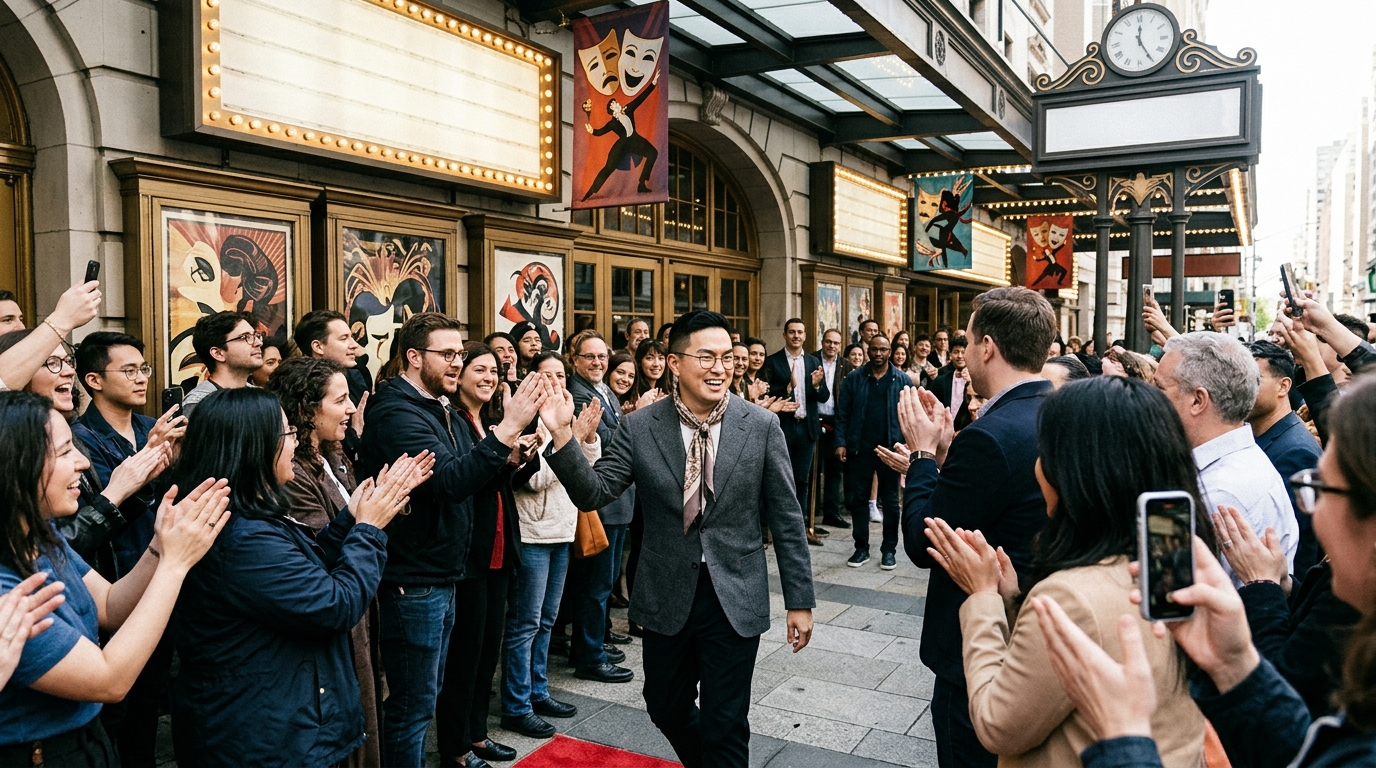
Celebrity-led productions delivered a welcome jolt to the theater business last week, with Bowen Yang’s appearance in Oh, Mary! helping drive attention.
The surge showed how a familiar name can quickly change a show’s commercial outlook. It also renewed an old industry debate: Do stars build lasting audiences, or simply create a brief rush?
Bowen Yang Brings Fresh Attention
Yang’s role in Oh, Mary! placed a widely recognized performer at the center of an established production. His casting gave existing fans a new reason to attend.
That effect matters in live theater, where seats disappear after each performance. A ticket left unsold tonight cannot be placed back on the shelf tomorrow.
Celebrity appearances can help solve that problem by creating urgency. Fans may also travel, pay higher prices, or choose dates based on a performer’s limited schedule.
The recent activity was not tied to one show alone. Celebrity-driven productions collectively moved the industry last week, suggesting star casting had become a wider commercial force.
Why Famous Names Move Tickets
Well-known actors arrive with an audience already attached. Their television, film, comedy, or music work can introduce theater to people who rarely follow stage productions.
A famous performer can support a show in several ways:



- Generating media coverage without a large advertising push
- Encouraging fans to buy tickets before a run ends
- Giving returning customers a reason to revisit a production
- Helping a show reach audiences outside regular theater circles
Social media adds another boost. Casting news can travel quickly through fan groups, entertainment accounts, and video clips. The result is publicity that money alone may struggle to buy.
For producers, this can be a tidy equation. A celebrity may cost more, but empty seats cost plenty too.
A Boost With Limits
Star casting is not a guaranteed cure for weak sales. Audiences still judge the script, staging, reviews, and overall experience. Recognition may secure an opening purchase, but quality shapes word of mouth.
Scheduling creates another challenge. Celebrities often join productions for limited periods because of television or film commitments. Ticket demand can drop when they leave.
There is also an artistic concern. Heavy focus on one performer can overshadow the cast and the work itself. It may also make long-term planning harder if a production depends too much on rotating famous names.
Still, replacement casting can extend a successful show’s life. A new performer refreshes press coverage and changes the audience’s experience without requiring producers to launch a separate production.
What the Industry Will Watch
The key question is whether last week’s lift continues. Producers will watch attendance, pricing, and sales after the first wave of publicity fades.
They will also study whether newcomers return for other productions. If celebrity casting creates regular theatergoers, its value reaches far past one run. If fans attend only for a favorite star, the effect is narrower.
Yang’s appearance in Oh, Mary! offers a clear snapshot of the strategy at work. A recognizable performer can refresh a hit, reach new buyers, and inject energy into weekly sales.
Theater has always mixed art with the awkward arithmetic of filling seats. Last week offered a sharp reminder that celebrity remains one of the industry’s quickest tools, even if the applause does not always last.