



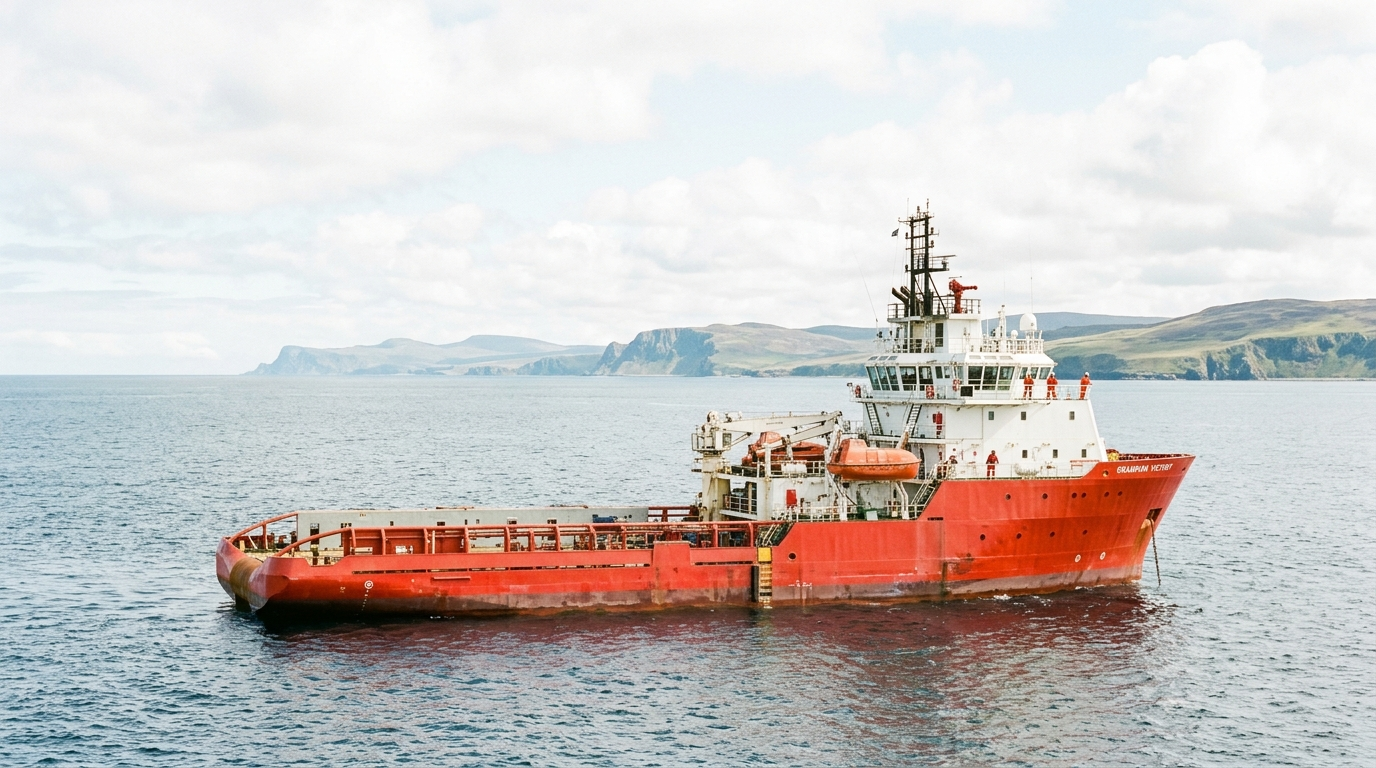
A ship stationed at an untapped Scottish oil field is waiting for a decision that could determine its future and that of its crew. Scotland editor James Cook visited the vessel to report on daily life aboard as the proposed development remains unresolved.
The ship offers a close view of a wider dispute over energy security, employment and climate policy. Any decision on the field could affect offshore workers, nearby communities and Scotland’s role in the North Sea oil industry.
Life Aboard During an Uncertain Wait
Working at sea demands strict routines, shared living space and long periods away from home. Those pressures can grow when the project supporting the vessel has no settled outcome.
Cook’s visit focuses attention on the people living with that uncertainty. Their workplace is linked to a resource that has not yet been developed, leaving future operations dependent on decisions made elsewhere.
Ships serving offshore projects often operate like small, self-contained communities. Crews work scheduled shifts while managing safety, maintenance, meals and rest within a confined setting.
The vessel’s position at an untapped field also gives the story an unusual contrast. Workers maintain daily operations in an area that may become an active production site, but its fate remains undecided.
Oil Policy Faces Competing Demands
New oil projects have become a major political issue across the United Kingdom. Supporters argue that domestic production can protect skilled jobs and reduce reliance on imported energy.
Critics say opening new fields risks extending fossil fuel use while governments have committed to cutting greenhouse gas emissions. They also question whether new production would lower consumer energy bills.



The debate generally centres on several competing priorities:
- Protecting offshore employment and supply-chain businesses
- Maintaining reliable energy supplies during the transition
- Meeting national and international climate targets
- Providing clear rules for long-term investment decisions
Scotland has a particularly strong stake in these questions. North Sea production has supported workers and communities for decades. However, declining reserves and climate commitments are increasing pressure to plan for other forms of employment.
A Decision With Wider Consequences
The field’s unresolved status places workers, operators and contractors in a difficult position. Delays may limit planning, while approval could trigger fresh scrutiny over emissions and the pace of the energy transition.
Rejection would also bring consequences. Companies could reconsider future spending, and workers may seek firmer assurances that renewable energy projects can replace offshore oil jobs at a similar scale and wage level.
The ship therefore represents more than one possible development. It shows how national policy decisions reach into workplaces where crews must continue their routines despite political and commercial uncertainty.
The next decision will be watched for its effect on the field, but also for the signal it sends about Scotland’s energy direction. For those aboard the vessel, the debate is immediate and personal. Their working lives remain tied to an offshore resource whose future has yet to be settled.