



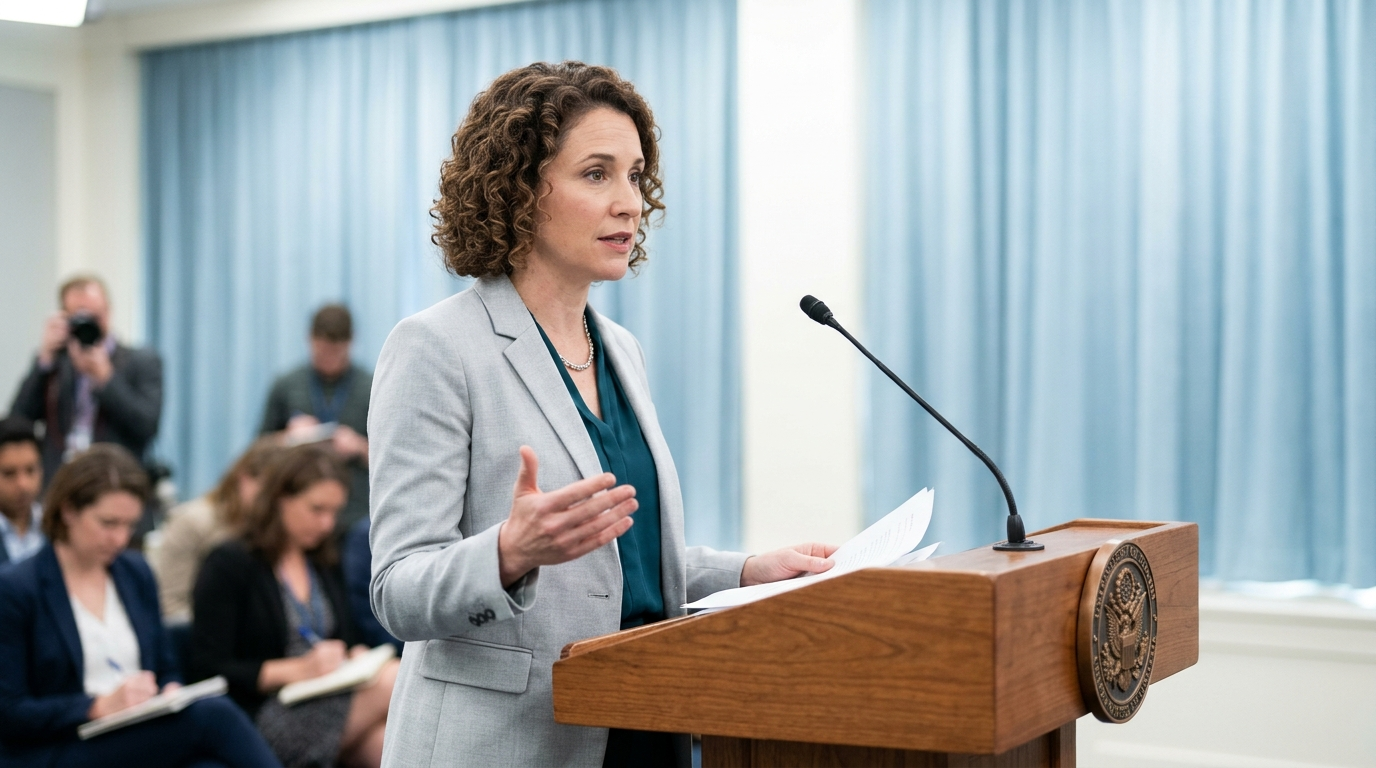
New White House press secretary Katie Zacharia says no one asked whether she had passed the bar exam before her appointment. The claim has drawn attention to how senior communications officials are selected and which qualifications the job requires.
Zacharia’s statement offers few details about when she made the comment or why the subject arose. No information was provided about her legal education, examination history, or whether she had sought admission to practice law.
“Nobody ever asked if she passed the bar exam before she was appointed.”
The statement should not be read as proof that Zacharia passed or failed an examination. It establishes only that, according to her account, the issue was not raised before her appointment.
A Communications Job, Not a Legal Post
The White House press secretary serves as the president’s leading public spokesperson. The official conducts briefings, answers questions from reporters, and explains administration policies.
Passing a bar exam is generally required for a person seeking a license to practice law in a particular jurisdiction. It is not a standard requirement for serving as White House press secretary.
Press secretaries have arrived at the job through several career paths. Common backgrounds include journalism, political communications, campaign work, public affairs, and government service.
The role instead depends on several practical skills:
- Clear communication under pressure
- Detailed knowledge of administration policy
- Coordination with senior government officials
- Accurate responses to public questions
A legal background may help when discussing court cases, executive authority, or congressional investigations. However, White House lawyers and agency counsel usually provide formal legal advice.



The Claim Leaves Key Questions Open
Zacharia’s comment raises separate questions about credentials and disclosure. A professional qualification may be irrelevant to a job’s formal duties, yet public officials can still face scrutiny over how they describe their experience.
No supporting records, official appointment documents, or responses from White House personnel were included with the claim. There was also no explanation of who may have been responsible for reviewing Zacharia’s background.
That missing context limits firm conclusions. It is unclear whether the bar exam became an issue because of a previous statement, a résumé entry, or a question about professional licensing.
The White House may also distinguish between background checks and job-specific qualifications. A review can examine employment, finances, security concerns, and public statements without treating every credential as a condition of appointment.
Accountability Depends on Accurate Disclosures
The central issue is not whether every press secretary should be a licensed lawyer. Rather, it is whether an appointee’s public claims and official biography are accurate.
If Zacharia never claimed to be licensed, the absence of a bar exam question may carry little significance. If legal credentials were presented as part of her qualifications, verification would become more relevant.
Further clarification from Zacharia or the White House could establish why the issue surfaced and whether any credential was disputed. Until then, her statement remains narrow: she says the question was never asked before she received the post.
The episode highlights a broader expectation for presidential appointees. The public needs accurate information about their records, while evaluations should remain tied to the actual duties of the office.