






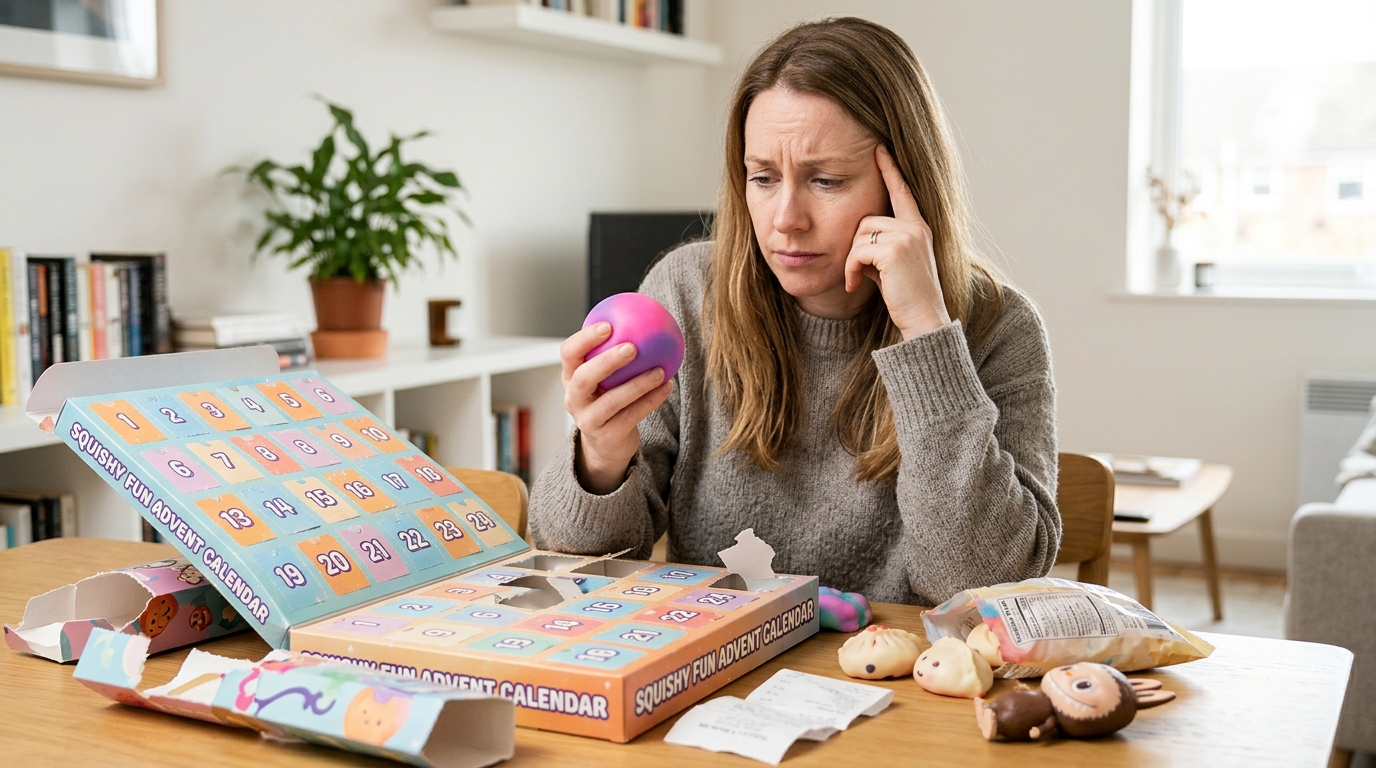
Charlotte Cripps has found herself caught in another shopping mishap, this time after buying an unbranded NeeDoh advent calendar. The purchase follows earlier encounters with fake squishy dumplings and counterfeit Labubus, raising fresh questions about how shoppers can spot imitation goods.
Cripps, writing from personal experience, said she was left wondering how she had made the same mistake again. Her account offers a familiar warning as novelty toys and seasonal gifts draw buyers seeking popular products at tempting prices.
A Pattern of Costly Confusion
The advent calendar was not Cripps’s first questionable purchase. She previously fell for fake squishy dumplings described as toxic, followed by counterfeit Labubus.
Cripps is “currently wondering how she managed to get it wrong again” after buying the unbranded calendar.
The repeated mistakes show how hard it can be to judge a product from its appearance alone. Imitations often borrow familiar names, shapes, colors, or packaging cues. A hurried shopper may see what looks like a bargain and miss the warning signs.
The word unbranded is especially important. A product presented as connected to a known toy line, but lacking clear branding, should prompt closer inspection. That does not prove an item is unsafe or illegal. It does suggest the buyer may not receive the product expected.
Why Advent Calendars Create Added Risk
Advent calendars encourage quick decisions because they are seasonal. Buyers have a limited window before December, while popular versions may sell out. That mix of urgency and scarcity can make a suspicious offer look more attractive.
The calendar format also hides much of what has been purchased. Customers may see a festive box but cannot inspect every item before opening its numbered doors. By the time problems appear, returns may be harder or less convenient.
Cripps’s earlier experiences add a safety concern to the usual worries about wasted money. Fake toys may not come with the same labeling, testing information, or seller accountability associated with an identified manufacturer.



Simple Checks Before Buying
Her experience points to several practical checks shoppers can make:
- Look for a clearly named manufacturer and seller.
- Compare packaging with images from an official source.
- Check warnings, age guidance, and product information.
- Treat unusually low prices with caution.
- Review return terms before completing the order.
These steps cannot catch every imitation. They can, however, slow the buying process long enough for obvious gaps to become visible. If a listing leans heavily on a famous product name but avoids naming its maker, the bargain may come with an unwanted surprise.
A Wider Lesson for Novelty Shoppers
Cripps’s account is humorous on the surface, but it highlights a serious gap between product popularity and buyer knowledge. Trend-led toys can spread quickly, while shoppers may know the character or brand without knowing its official packaging or approved sellers.
Retailers and online marketplaces also have a role. Clear seller identities, accurate product descriptions, and responsive refund systems can help buyers make informed choices. Manufacturers can assist by publishing guidance on recognizing genuine goods.
For Cripps, the unbranded calendar has become the latest chapter in an unfortunate shopping streak. For other buyers, it offers a useful reminder: a festive box can hide more than daily treats. The key question is not just what sits behind each door, but who made it and who is responsible if something goes wrong.