




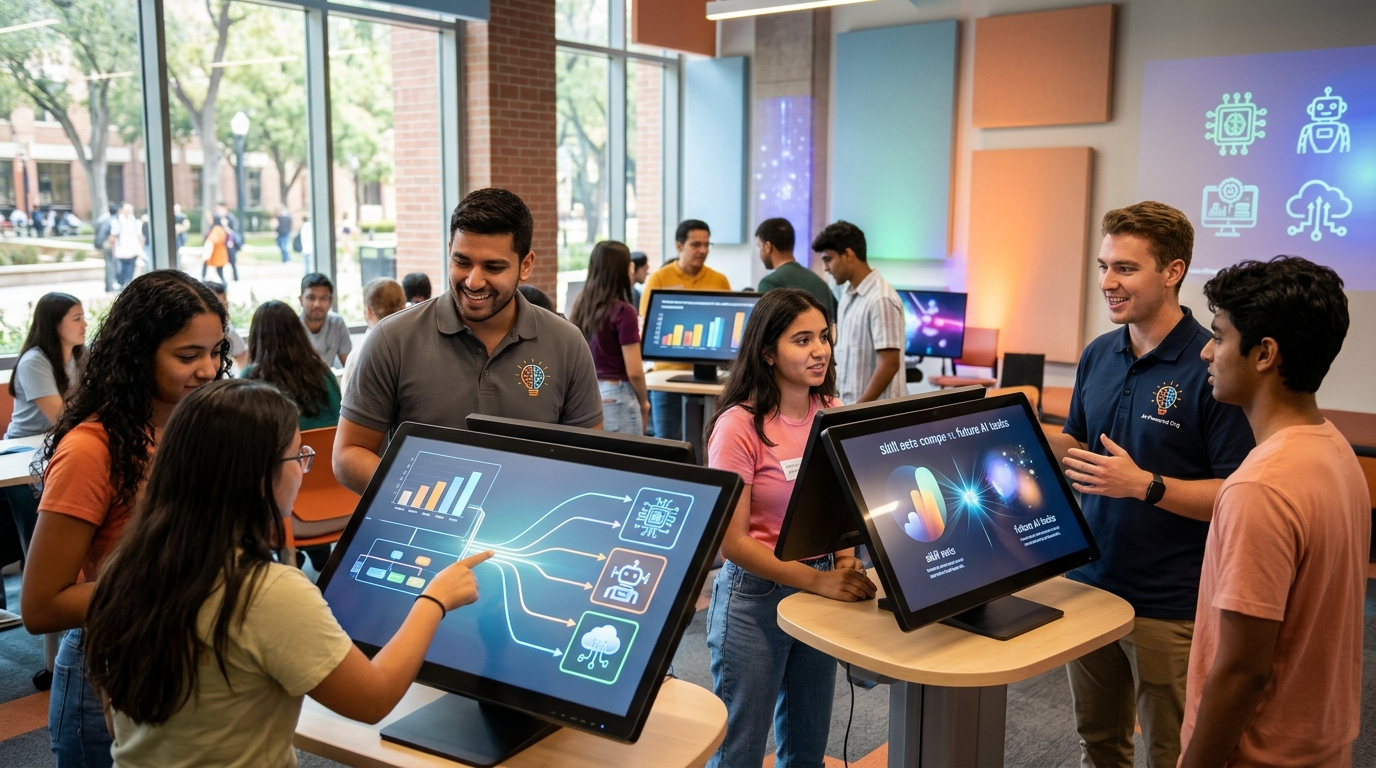
The AI-Powered Org is helping students assess how artificial intelligence could shape their careers, while addressing the risks and doubts tied to workplace use.
The initiative focuses on three issues facing future workers: opportunity, risk, and skepticism. Its mission arrives as students encounter AI tools in classrooms, job searches, and early career planning.
Details about the organization’s programs, leadership, and reach were not provided. Still, its stated purpose points to a growing need for practical guidance before students enter jobs where AI may influence daily tasks.
Preparing Students for Changing Jobs
AI can assist with research, writing, data review, and routine office work. These uses may help employees complete some tasks faster. They may also change which skills employers value.
For students, preparation involves more than learning how to operate a tool. They must also judge whether its output is accurate, useful, and appropriate for a given assignment.
“The AI-Powered Org helps students navigate the opportunities, risks, and skepticism surrounding artificial intelligence in the workplace.”
That goal places judgment at the center of AI education. Students may need to understand both what the systems can do and where human review remains necessary.
Risks Extend Past Incorrect Answers
AI systems can produce false information, reflect bias, or omit key context. Workers who accept generated material without checking it may make poor decisions or spread errors.
Privacy is another concern. Students entering the workforce may not know whether confidential documents can be entered into public AI services. Workplace policies can differ, and unclear rules may expose sensitive information.



Several practical questions can guide responsible use:
- What information may be shared with an AI tool?
- Who checks the accuracy of generated work?
- Should customers know when AI helped create content?
- Who is accountable when an automated result causes harm?
These questions show why AI literacy must include ethics and workplace policy. Technical skill alone cannot resolve issues involving consent, ownership, fairness, or responsibility.
Skepticism Can Support Better Decisions
Skepticism does not always mean rejecting AI. It can encourage students to test claims, compare results, and ask whether a tool solves a real problem.
Supporters may view AI as a useful assistant that reduces repetitive work. Critics may worry about job losses, surveillance, biased decisions, or excessive dependence on software. Both views can inform classroom and career discussions.
A balanced program would help students distinguish proven uses from inflated promises. It would also make clear that AI output depends on training data, instructions, and human oversight.
Clearer Program Details Will Matter
The AI-Powered Org’s impact will depend on how it turns its mission into instruction. Key measures could include student participation, practical training, employer involvement, and evidence that learners apply safer practices.
Transparency will also matter. Public information about instructors, funding, course content, and assessment methods would help students judge the program’s value.
The central challenge is not simply teaching students to use AI. It is preparing them to decide when to use it, when to question it, and when not to use it at all. As employers set new rules for automated tools, that judgment may become a core career skill.