





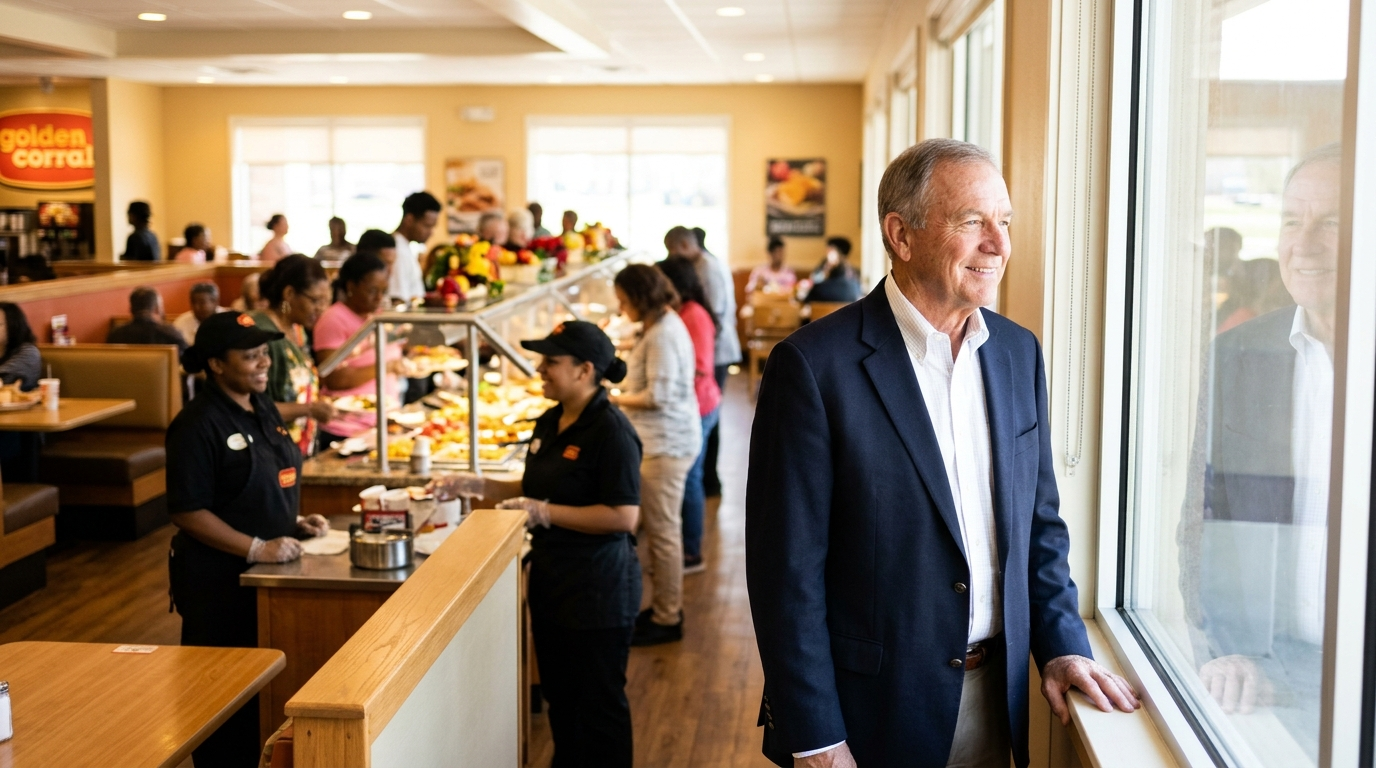
After 41 years with Golden Corral, CEO Lance Trenary says close ties with customers, employees and franchisees have shaped his approach to leadership.
His career offers a long-term view of restaurant management at a company built around buffet dining and franchised locations. Trenary’s message centers on listening to the people who serve meals, operate restaurants and choose where to eat.
Leadership Built on Direct Contact
Trenary’s approach rests on staying connected to three groups with different needs. Customers seek value, quality and reliable service. Employees need clear direction and workplace support. Franchisees must manage costs while meeting brand standards.
That contact can give an executive information that financial reports may not capture. Customer comments may expose changes in dining habits. Employee feedback can identify operating problems. Franchisees can explain how corporate decisions work at the restaurant level.
Staying close to customers, employees and franchisees has shaped Trenary’s approach to leadership.
The emphasis is practical. Restaurant leaders often make decisions involving menus, staffing, training and pricing. Each choice can affect guests and operators in different ways. Regular communication may help management detect those effects sooner.
Four Decades of Industry Change
Trenary’s 41-year tenure spans major changes in American dining. Restaurant operators have faced new technology, shifting labor conditions and growing competition for value-conscious customers.
Consumer expectations have also changed. Guests can now compare prices and reviews within minutes. They expect speed and convenience, even from brands known for dine-in service. At the same time, rising food and labor costs can make low-price offers harder to maintain.
Long service at one company can provide institutional knowledge during such shifts. It can help a leader compare current pressures with earlier downturns or changes in customer demand. However, experience must be paired with a willingness to hear new ideas.



Balancing Corporate and Franchise Priorities
Franchise systems depend on cooperation between company leaders and local owners. Corporate management protects the brand, while franchisees handle daily operations and local market conditions.
Those interests can differ. A company may seek systemwide consistency, while an operator may need flexibility to address staffing, costs or regional preferences. Trenary’s focus on franchisee relationships suggests that consultation is central to managing those tensions.
- Customers provide evidence about value and service.
- Employees see operational problems during each shift.
- Franchisees bring local business and cost data.
None of these groups can provide a complete picture alone. Customer requests may be costly to deliver. Employee concerns may require changes in staffing or training. Franchisee priorities must still align with the wider brand.
A People-Centered Test for Leadership
Trenary’s experience points to a broader lesson for service businesses. Seniority has value when leaders use it to improve judgment rather than create distance from daily operations.
For Golden Corral, the next test will be whether close relationships lead to timely decisions as customer expectations and restaurant economics change. Listening must produce clear action, measurable results and communication back to the people who raised concerns.
After more than four decades, Trenary’s core principle remains straightforward: leadership depends on proximity to those affected by each decision. The results will be seen in guest loyalty, employee stability and franchisee confidence.