




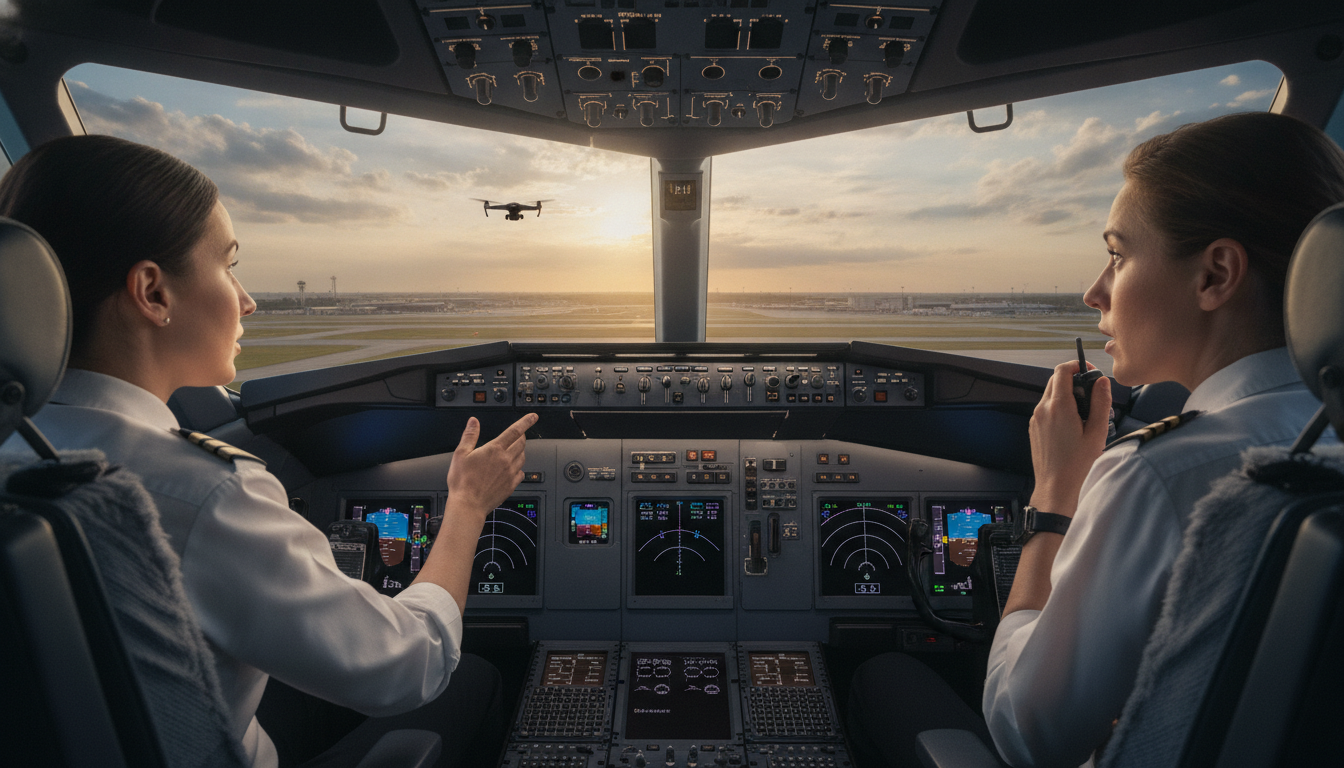
Air traffic crews logged reports of a suspected drone in the vicinity of a commercial flight path, and a second crew confirmed a similar sighting around the same period, prompting a standard safety review and alert to authorities. The twin reports, shared by pilots operating separate flights, raise fresh concerns about small unmanned aircraft intruding into controlled airspace near an airport and the potential risk to passenger jets.
While officials have not confirmed the object’s identity, the timing and consistency of the accounts have drawn attention to recurring hazards from drones near runways. Aviation managers often respond by increasing monitoring, warning nearby aircraft, and coordinating with law enforcement to search for the operator.
Growing Concern Over Drones Near Airports
Reports of small drones near airports have increased in recent years as consumer and commercial use has expanded. Even a small quadcopter can pose a threat to a jet on approach or departure due to the speed and altitude at which airliners operate. Federal rules prohibit drone flights in controlled airspace around major airports without prior authorization, and night operations or flights above 400 feet are restricted under most circumstances.
Safety agencies emphasize that identifying a drone in flight can be difficult. Lighting conditions, distance, and altitude can make it hard for pilots to distinguish a drone from a balloon or a bird. That uncertainty complicates the response, which focuses on caution and coordination rather than immediate disruption of operations.
What Pilots Reported
The accounts recorded by crews pointed to a sighting near an active flight path. A second pilot’s comment suggested the object may have been present for more than a brief moment, raising the possibility of repeated or sustained activity.
“A pilot on a separate flight also reported a drone sighting around the same time.”
Such corroboration often triggers additional checks. Controllers may ask other aircraft to scan the area and adjust altitudes or headings to add margin during approach or departure. Law enforcement units, if available, may be dispatched to likely launch points based on wind and location.
Operational Impact and Response Protocols
Airports and airlines follow established steps when drones are suspected nearby. Most responses begin with a safety alert to inbound and outbound flights. If risk remains, short ground holds or spacing measures are considered to keep aircraft clear of the reported location.
- Notify pilots and adjust traffic flows.
- Coordinate with law enforcement to locate the operator.
- Use surveillance tools, when available, to detect or track small objects.
- Document the event for investigation and possible enforcement.
These steps aim to balance safety with the need to avoid unnecessary disruption. False alarms are possible, but aviation authorities prefer conservative decisions when pilot reports suggest a hazard.



Past Cases Inform Today’s Caution
International incidents have shown how drone activity can ripple through flight schedules. In 2018, reports of drones near London Gatwick led to extended closures and mass delays. While such large-scale shutdowns are rare, the event shaped current practices, encouraging quick alerts and tighter coordination between airports and police.
In the United States, the Federal Aviation Administration logs thousands of drone sightings each year, though only a fraction involve close encounters with crewed aircraft. Investigations often hinge on locating the operator, which can be difficult without detection systems or eyewitnesses on the ground.
Technology, Enforcement, and Education
Airports and agencies are testing detection tools that can spot and classify small unmanned aircraft. Some systems use radio frequency sensing or radar tuned for small targets. Wider deployment is limited by cost, complexity, and regulatory limits on counter-drone measures near populated areas.
Enforcement relies on penalties for unauthorized flights in restricted areas. At the same time, outreach campaigns urge hobbyists and commercial pilots to follow geo-fencing alerts, stay under 400 feet, and seek authorization when operating near airports.
What to Watch Next
Investigators will review radar, weather, and pilot reports to determine whether the object was a drone and, if possible, identify an operator. If confirmed, the case could add to calls for broader use of detection systems around large airports and stricter penalties for risky flights.
The event also highlights a gap between rapid growth in drone use and the slower spread of tools to manage low-altitude traffic. As more small aircraft take to the sky, consistent reporting by pilots and swift coordination on the ground will remain central to keeping flight operations safe.
For passengers, the immediate takeaway is measured: sightings like this rarely lead to long delays, but they prompt careful checks. For authorities, the focus stays on prevention, education, and better technology to reduce incidents before they affect a takeoff or landing.