




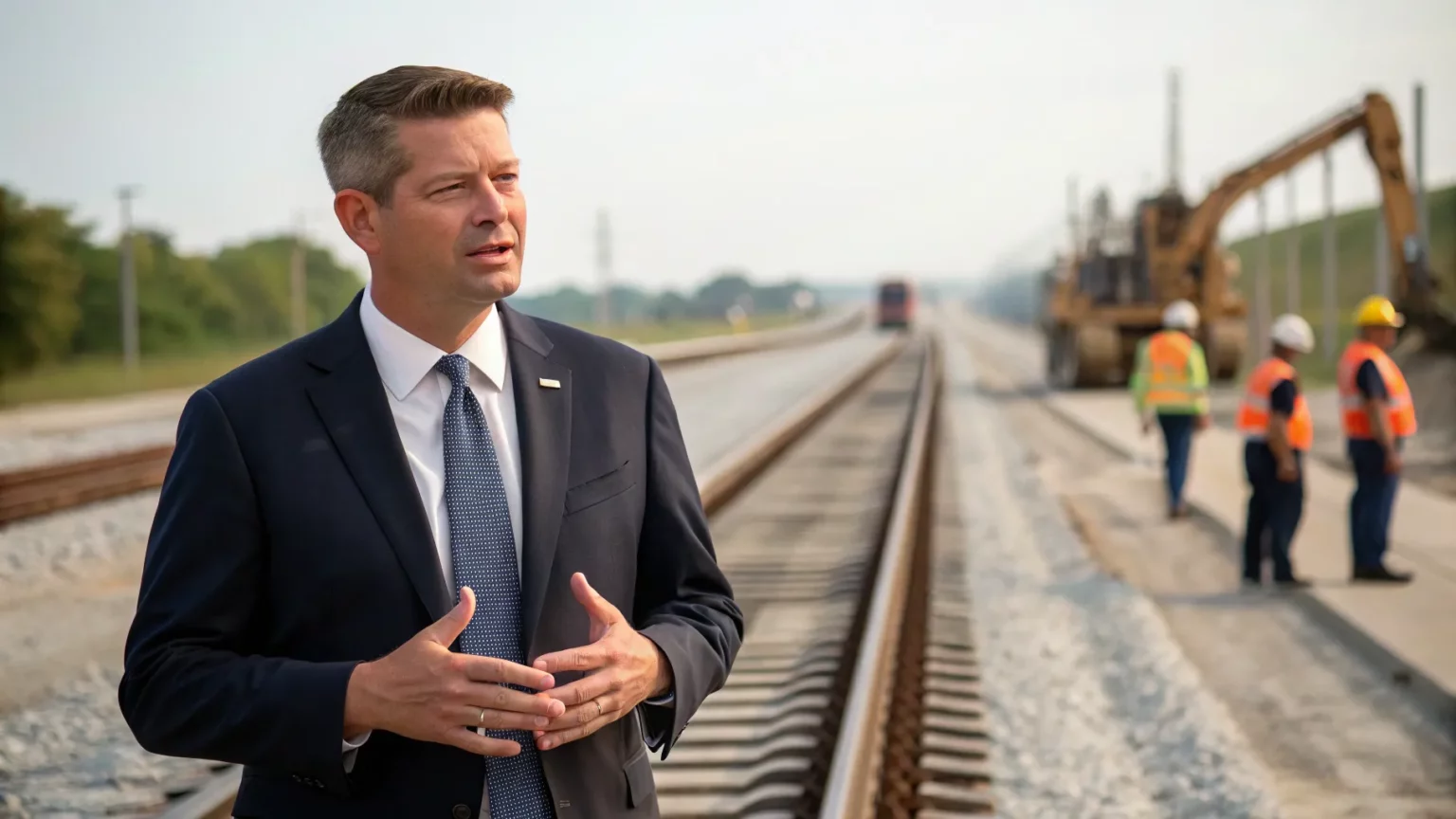
Transportation Secretary Sean Duffy has withdrawn $175 million in federal funding from California’s high-speed rail project, marking another financial setback for the controversial transportation initiative.
The announcement represents the latest chapter in the ongoing funding challenges facing California’s ambitious rail system, which has been plagued by cost overruns and delays since its inception. This withdrawal comes on top of previous federal funding reductions for the project.
Project Funding History
California’s high-speed rail project was initially approved by voters in 2008 with a $9.95 billion bond measure. The project aimed to connect Los Angeles and San Francisco with trains capable of speeds up to 220 mph, promising to reduce travel time between the cities to under three hours.
Federal support for the project has fluctuated over the years. During the Obama administration, the project received billions in federal grants and stimulus funding. However, under the Trump administration, the Department of Transportation attempted to pull nearly $1 billion in federal grants, citing the state’s failure to make adequate progress.
This latest $175 million withdrawal by Secretary Duffy continues the pattern of federal funding challenges for the project.
Current State of the Project
The California High-Speed Rail Authority is currently constructing a 171-mile segment in the Central Valley between Merced and Bakersfield. This section has been prioritized as the initial operating segment, though it represents only a portion of the originally planned system.
The project has faced several obstacles including:
- Construction costs that have ballooned from initial estimates of $33 billion to over $100 billion
- Land acquisition challenges in densely populated areas
- Engineering difficulties through mountain passes
- Political opposition at both state and federal levels
Implications of the Funding Cut
The withdrawal of $175 million will likely force California officials to make difficult decisions about the project’s scope and timeline. State transportation officials have not yet detailed how they plan to address this funding gap.



“This funding reduction creates significant challenges for maintaining our construction schedule,” a spokesperson for the California High-Speed Rail Authority said in response to Duffy’s announcement.
State officials maintain that the project remains viable despite the funding setback. Governor’s office representatives emphasized that California has increased its own financial commitment to the rail system in recent budget cycles.
Political Reactions
The funding withdrawal has generated mixed reactions from political figures. Supporters of the high-speed rail project have criticized the move as politically motivated and harmful to national infrastructure development.
Critics of the project, meanwhile, have applauded Secretary Duffy’s decision, pointing to the rail system’s cost overruns and questioning whether the project represents a wise use of federal transportation dollars.
Congressional representatives from California have indicated they may challenge the funding withdrawal through legislative means, though the prospects for success remain uncertain given the current political climate.
The funding cut comes amid broader national debates about infrastructure investment priorities and the role of rail transportation in addressing climate change and traffic congestion.
As California officials assess their options, the future of what was once envisioned as America’s first true high-speed rail system hangs in the balance, with questions about its completion timeline and ultimate scope remaining unanswered.