




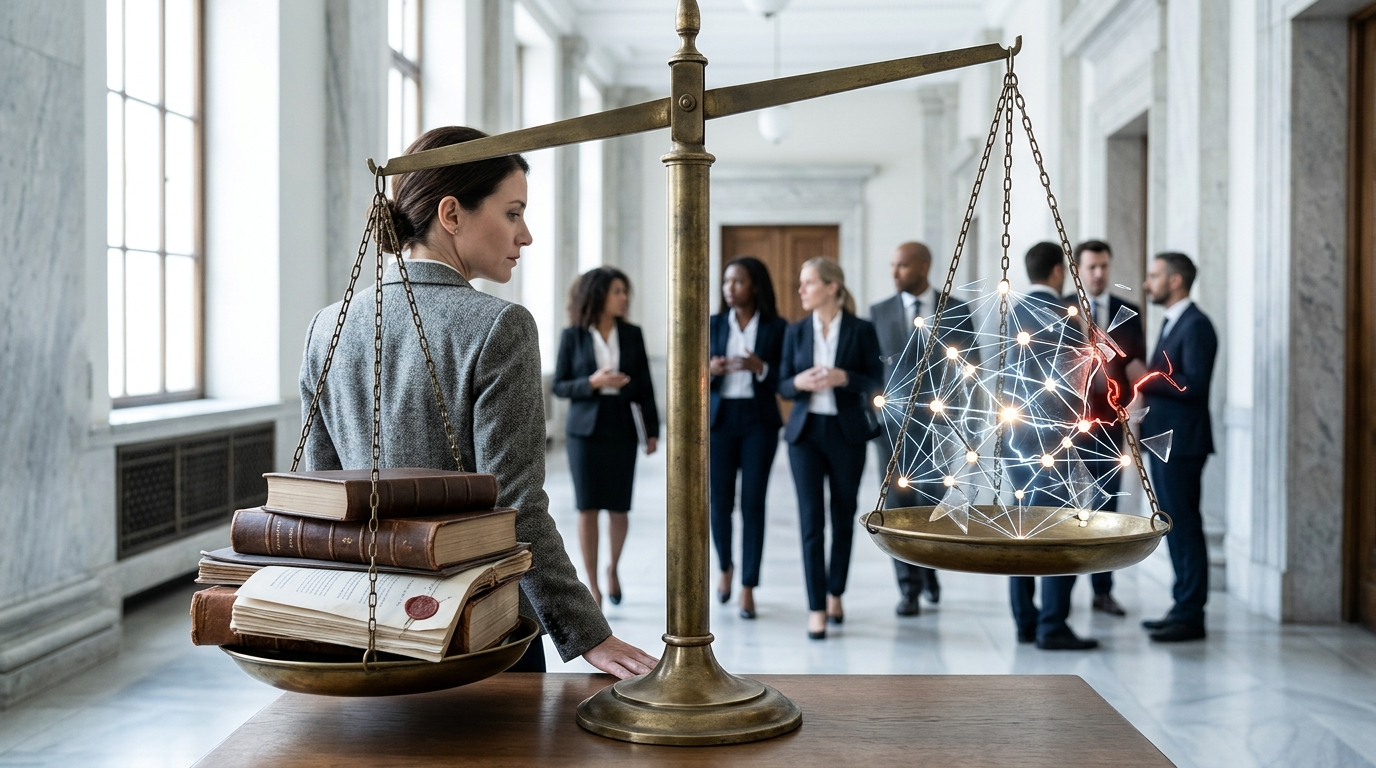
Calls to hold artificial intelligence companies responsible for harmful systems are testing whether existing law can handle technology that may act unpredictably.
The debate centers on who should pay when an AI system causes damage: the developer, the company deploying it, the user, or another party. While many people support corporate liability, legal scholars warn that applying current rules could become difficult.
Accountability Meets Existing Law
Liability usually depends on several questions. Courts may examine whether a company owed someone a duty of care, whether it acted negligently, and whether that conduct caused measurable harm.
AI systems can complicate each part of that analysis. Developers create the models, but other businesses may adapt or deploy them. Users also influence outputs through their instructions and decisions.
Legal scholars say applying existing law could be “messy.”
That concern does not mean companies are automatically protected. Existing legal claims may still apply when a business makes misleading promises, ignores known safety problems, or releases a defective product.
However, the correct legal route may depend on how the system was built and used. A consumer chatbot, hiring tool, medical assistant, and autonomous machine can create very different risks.
The Problem of Runaway Technology
The phrase runaway technology reflects fears that AI products may produce harmful results outside their creators’ direct control. Such concerns can involve false information, discrimination, privacy violations, financial losses, or physical injury.
Yet unpredictability creates a legal tension. A company may argue that it could not reasonably foresee a specific output. An injured person may respond that unpredictability itself made stronger safeguards necessary.


Courts could consider several factors:
- Whether the developer knew about the relevant risk.
- Whether practical safeguards were available.
- How much control the deploying company exercised.
- Whether user conduct contributed to the harm.
These questions may become harder when several companies supply different parts of an AI service. Responsibility can be spread across model developers, cloud providers, software vendors, and customers.
Competing Risks for Courts and Industry
Supporters of stronger liability argue that companies are best placed to test their systems and absorb the cost of failures. Clear exposure to lawsuits could also give firms a financial reason to improve safety.
Critics may warn that broad liability could punish companies for conduct they could not predict or control. Smaller developers could face high insurance and legal costs, even when another party misused their technology.
A rule that is too narrow could leave injured people without an effective remedy. A rule that is too broad could discourage useful products or shift development to companies with the deepest resources.
Pressure for Clearer Standards
The legal uncertainty may increase pressure on lawmakers and regulators to define duties for AI developers and deployers. Possible standards could address testing, warnings, documentation, monitoring, and reporting of serious incidents.
Even with new rules, courts would still need to connect a company’s conduct to a specific injury. That task will shape how responsibility is divided throughout the AI supply chain.
The central issue is no longer whether AI can cause harm. It is whether current law can identify who caused that harm and assign a fair remedy. Future court decisions and legislation will determine whether existing doctrines can adapt or whether AI needs a clearer liability framework.