




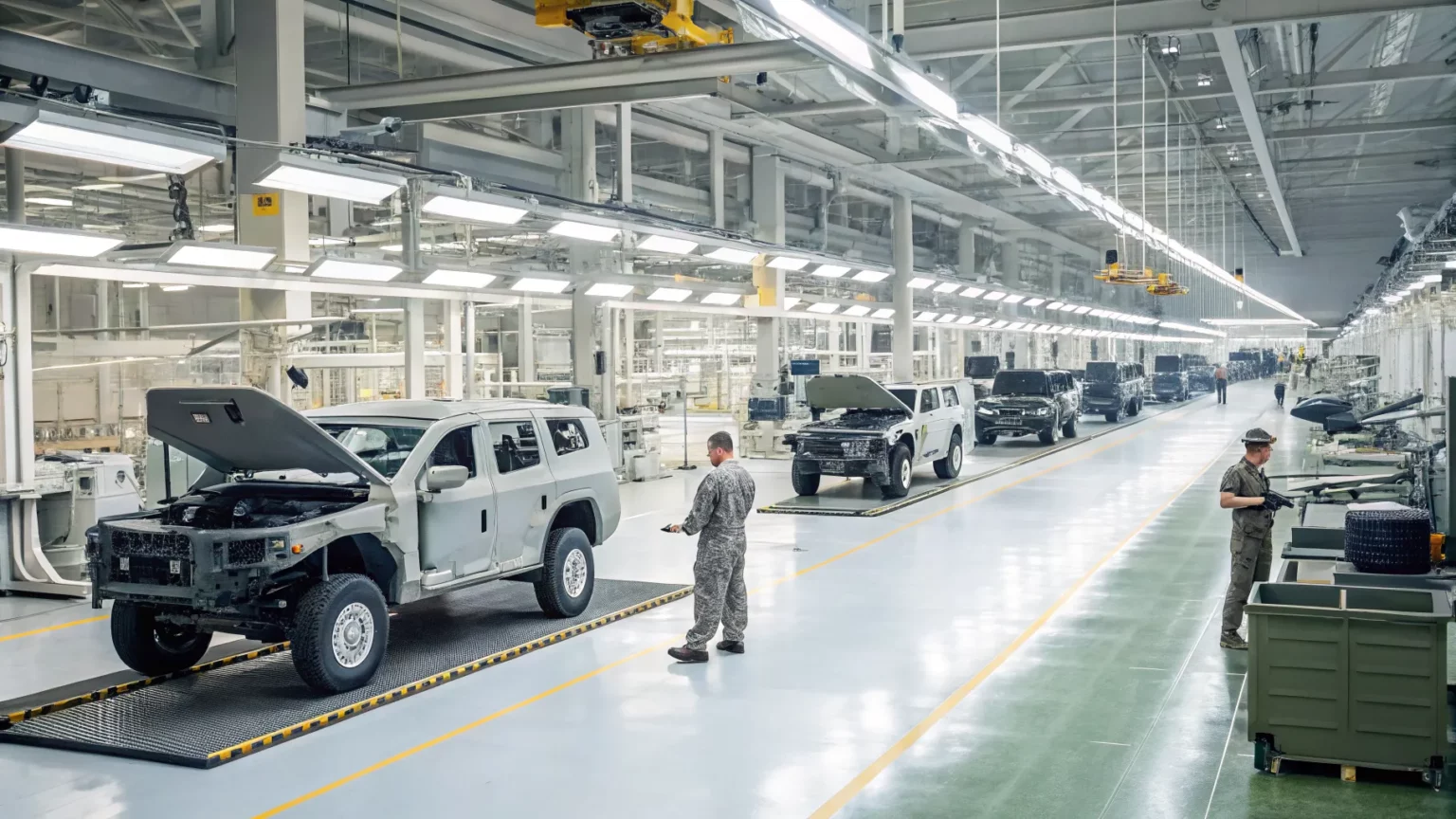
An American automaker is moving to expand its defense subsidiary as Washington races to refill munitions and repair strained supply lines. The push comes as the Pentagon steps up orders for ammunition and missile components following heavy drawdowns to support allied conflicts. The company did not disclose a timeline, but signaled a larger role in defense manufacturing as demand rises across the industrial base.
“The automaker seeks to grow its defense subsidiary as the U.S. aims to replenish munitions supplies.”
The plan points to a wider shift among commercial manufacturers that are eyeing defense work while the government seeks stable output. It raises questions about jobs, supply bottlenecks, and how quickly industry can deliver.
Why Munitions Are in Short Supply
U.S. stockpiles of key ammunition have tightened after large transfers overseas and increased training needs. The Pentagon has announced an effort to lift monthly production of 155mm artillery shells, a round heavily used by allies. Officials have said they aim to reach 100,000 shells per month in 2025 after sitting near 14,000 per month in 2022.
Missiles, propellants, and electronic guidance parts also face long lead times. These shortages have nudged the Defense Department to court new suppliers and ask existing ones to add shifts, open new lines, and qualify alternate sources for parts.
An Auto Maker’s Pitch to the Pentagon
The automaker’s defense arm already works on specialized vehicles and parts that can cross over from commercial lines. Management is now weighing added investments in machining, casting, and advanced electronics assembly that match defense needs for shells, casings, and seekers.
Executives see three selling points: scale, speed, and quality control. High-volume auto plants offer skilled labor, automation, and supplier networks that could translate into steady output for select defense items. The company’s statement signals a bid to convert or expand facilities to meet government orders.
Opportunities and Hurdles
The move could support jobs in regions with idle capacity and help the Pentagon diversify sources. It may also ease pressure on small specialty firms that have struggled to meet sudden surges in demand.
- Near-term wins: Metalwork, vehicle platforms, battery systems, and ruggedized electronics.
- Key hurdles: Security clearances, quality certifications, export controls, and supplier vetting.
- Capital needs: New tooling, testing equipment, and workforce training for defense standards.
Analysts warn that auto-grade production does not immediately translate to defense-grade reliability. Qualification testing, documentation, and cybersecurity rules can extend timelines. A rapid scale-up risks defects if training and oversight lag.



Industry Impact and Competition
Prime contractors have welcomed more capacity for consumables while guarding higher-margin systems. If automakers capture segments like shell casings or vehicle platforms, primes may focus more on integration, software, and guidance units.
Small suppliers could face tighter margins as larger firms enter. On the other hand, more demand may lift orders for raw materials, machining, and electronics, supporting a broader set of shops. Regional clusters near auto plants could see fresh investments in heat treatment, powder metallurgy, and precision sensors.
Procurement Outlook and Funding
Congress approved supplemental security funds in 2024 to restock ammunition and support allied needs. Multi-year buys for munitions signal longer visibility for suppliers, which could justify factory upgrades. However, continuing resolutions or delayed appropriations would slow awards and complicate hiring.
To secure contracts, the automaker will need to pass supplier audits, meet delivery milestones, and price competitively. Long-term agreements could hinge on proving repeatable output at tight tolerances and meeting cyber and supply chain rules.
What to Watch Next
Key milestones will indicate whether the expansion sticks or stalls:
- Announcements of new lines or plant conversions in states with existing auto capacity.
- Defense contract awards for shells, casings, or vehicle programs.
- Hiring surges for engineers, machinists, and quality specialists with defense experience.
- Partnerships with primes for guidance systems and final integration.
The automaker’s plan reflects a broader reshaping of U.S. industrial policy around sustained munitions output. If funding holds and certification moves on schedule, new capacity could ease shortages by mid-decade. If budgets slip or qualification drags, pressure on stockpiles will persist. For now, the company is positioning itself as a fresh source of parts and production muscle at a time when steady supply matters most.