




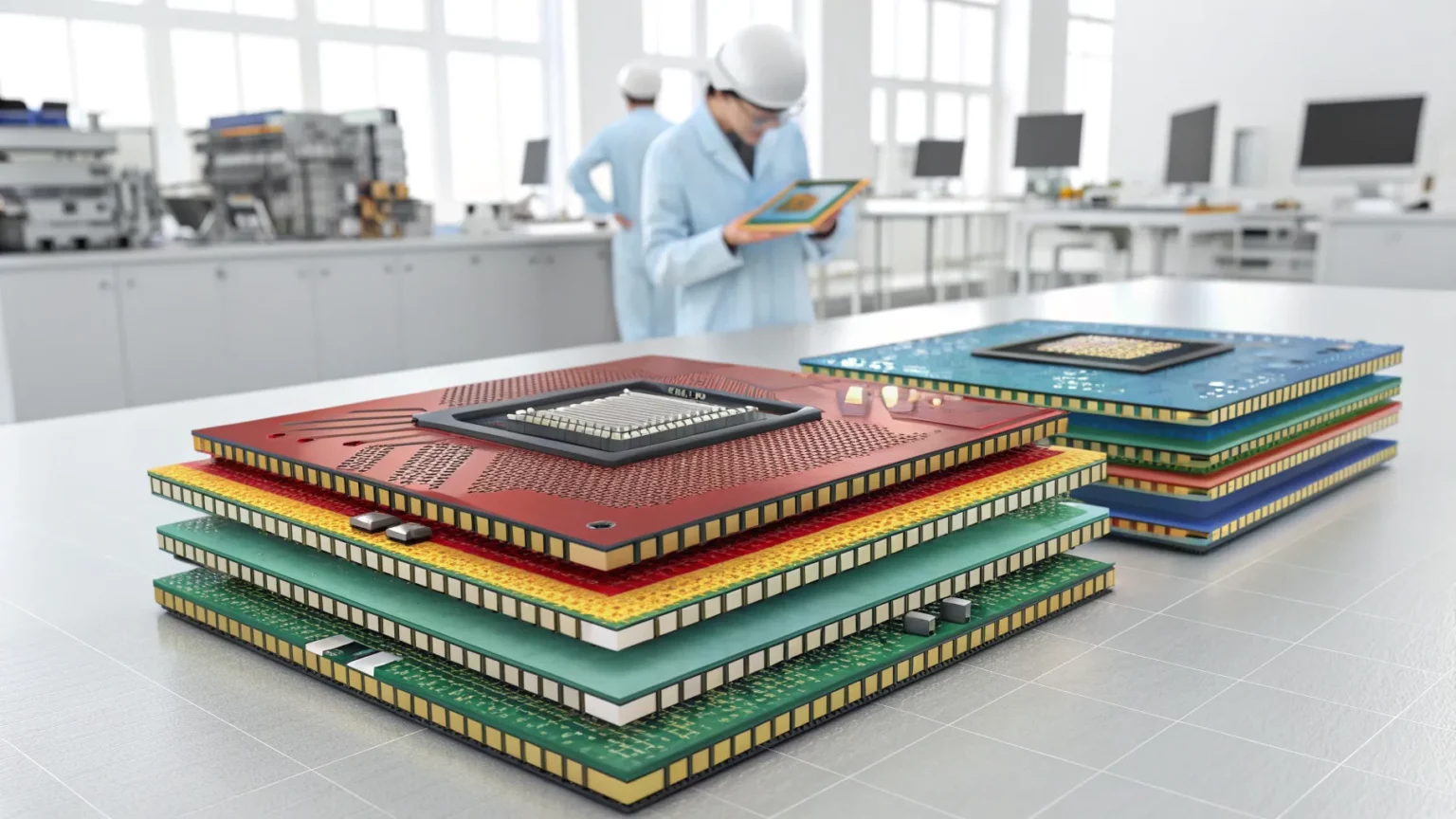
Engineers are turning to industrial diamond to solve one of computing’s toughest problems: getting heat out of stacked chips. The approach could cut power use, speed up signaling, and lift performance across data centers and consumer devices.
The idea is simple but ambitious. Add thin diamond layers inside three-dimensional chip stacks to move heat away from hotspots. The goal is to keep transistors cooler without slowing them down. As one researcher summarized the pitch:
Tackling heat transfer, diamond layers build 3D computer chips with lower power consumption, faster signaling, and increased performance.
The concept targets the limits of modern chip design. As manufacturers pack more compute blocks into tighter spaces, heat builds up faster than traditional materials can handle. Diamond, with its very high thermal conductivity, is emerging as a promising heat spreader that could keep the next wave of 3D chips on track.
Why Heat Blocks 3D Chip Progress
Chipmakers have shifted from shrinking transistors alone to stacking compute layers vertically. This 3D approach cuts the distance data travels and can reduce latency. It also packs more logic into the same footprint.
The tradeoff is heat. Stacked layers trap thermal energy inside the package. Silicon and common interface materials move heat, but not fast enough for dense designs used in AI accelerators, smartphones, and edge devices. When temperature rises, circuits slow down or throttle. Power draw rises to maintain target performance, and reliability can suffer.
Diamond changes that equation. Laboratory measurements place synthetic diamond’s thermal conductivity at roughly four to five times that of copper and far higher than silicon. That means heat can be pulled away from transistors more efficiently, keeping temperatures within safe limits under heavy workloads.
How Diamond Could Be Integrated
The current work looks at placing ultra-thin diamond films as thermal spreaders between chip layers, under hotspots, or as part of the package lid. Engineers are also exploring diamond heat vias—vertical heat conduits—aligned with areas that run hottest.
Pairing diamond with direct copper-to-copper interconnects may help keep signal paths short while heat bleeds out quickly. If successful, the approach could allow higher clock speeds and tighter stacking without a spike in failure rates.



What Faster Signaling and Lower Power Mean
Lower junction temperatures reduce resistance and noise, which improves signal integrity. In 3D stacks, where tiny vertical interconnects carry data between layers, cleaner signals can translate to higher data rates and less error correction overhead.
Cooling also saves energy. If a chip can hold performance at a lower voltage because it runs cooler, total power drops. In data centers, even small gains add up across thousands of servers. For mobile devices, cooler chips may enable sustained performance without bulky fans.
Hurdles Before Wide Adoption
Diamond’s benefits are clear on paper, but practical challenges remain. Thin-film growth must avoid defects that limit heat flow. Bonding diamond to silicon and metal layers without adding thermal resistance is difficult. Cost and supply of high-quality synthetic diamond are also concerns.
- Manufacturing: Uniform, low-defect films at chip scale.
- Integration: Reliable bonding and alignment in stacks.
- Materials fit: Managing thermal expansion mismatches.
- Cost: Affordable deposition and processing at volume.
- Reliability: Proven performance over thermal cycles.
Industry Impact and What Comes Next
If diamond thermal layers meet manufacturing and cost targets, the payoff could be broad. AI processors may sustain higher throughput. Network chips could push link speeds with fewer errors. Consumer devices might run cooler without thick heat spreaders.
Analysts expect interest first in high-value segments where every watt matters. That includes training clusters, advanced packaging for chiplets, and premium mobile processors. Standards bodies and packaging consortia are also watching, as new materials often drive changes in testing and reliability metrics.
Researchers are now measuring real-world gains on test vehicles and comparing diamond against advanced graphite, aluminum nitride, and novel phase-change materials. The key metrics will be temperature reduction at hotspots, signal quality at higher data rates, and cost per unit of heat removed.
Early statements frame the goal clearly: use diamond layers to beat the heat, trim power, and keep performance rising. Success will depend on manufacturing scale and proven reliability over time. If those pieces fall into place, diamond could become a quiet but important part of future 3D chips, enabling denser designs without the thermal penalties that have held them back.