


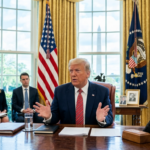


Most U.S. adults say they sidestep news about Donald Trump at least sometimes, according to a new AP-NORC survey, signaling deep fatigue with a story that has dominated headlines for years. The finding lands as the 2024 race grinds on and legal sagas keep Trump in the spotlight, raising fresh questions about how voters get information and what they choose to skip.
What the Survey Signals
Most U.S. adults try to avoid news stories about President Donald Trump at least “sometimes.” — AP-NORC
The survey’s core message is simple: many Americans are tapping the brakes on Trump coverage. That does not mean they ignore politics. It suggests people ration attention when the narrative feels repetitive, heated, or stressful.
Pollsters and editors have tracked similar behavior for years. Audiences tune in for sharp turns—indictments, debates, court rulings—and then tune out when the cycle loops back. The AP-NORC snapshot shows that pattern has staying power.
Why People Tune Out
News avoidance has grown since 2016 as politics took over daily life and feeds. The Reuters Institute has reported steady levels of selective avoidance, with large shares of Americans saying they skip news that feels draining or polarizing. That habit often spikes around intense elections or legal drama.
Several forces push people away:
- Information overload on cable, social media, and push alerts.
- Emotional strain from constant conflict and legal updates.
- Distrust of media fairness and framing.
- Desire to protect time and mental health.
Trump stories sit at the center of these pressures. Coverage is high volume and high stakes. For many, that mix is hard to process day after day.
Impact on Politics and Media
Selective avoidance matters because attention is the currency of campaigns. If voters dodge Trump news, they may miss new policy stands, court outcomes, or shifts among key groups. That can leave impressions frozen in time while facts keep moving.
For newsrooms, the signal is tricky. Trump coverage still drives traffic and debate, but saturation can backfire. Editors face a familiar riddle: report with rigor without exhausting readers. Many outlets now add service pieces—plain-language explainers, timelines, and short recaps—to help audiences manage the flow.



There is also a risk that people who avoid Trump news could slide into information bubbles. Skipping one topic can lead to skipping others. Yet some researchers note a silver lining: when people set boundaries, they may make room for deeper reading on issues they care about, such as local races, prices, or healthcare.
A Broader Trend of Selective Attention
Americans have been curating their news diets for years. Streaming and social platforms trained users to pick what they want, when they want it. Politics did not escape that shift. The AP-NORC finding fits with wider patterns showing people gravitate to news that feels useful, actionable, or close to home.
At the same time, the Trump story is unusual. He blends politics, celebrity, and courtroom drama. That fusion makes the news both hard to avoid and easy to skip, depending on the day.
What Might Change Behavior
Analysts point to a few steps that could pull back reluctant readers without adding noise:
- Clear labels distinguishing legal updates, campaign moves, and opinion.
- Short, factual summaries before deep dives.
- Stronger coverage of stakes—how outcomes hit wallets, rights, and local services.
- Fewer incremental alerts; more meaningful roundups.
Campaigns face a similar test. Messages that speak to everyday tradeoffs—jobs, costs, safety—break through more than personality spats. Voters who avoid Trump news may still respond to concrete plans that touch daily life.
The bottom line: a growing share of Americans is setting limits on Trump coverage, even as the story shapes the race and the courts. That tension will define how information moves this year. Expect more tailored formats, more audience testing, and more efforts to meet readers where they are. The question for media and campaigns is simple: can they make the essential parts impossible to miss without wearing people out?