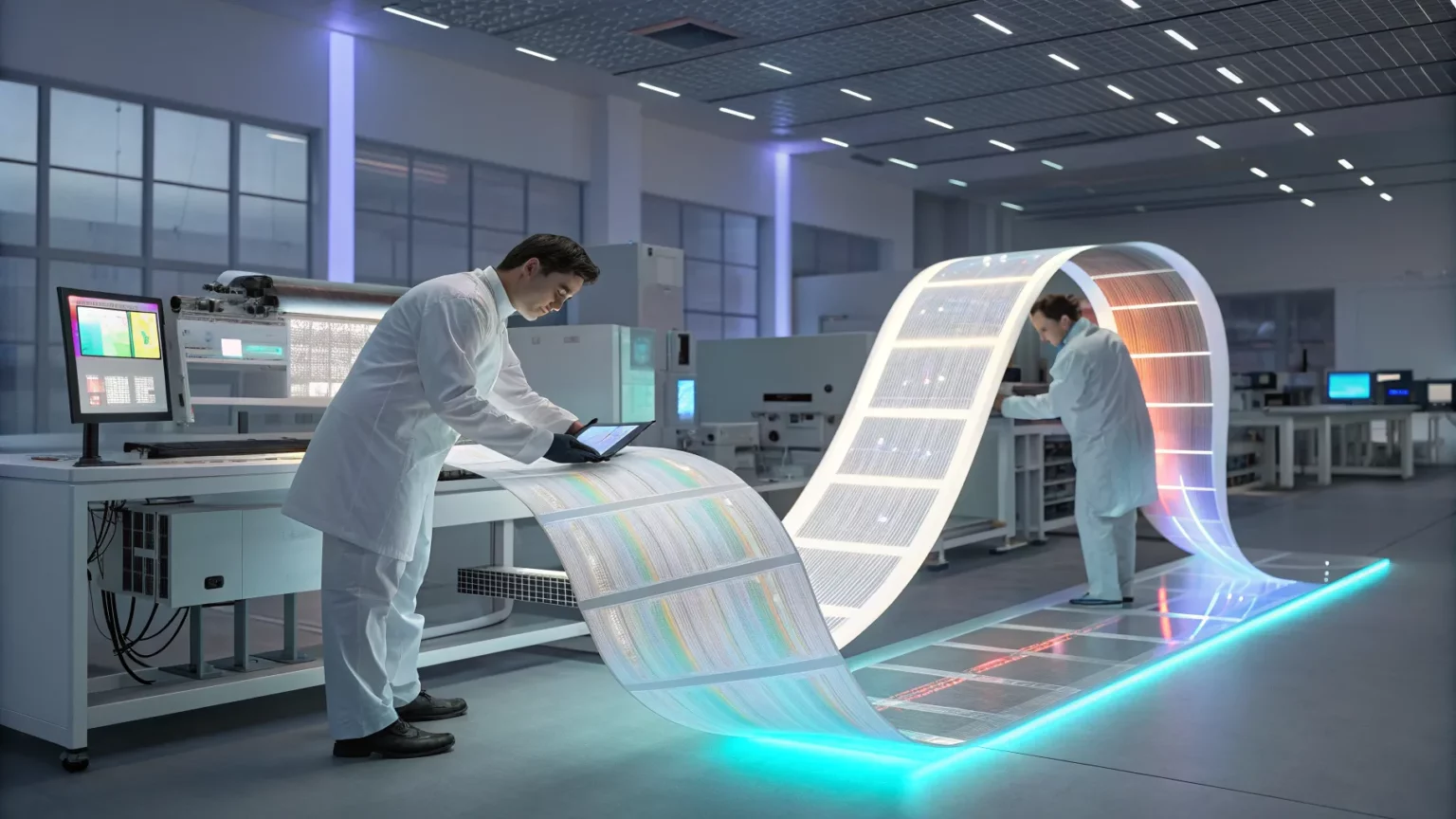
Researchers report a simple shift in design strategy that could reshape flexible lighting and display materials, saying that changing the polymer matrix rather than the light-emitting dye can unlock stable white light from thin, bendable films.
The approach, discussed this week in lab briefings, centers on how the host material guides energy inside light-emitting polymers. The team described how careful matrix control produced white light in test films that flex without losing output, a key step for future screens and soft lighting panels.
Background: Why White Light From Polymers Is Hard
White light is tricky for organic and polymer emitters. It often requires mixing multiple dyes or stacking layers that each emit a different color. Balancing those colors over time is difficult because organic materials age at different rates.
Traditional efforts focus on finding better dyes, improving quantum yield, or adding blue stabilizers. Many prototypes still face drift in color, short lifetimes, and costly fabrication. Flexible formats add more stress, since bending can change the distance between emissive sites and the host, which affects color and efficiency.
The New Idea: Host First, Dye Second
The team’s message is concise and pointed:
“Adjusting the matrix rather than the dye enables flexible, white light-emitting polymer films for future display and lighting technologies.”
In plain terms, the polymer network around the dye can steer how energy moves and where it lands. By tuning polarity, rigidity, and the spacing of chains, the matrix can split and recombine emission paths to produce balanced white light from one dye or a simple dye set.
That control could limit color shift when the film bends. It may also ease manufacturing by keeping the dye recipe stable while the host material does the balancing act.
How It Could Work in Practice
White output can stem from combining short-wavelength and long-wavelength emission within one structured host. A tailored matrix can favor two emission channels—one in the blue-green range and one in the orange-red range—yielding a neutral mix.


Engineers often target high color rendering and a neutral tone near 4000–6500 K for general lighting. If the matrix holds those targets under flex and heat, designers gain a path to thin, rollable panels and curved screens.
Potential Uses and Benefits
- Flexible architectural lighting and roll-to-roll panels
- Curved or foldable display backlights
- Wearable illumination with soft substrates
- Low-weight lighting for vehicles and aircraft interiors
A matrix-first method could reduce the number of dye species, which may simplify supply chains and quality control. It could also help with uniformity across large areas, a common hurdle for polymer emitters.
Open Questions and Trade-Offs
Key metrics remain unreported. Efficiency, lifetime under constant current, and stability at high humidity will decide if this approach is viable at scale. Some host materials can trap charges or quench emission, so matrix tuning must avoid those losses.
Mechanical cycling is another gate. Films need to keep color and brightness after thousands of bends. Adhesion to electrodes and barriers also matters, since oxygen and water can degrade organic films.
Cost will influence adoption. If the matrix relies on specialty polymers or tight processing windows, gains in performance could be offset by higher prices.
Industry Reaction and Next Steps
Materials scientists have long argued that host design can rival dye innovation in importance. This announcement amplifies that view by placing the matrix at the center of white light control. Display engineers are likely to ask for head-to-head tests against current white OLED and polymer LED stacks.
Independent testing of device efficiency, color stability under bend, and shelf life would add confidence. Pilot-scale coating on flexible substrates and compatibility with common electrodes are natural milestones.
What To Watch
Analysts will look for three signs of progress: consistent white balance under flex, long operating lifetimes, and smooth manufacturing on wide web lines. If the matrix approach meets those bars, it could streamline flexible lighting design and reduce the need for complex multi-dye blends.
For now, the message is clear and measured. Host engineering is not just support work; it can set the color. If further data backs the claim, flexible white polymer films may move closer to everyday use.