


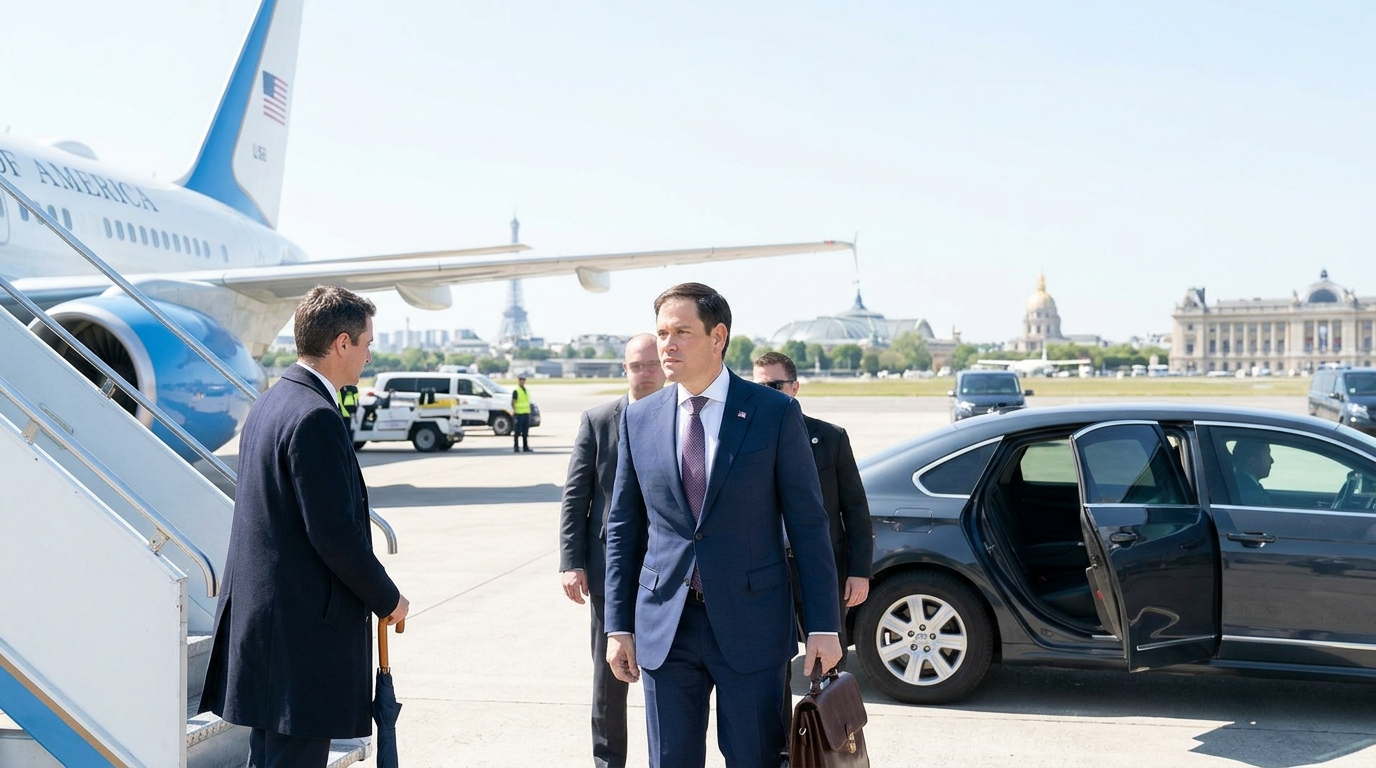
U.S. Secretary of State Marco Rubio is traveling to Paris for a G7 foreign ministers meeting, marking his first international trip since the midterm elections.
The visit places Rubio alongside senior diplomats from major allied economies at a politically sensitive moment. The Paris talks will offer an early test of how Washington plans to work with its closest partners after the vote.
The announcement described the journey as “his first international trip since the midterms.” That timing gives the meeting added weight, although no detailed agenda or schedule was provided.
Allied Coordination Takes Center Stage
The Group of Seven brings together the United States, Canada, France, Germany, Italy, Japan and the United Kingdom. The European Union also takes part in its meetings.
Foreign ministers use these sessions to coordinate positions before national leaders make major decisions. Discussions often cover security, economic pressure, diplomatic strategy and responses to international crises.
Rubio’s attendance signals that direct talks with allies remain part of the administration’s foreign policy approach. France, as the meeting’s location, will also have a central role in managing the discussions and seeking common ground.
Several issues could shape the talks, though officials have not released a specific agenda in the available announcement. G7 foreign ministers commonly address:
- Wars and international security threats
- Sanctions and other forms of economic pressure
- Trade, technology and supply-chain security
- Relations with strategic competitors
- Humanitarian aid and crisis response
A Closely Watched First Trip
Travel by a secretary of state often carries both practical and symbolic value. Private meetings allow officials to compare priorities, settle disagreements and prepare joint statements.


This trip may attract added attention because it follows the midterms. Election results can alter political pressure on an administration, including congressional oversight of foreign policy, security assistance and diplomatic spending.
Allies will likely watch for signs of continuity in Washington’s commitments. They may also seek clarity about any policy changes expected after the elections.
The United States, meanwhile, can use the meeting to measure support for its positions. A united G7 statement can increase diplomatic pressure, while visible disagreements may weaken the group’s influence.
What the Paris Meeting Could Show
The final language issued after the talks will provide the clearest measure of agreement. Joint statements often reveal which subjects received priority and where governments accepted compromise.
Rubio’s separate meetings will also matter. Bilateral talks held around a larger summit can address disputes that are difficult to resolve in a full group session.
Key details remain unanswered, including the meeting dates, Rubio’s planned bilateral sessions and the policies Washington wants the G7 to support. Any announcements made in Paris could clarify the administration’s post-election diplomatic agenda.
The trip therefore carries significance greater than its brief announcement suggests. It will show how Rubio presents U.S. priorities after the midterms and how closely G7 partners are prepared to align with Washington. The meeting’s statements, side discussions and follow-up actions will indicate whether the Paris talks produce shared policy or expose deeper divisions.