




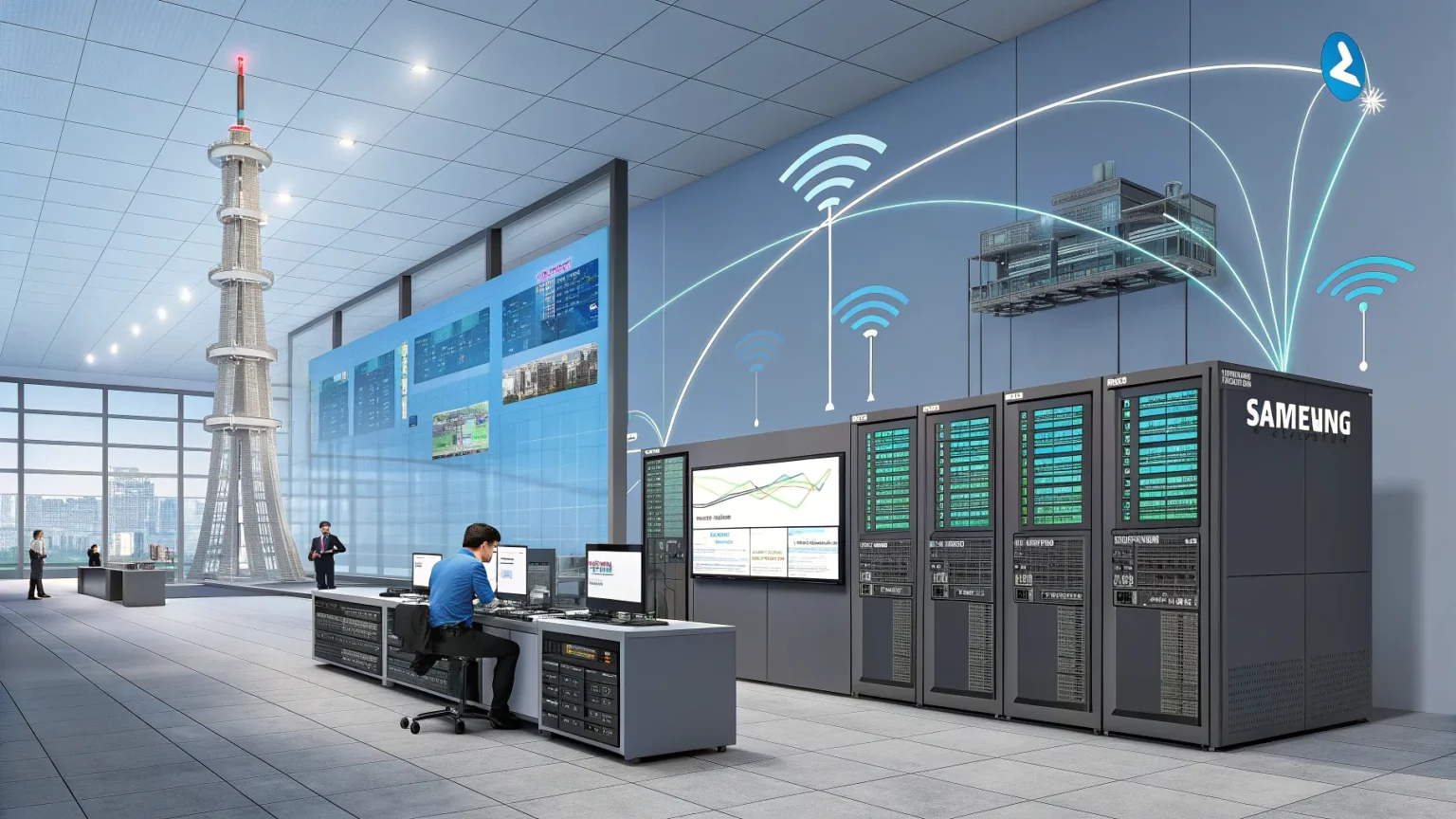
Samsung and South Korean carrier KT have taken a public step in applying artificial intelligence to mobile networks, showing AI-based radio access network optimization on live commercial systems. The move signals growing interest in using software to tune 5G networks in real time for speed, reliability, and energy savings.
The companies did not share detailed figures, but the live setting matters. Trials on active networks are a key hurdle before any national rollout. The work points to a wider shift in how operators plan to manage dense 5G sites amid rising traffic and high power costs.
What Was Demonstrated
“Samsung and telecoms operator KT have demonstrated the benefits of AI-RAN optimisation on live commercial networks.”
The statement highlights two important elements. First, the focus is on AI-RAN, a catchall for tools that use machine learning to make network decisions. Second, the test was carried out on a commercial network serving real users, not a lab or pilot-only setup.
AI-RAN tools can analyze radio conditions, user demand, and equipment status. They then adjust parameters that affect throughput, latency, and coverage. In practice, this can mean smarter scheduling, dynamic spectrum use, and energy-aware power control at each site.
Why AI Is Moving Into the RAN
Mobile traffic has grown as video, gaming, and cloud apps spread. Adding spectrum and more radios helps, but it also adds complexity and cost. AI promises to find gains that fixed rules miss, especially during busy hours or sudden events.
Energy is a major pressure point. Analysts often estimate that the RAN consumes the majority of a mobile network’s electricity, sometimes around two-thirds to four-fifths. Small efficiency wins at thousands of sites can add up to large savings.
- Reduce energy use during low-traffic periods while keeping coverage.
- Stabilize latency for apps like gaming and video calls.
- Improve spectral efficiency by matching capacity with demand.
- Automate tuning to cut manual site visits and errors.
KT’s Stakes and Samsung’s Pitch
KT runs one of the largest networks in South Korea, a market known for early 5G adoption and heavy data use. Managing quality in dense urban zones while controlling costs is a constant challenge. AI-RAN fits that need if it delivers reliable gains without service risk.
For Samsung, the message is that AI can add value on top of radios and core gear. By tying AI software to their RAN products, vendors aim to lock in customers with measurable performance and energy results. The live trial with KT helps make that case.



What Success Would Look Like
The companies did not provide metrics, but operators tend to judge AI-RAN by a few clear outcomes. These include better average and peak user speeds, fewer dropped connections, faster recovery from faults, and lower energy per bit delivered. Gains must hold across different neighborhoods and device mixes.
Another test is operational trust. Network teams need to see that AI actions are safe, explainable, and reversible. Audit logs, guardrails, and staged rollouts are common practices before automation runs at scale.
Risks, Limits, and Industry View
AI models can drift when traffic patterns change, such as during holidays or emergencies. Poor training data can also lead to uneven results across sites. That is why live trials are watched closely, and why many carriers keep a human-in-the-loop at first.
Across Europe and Asia, operators have run energy-saving pilots and traffic steering tests with different vendors. Results vary by market and network design, but many report double-digit percentage improvements in specific metrics during off-peak hours. Consistent gains during peak load remain a harder target.
What Comes Next
If results at KT prove stable, the next step would be a broader rollout across more regions and radio bands. That would test scale, interoperability, and the ability to co-exist with legacy settings. It would also reveal how well the AI handles unexpected events.
Vendors are likely to add forecasting features, using traffic predictions to prepare resources in advance. Integration with energy markets and renewable sources is another area to watch, as operators seek to cut both costs and emissions.
Samsung and KT have signaled that AI-RAN is ready to move from promise to practice. The key questions now are how big the gains are, how reliable they remain across seasons, and how fast operators can adopt them without service risk. The answers will shape how 5G networks are run and how soon AI becomes a standard tool in the radio stack.