




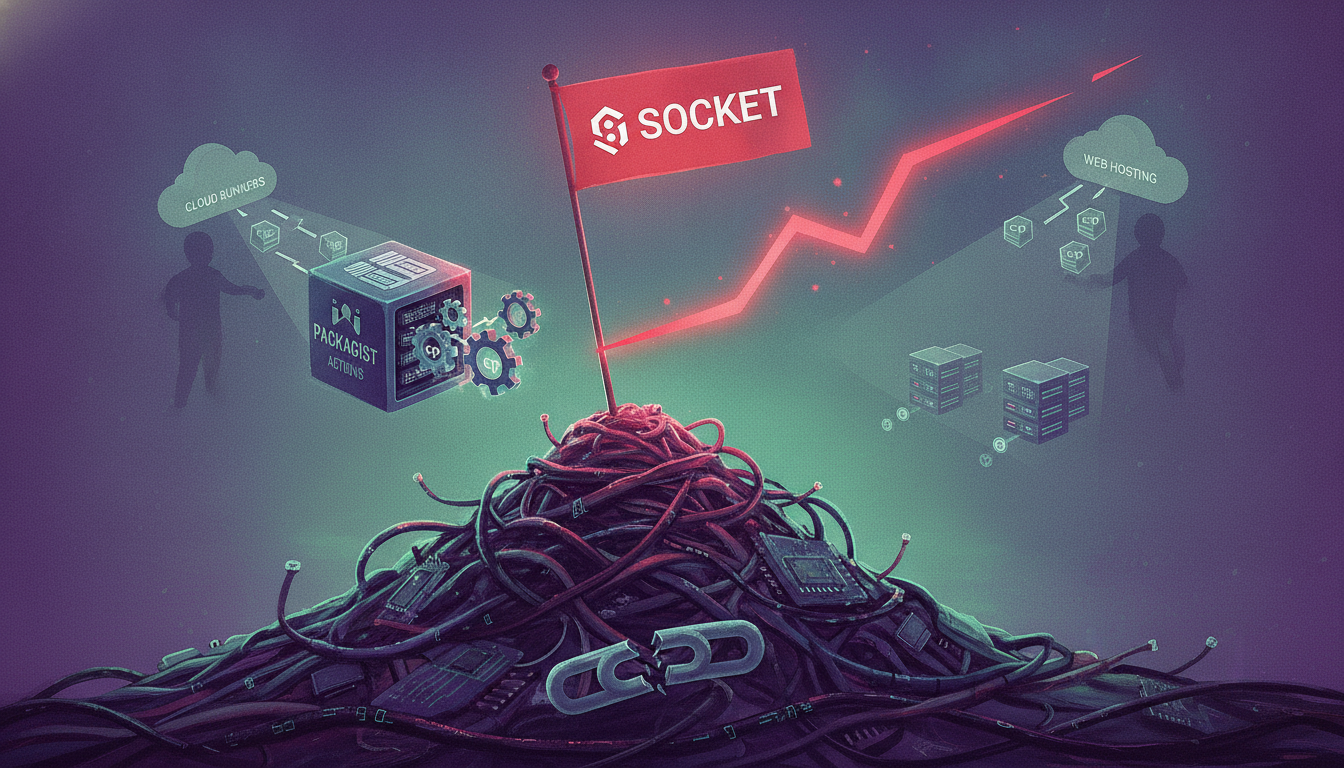
A new security alert has raised concerns about software supply chain risks. Socket reported that attackers abused GitHub Actions in Packagist repositories to run cPanel scanning from temporary cloud runners. The disclosure points to a tactic that uses short-lived automation jobs to probe web hosting targets, while hiding traces in the churn of continuous integration systems.
Socket’s finding highlights exposure in open source workflows that many PHP projects rely on. The issue centers on GitHub Actions jobs that launch automatically for code changes, then spin up fresh cloud runners for each task. If those jobs are misconfigured, they can be hijacked to run outside commands.
“According to Socket, GitHub Actions abuse in Packagist repos ran cPanel scanning from temporary cloud runners.”
The report focuses attention on the security of automated build and test pipelines. It also raises questions about how common this type of misuse may be across popular ecosystems.
How the Attack Vector Works
GitHub Actions is a widely used automation tool for building and testing code. Each workflow runs inside an isolated virtual machine that exists for only a short time. These temporary runners are designed to be clean and reproducible, but they also can be used for one-off tasks chosen by whoever controls the workflow steps.
Packagist is the main package index for Composer, the dependency manager used across the PHP community. Maintainers often set up workflows to run tests, build releases, and check pull requests. If a workflow accepts untrusted inputs or grants broad permissions, it may open a path for abuse.
Socket’s note suggests an attacker or unauthorized user triggered workflows that executed cPanel scanning commands. cPanel is a popular web hosting control panel. Scanning traffic could indicate an attempt to probe login pages or locate exposed resources. The use of short-lived cloud runners makes the activity hard to trace after jobs complete.
Why It Matters for Open Source Teams
Automation keeps open source projects moving, but it also expands the attack surface. Malicious jobs can perform network scans, exfiltrate data, or pivot inside a cloud account if secrets are available. Even if no secret data is exposed, projects can face reputational damage and service blocks if their runners are seen as the source of hostile traffic.
Security researchers have long warned about risky defaults and permissive workflows. Past incidents across various ecosystems have shown attackers repurposing continuous integration services for tasks like scanning, spam, or resource theft. The reported cPanel scanning aligns with that pattern of opportunistic misuse.



Developer Safeguards and Practical Steps
Projects that depend on GitHub Actions and Packagist can reduce exposure with tighter controls. The goal is to stop untrusted code from running network calls or accessing secrets, and to make suspicious activity visible.
- Limit workflow permissions and set defaults to read-only.
- Require approval before running workflows from first-time or forked contributors.
- Use allowlists for event triggers and restrict which branches can start jobs.
- Block outbound network calls in test steps where possible.
- Store no long-lived secrets in workflows that handle untrusted inputs.
- Log runner activity and alert on unusual network patterns.
Many teams also move sensitive jobs to self-hosted runners with strict egress rules. Others split workflows so that community pull requests run in a minimal, no-network environment, while release steps require maintainer approval.
Responses From Platforms and Maintainers
GitHub has introduced features that help reduce risk, including required approvals for workflows triggered by new contributors and finer permission controls for tokens. Maintainers can also pin actions to specific commit SHAs and avoid running scripts from untrusted sources. These steps limit the chance that a workflow will execute harmful commands.
Packagist maintainers and PHP project leads are likely to review their CI settings in light of the report. Socket’s message serves as a reminder that small configuration gaps can be enough for misuse, especially when attackers look for automation they can turn into on-demand infrastructure.
The report did not share details on affected repositories or the scope of the scanning. The lack of public impact data suggests the issue may have been identified early, or it may still be under review by maintainers.
Organizations that consume PHP packages should monitor dependency updates and review their own build pipelines. Even if the primary risk sits with public projects, the same methods can be attempted in private forks or internal CI systems that mirror open source patterns.
Socket’s alert marks another warning shot for software supply chain security. The immediate takeaway is clear. Audit workflow triggers and permissions, reduce network exposure, and watch for signs of abuse in ephemeral runners. The next few weeks will show whether maintainers tighten controls and whether platforms add more guardrails for network activity inside automated jobs.