



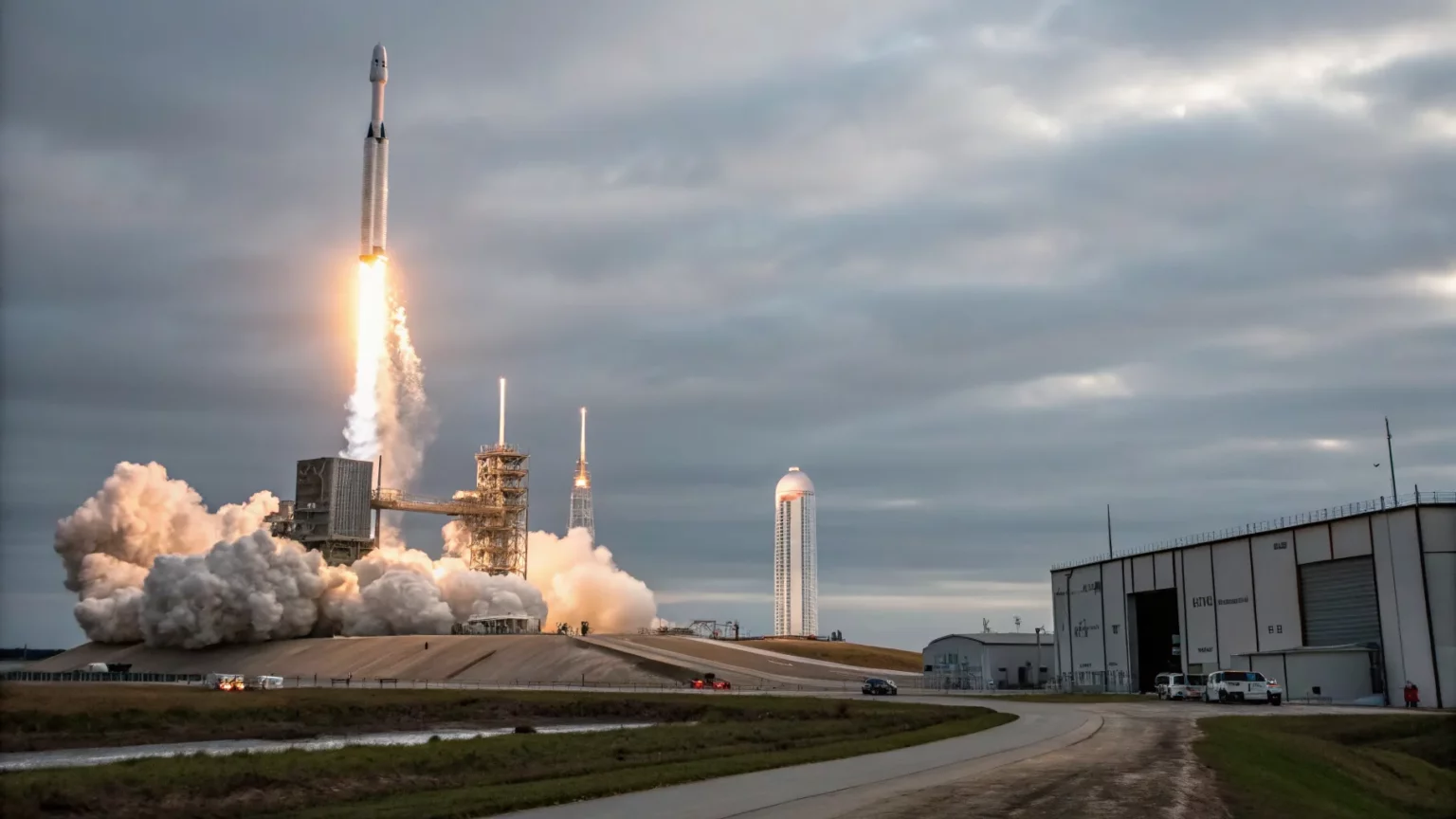
SpaceX set a new high-water mark for public offerings, raising $75 billion and more than doubling the previous record. The move signals an aggressive push to scale its satellite internet arm and invest in space-focused artificial intelligence centers. Led by Elon Musk, the company is preparing to pour fresh capital into network coverage, launch cadence, and advanced computing tied to orbital operations.
The deal, the largest IPO in history, positions the rocket and satellite operator for its next phase of growth. Investors piled in on expectations that global connectivity and AI-enabled services will drive new revenue. The company framed the offering as fuel for expansion rather than an exit.
A Historic Raise and What It Means
IPOs rarely reshape an industry in one stroke. This one might. By more than doubling the previous record, SpaceX now has a war chest suited for infrastructure that is expensive, regulated, and hard to imitate. The size gives it flexibility in a market where launch slots, spectrum access, and satellite manufacturing are constant bottlenecks.
“SpaceX raised $75 billion in the largest IPO in history, more than doubling the previous record.”
Such scale can speed satellite production, strengthen supplier contracts, and derisk launch schedules. It can also support pricing strategies to win new customers in underserved regions where fiber is costly or lacks political support.
Starlink Growth Takes Center Stage
Musk’s near-term priority is clear. The capital will back growth in the company’s satellite internet network, which relies on thousands of low-Earth-orbit satellites and a global ground segment. Additional funding can expand coverage, improve latency, and add capacity for enterprise and government users.
Analysts have long pointed to the delicate balance between subscriber growth and capital intensity. Every phase of expansion needs hardware, launches, and ground stations. With more cash on hand, SpaceX can accelerate constellation refresh and push into new markets where licensing has taken time.
Space AI Centers Signal a New Bet
The company also plans to invest in space AI centers, a sign that on-orbit and near-orbit computing will become a core capability. These centers could process earth observation data, optimize satellite routing, and enable autonomous spacecraft operations. They may also support advanced services for defense, maritime, aviation, and disaster response.
“Musk eyes Starlink growth and space AI centers.”
If successful, AI-linked services could help diversify revenue and reduce reliance on consumer broadband. The approach also fits with the company’s culture of vertically integrating critical technologies.



Risks, Regulation, and Competition
Big raises carry big expectations. Execution risk remains high as the firm scales manufacturing and navigates global rules on spectrum, competition, and national security. Satellite operators must secure rights across jurisdictions and coordinate to avoid interference.
Rivals, including other satellite networks and terrestrial providers, are unlikely to stand still. Competing constellations, regional telecom partnerships, and 5G expansion could challenge pricing and customer acquisition. Supply chains for satellites, user terminals, and launch vehicles must also keep pace with plans.
- Licensing and spectrum coordination will remain a gating factor.
- Capital needs stay elevated as satellites are replaced and upgraded.
- Competitive responses could pressure margins in key markets.
What to Watch Next
Attention now shifts to how quickly cash turns into capacity. Key indicators include the rate of satellite deployments, user terminal availability, network reliability, and enterprise wins. Another signal will be progress on AI centers, from site selection to initial services.
Investors will look for disclosure on capital spending, gross margins by segment, and churn in mature markets. Any sign of smoother licensing in large countries could unlock faster growth. Clear pathways for monetizing AI-driven products will be closely watched.
SpaceX has rewritten the playbook for commercial space twice: first in launch, then with large-scale satellite internet. This record offering suggests a third act is underway. The next year will show whether historic funding can translate into durable advantages in connectivity and intelligent space services.