




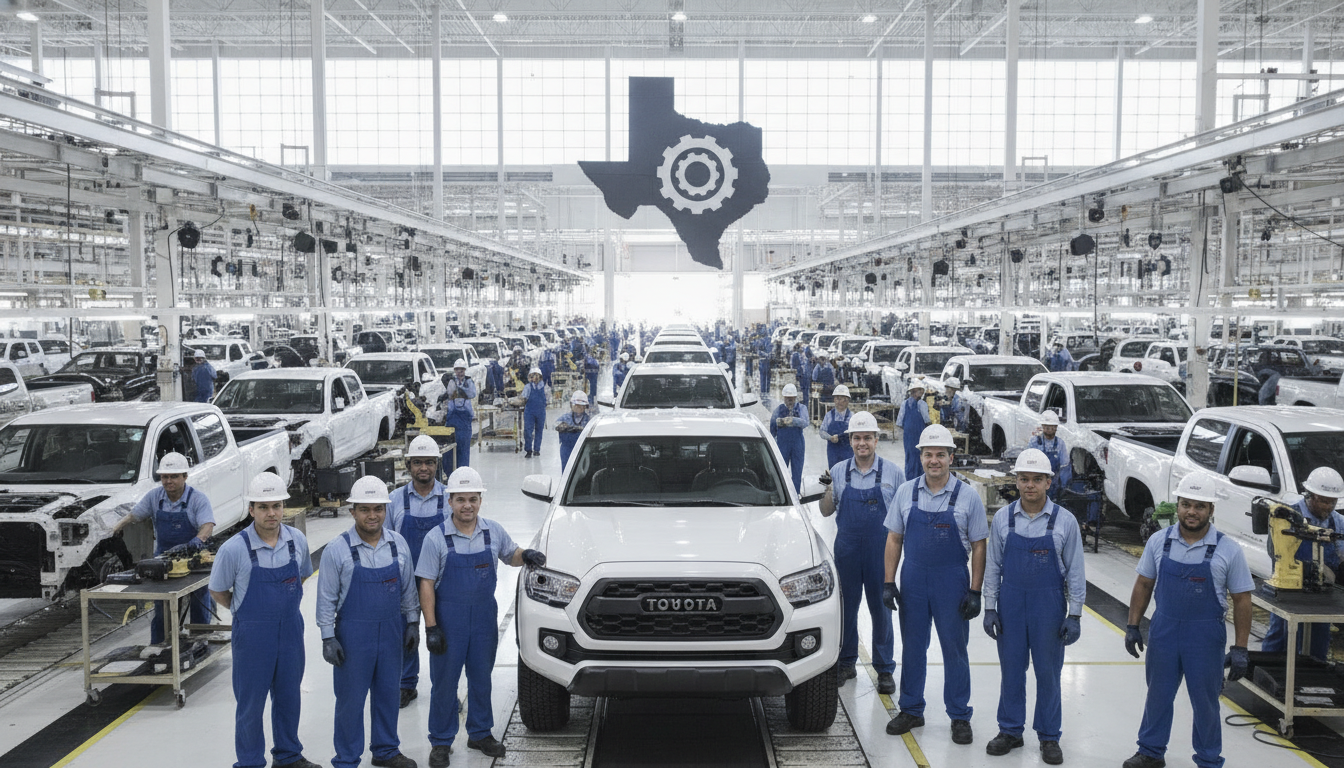
Toyota plans to move most production of its Tacoma mid-size pickup to the United States, anchoring a $3.6 billion expansion of its San Antonio, Texas plant. The shift marks a major reshoring of a top-selling truck line and signals a broader push to strengthen U.S. manufacturing. The company framed the move as an investment in capacity, supply stability, and local jobs.
“Toyota says it’s shifting most production of its mid-size Tacoma pick-up truck from Mexico to the United States as part of a $3.6 billion investment in its San Antonio, Texas plant.”
The Tacoma has led U.S. mid-size pickup sales for years. It is a core product for Toyota’s North American operations and a key profit driver. The timeline for the transition was not disclosed. The company did not specify hiring targets, but large-scale plant investments often bring new headcount and supplier activity.
Why Toyota Is Moving Production
Several forces are pushing automakers to localize more output. Supply chain disruptions since 2020 exposed risks tied to cross-border logistics. U.S. policy favors domestic manufacturing through tax incentives and public procurement rules. The U.S.-Mexico-Canada Agreement also tightened content rules, nudging more value-add into the United States.
Texas offers advantages for large plants. It has highway and rail links, a sizable auto supplier base, and a skilled workforce. Labor is non-union at Toyota’s San Antonio facility, which can keep costs predictable. State and local incentives often support expansions, though terms were not announced.
What It Means For Workers And Suppliers
San Antonio already builds Toyota’s full-size Tundra and the Sequoia SUV. Adding Tacoma production would deepen the region’s auto cluster and drive more work for nearby parts makers. Logistics firms and construction contractors are also likely to benefit as the plant scales up.
Shifts of this size affect Mexico as well. Toyota currently assembles Tacomas in Baja California and Guanajuato. Those plants could see model changes, reduced volume, or a refocus on other North American needs. Toyota did not detail the impact on Mexican facilities.
- U.S. jobs could rise with final assembly and supplier growth.
- Mexico may absorb different models or parts production.
- Logistics costs may fall with trucks built closer to buyers.
Sales Strength And Market Pressures
The Tacoma’s market lead helps explain the investment. Industry data show the truck posting annual U.S. sales well above 200,000 units in recent years. Buyers value its reliability, resale value, and off-road trims. Competitors are updating their trucks, increasing pressure to protect share.
Local production can shorten delivery times and broaden customization options. It can also improve quality control with engineering teams on site. These gains matter as new versions of the Tacoma roll out with more tech and advanced safety features.

Costs, Prices, And Consumer Impact
Bringing more assembly to the United States can raise labor and facility costs. Toyota will aim to offset that with efficiency and scale. Building in Texas reduces shipping and border delays, which saves money and time. Stable supply can help dealers keep inventory and trim markups.
Consumers may see faster delivery and a wider choice of trims built for U.S. demand. Fleet buyers, including small businesses, could benefit from more predictable lead times.
Policy And Industry Context
Automakers are reassessing factory footprints. Many are adding U.S. capacity for engines, batteries, and final assembly. Even with a focus on electrification, gas and hybrid trucks remain strong sellers. Toyota’s move fits a pattern of balancing future tech with current demand.
The decision also aligns with political pressure to expand domestic manufacturing. Reshoring announcements can draw bipartisan support, especially in states courting industrial jobs. Any public incentives tied to the investment will come under scrutiny for job creation and wage levels.
What To Watch Next
Key details remain open. The start date for U.S. Tacoma output, hiring plans, and any changes at Mexican plants will set the scale of the shift. Suppliers will look for sourcing lists and bid timelines. Dealers will watch allocation to gauge when U.S.-built trucks hit showrooms.
Analysts will track whether the investment raises capacity or replaces Mexican output one-for-one. They will also look at how the move affects pricing, incentives, and profit margins in a competitive segment.
Toyota’s decision signals confidence in U.S. truck demand and in Texas as a production hub. The $3.6 billion build-out positions the company to tighten its grip on a key market. The next milestones will show how quickly the transition happens and how widely the gains spread through the regional economy.