





Workers and bestselling authors are raising concerns about artificial intelligence inside major publishing companies, warning that the technology is harming work and trust. Employees told WIRED that an assistant called NOA was unhelpful, while authors said AI was straining ties with Big Five publishers.
The complaints point to a widening conflict over how publishers adopt AI. Companies may see the tools as a way to speed up routine tasks. Workers and writers, however, question whether the systems improve their jobs or put creative work at risk.
Workers Question NOA’s Value
NOA stands for “No Ordinary Assistant.” Yet workers who spoke with WIRED described the system in less ambitious terms. They said it was “unhelpful,” a blunt assessment that raises questions about its practical use.
The criticism matters because an internal assistant must save time to justify the effort required to deploy it. If workers must check unreliable answers, rewrite output, or avoid the system, it can create more work instead.
The available accounts do not establish how many employees used NOA or which tasks it handled. They also do not show whether the problems came from the underlying model, its training material, or its workplace design.
Still, the reports identify several issues publishers may need to examine:
- Whether the assistant produces accurate and useful responses
- How much human review its output requires
- What material was used to build or train the system
- Whether employees can challenge its use or report failures
AI assistants often perform best on narrow, clearly defined tasks. Publishing work can be harder to automate because it depends on context, judgment, voice, and close knowledge of readers.
Authors See Trust Breaking Down
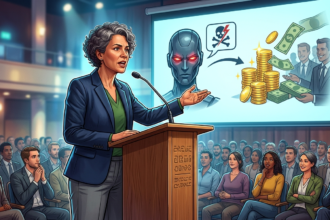
The dispute also reaches outside publishing offices. Bestselling authors say AI is damaging their relationships with the Big Five, the group of companies that dominates English-language trade publishing.


Those relationships depend on more than contracts. Authors share unpublished manuscripts, research, and long-term creative plans with their publishers. Any uncertainty about how that material may be used can weaken confidence.
The core concern is control. Writers may want clear answers about whether their books, drafts, or related data are being used in AI systems. Publishers, meanwhile, may seek tools that help with editing, marketing, sales analysis, or administrative work.
Those goals are not always incompatible. Conflict grows when policies are vague, authors are not consulted, or companies cannot explain where AI-generated material enters the publishing process.
Workers described NOA, short for “No Ordinary Assistant,” as “unhelpful.” Bestselling authors said AI was “ruining their relationships with Big Five publishers.”
Publishing Faces a Transparency Test
The concerns reflect a larger debate across creative industries. Writers have challenged technology companies over the use of copyrighted books in model training. Employees in many fields have also questioned tools introduced without clear proof that they improve performance.
Publishers now face pressure from both groups. Staff members want systems that support their work rather than complicate it. Authors want consent, credit, payment, and firm limits on how their writing is handled.
A balanced response would require publishers to explain each tool’s purpose and disclose relevant data practices. They could also test systems with workers before broad use and create clear opt-out or review procedures for authors.
AI may still help with limited publishing tasks, but the reported problems show that adoption alone does not equal progress. The next test will be whether major publishers address employee feedback and give writers direct, enforceable answers. Without that, an efficiency project could deepen a more costly problem: the loss of trust.