



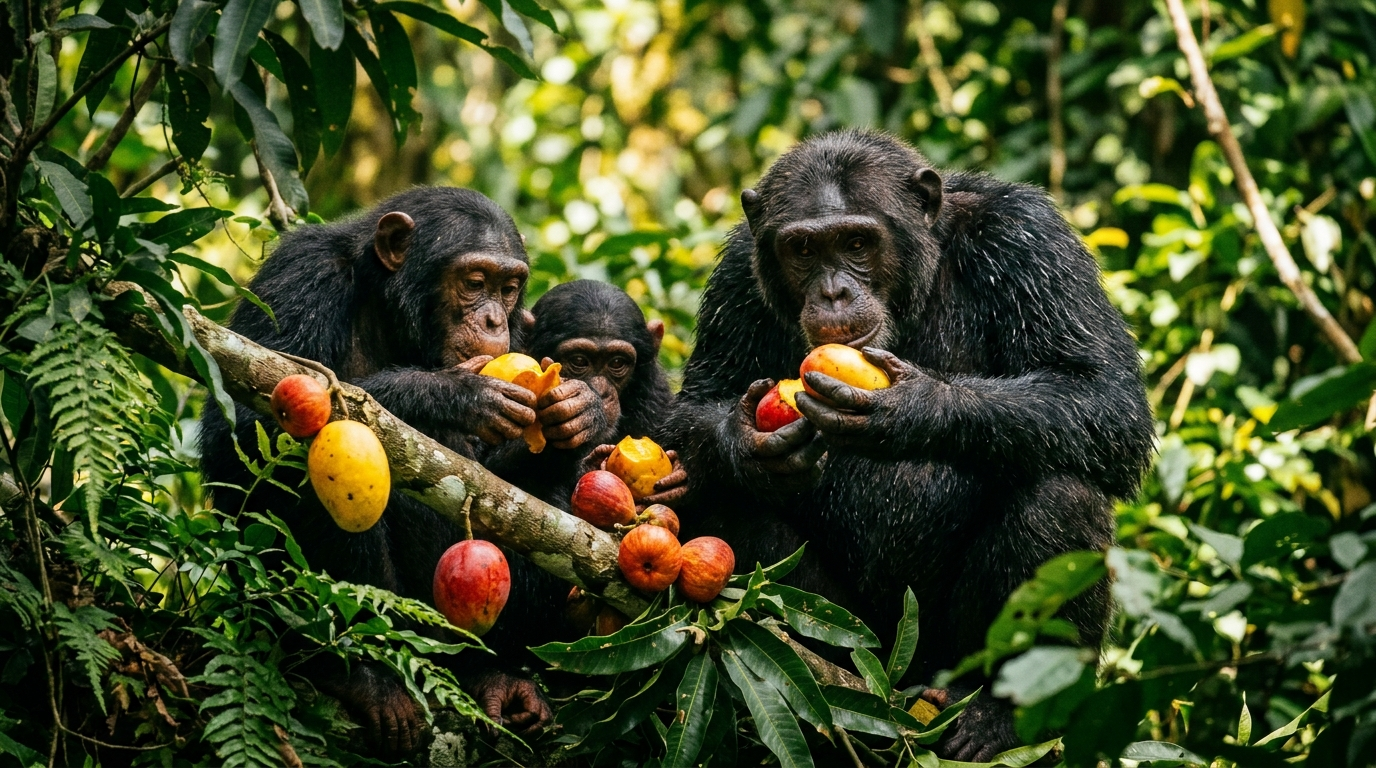
Fruit may have played a major role in the growth of primate brains, challenging simple accounts that credit meat as the main dietary driver of human evolution.
The claim does not dismiss meat’s importance. Instead, it points to fruit as a key source of energy for primate relatives and early human ancestors. This broader view may help explain how diet, movement, memory, and social behavior developed together over millions of years.
Rethinking Food and Brain Evolution
Discussions of human evolution often focus on meat, hunting, and cooking. Animal foods can provide protein, fat, and nutrients needed by the body and brain. Yet human ancestry stretches back before regular hunting and controlled fire.
“Meats were important, too. But throughout human evolution, fruits may have fueled much of the brain growth in our primate cousins and early ancestors.”
The wording presents fruit and meat as related parts of the story, rather than competing explanations. Different foods likely mattered at different times and in different habitats.
Fruit offers readily available carbohydrates, which the body can convert into glucose. The brain requires a steady energy supply. For tree-dwelling primates, ripe fruit could provide dense energy without the risks involved in hunting.
Finding Fruit Demands Mental Skills
Fruit is often spread unevenly through forests. It also ripens on changing schedules. Animals seeking it may need to remember where trees are located and when those trees produce food.
That task could favor several useful traits:
- Better memory for routes and feeding sites
- Improved vision for spotting ripe food
- Flexible movement through trees
- Social learning about where food is available
These demands may have created a link between fruit eating and brain development. Primates that tracked scattered resources could gain more calories. Better access to energy could then help support costly brain tissue.



However, diet alone cannot explain brain growth. Environmental change, social life, tool use, body size, and movement also shaped primate evolution. The evidence therefore supports a combined account, not a single cause.
Meat Still Matters
Meat may have gained greater importance as some early humans moved into new habitats and developed tools. It could supply concentrated calories and nutrients, while group hunting may have encouraged planning and cooperation.
Later, cooking likely changed the equation again. Heating food makes many items easier to chew and digest. This can increase the energy gained from both plant and animal foods.
The fruit-centered argument adds an earlier chapter to that history. Before organized hunting became common, primate ancestors were already making complex feeding decisions in forests and mixed habitats.
A Broader View of Ancestral Diets
The central lesson is that human dietary history was varied. Early ancestors did not follow one fixed menu, and foods available in one place may have been scarce elsewhere.
Future research can test the fruit hypothesis through fossil teeth, ancient environments, primate behavior, and evidence of past diets. Such work may clarify whether fruit mainly supplied brain energy, encouraged advanced behavior, or did both.
For now, the claim shifts attention from a meat-only narrative to a longer evolutionary process. Meat remained important, but fruit may have helped provide both the calories and mental challenges that shaped primate brains.