




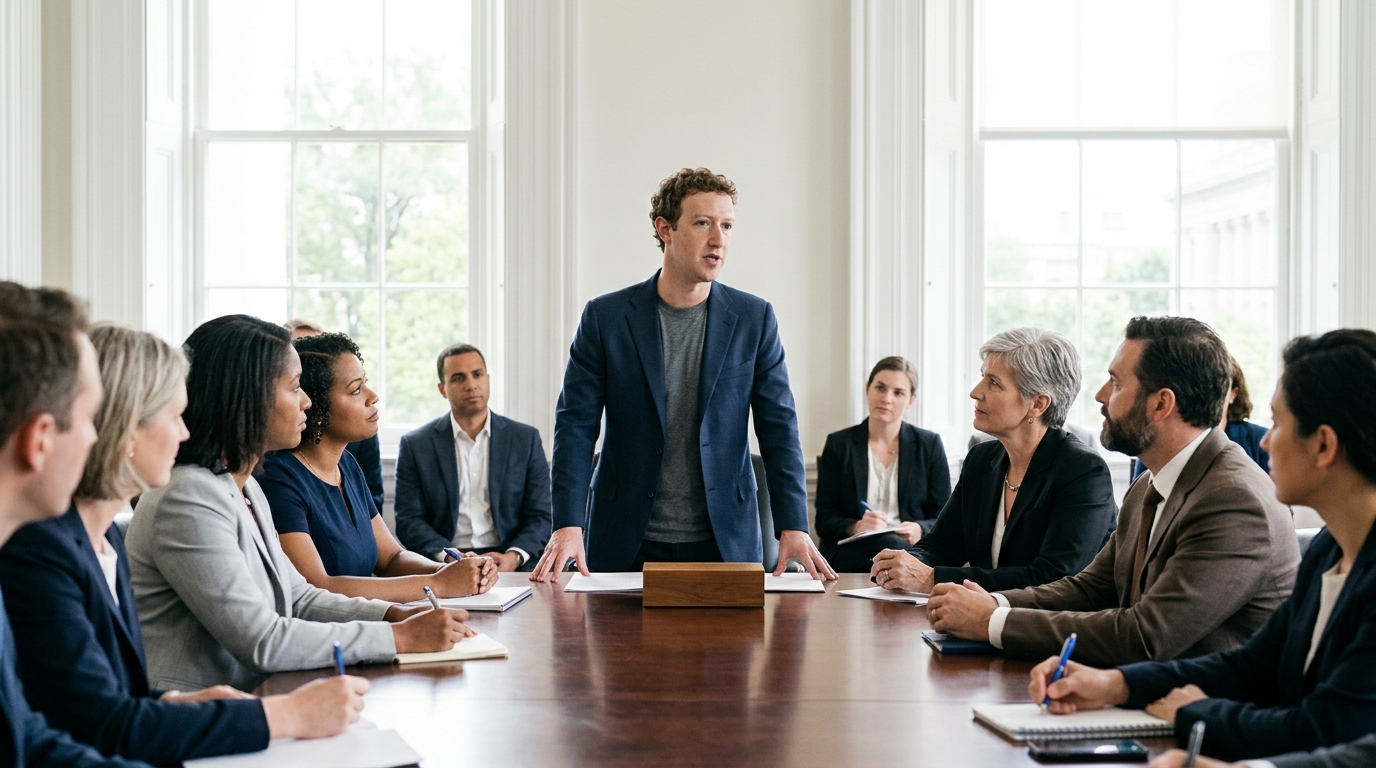
Mark Zuckerberg secured a central role in Washington’s AI debate last month, persuading major technology leaders to support a plan for managing serious safety risks.
The Meta chief executive presented the document during a White House meeting attended by CEOs from some of the world’s largest technology companies. Zuckerberg later described the gathering as “historic.”
The agreement placed industry self-regulation at the center of the discussion. It also raised a pressing policy question: Can companies developing powerful AI systems police themselves effectively?
Industry Takes the Lead
Zuckerberg sat at the center of the White House meeting as other executives signed the document he had crafted. The setting gave the proposal political weight, even though the commitment relied on voluntary action.
Self-policing usually allows companies to set or follow shared standards without immediate, binding government rules. Supporters see that approach as faster than legislation, especially when technology changes quickly.
Companies also have direct access to their systems, safety tests and internal research. That knowledge may help them identify risks before public agencies can respond.
Yet voluntary commitments can differ sharply from enforceable laws. Their value depends on clear standards, public reporting and consequences when companies fail to meet their promises.
Zuckerberg called the White House agreement “historic.”
His description reflected the scale of the participation and the urgency surrounding AI safety. It did not settle how the commitments would be monitored or whether outside reviewers would verify company claims.


Safety Questions Remain
The meeting focused on serious AI risks, but the brief public account did not identify specific safeguards or enforcement methods. Those details will shape whether the document produces measurable change.
Key questions include:
- Which AI risks will companies be required to test?
- Will independent experts review safety findings?
- How much information will companies disclose publicly?
- What happens if a company breaks its commitment?
Industry-led rules may help establish common practices before lawmakers act. However, companies also face pressure to release products quickly and protect valuable commercial information. Those incentives can conflict with broad public disclosure.
Washington Faces a Regulatory Choice
The White House meeting showed that political leaders want direct engagement with the executives building AI systems. It also suggested that government may initially depend on voluntary cooperation while officials consider formal regulation.
That approach offers speed, but it can leave gaps. Binding rules generally require legal definitions, oversight authority and penalties. Voluntary pledges can begin sooner, although participation and compliance may remain uneven.
Zuckerberg’s authorship also gives Meta influence over the early terms of the safety debate. Other technology companies may welcome shared expectations, particularly if they reduce uncertainty. Critics of self-regulation may argue that the public needs a stronger role in setting those expectations.
The meeting marked an important show of unity among powerful executives, but signatures alone will not determine its impact. The next test is implementation, including transparent reporting, outside review and evidence that safety promises affect product decisions.
Policymakers will also need to decide whether voluntary standards are a temporary measure or a lasting model. Zuckerberg may view the agreement as historic, but its legacy will depend on accountability after the White House ceremony.