



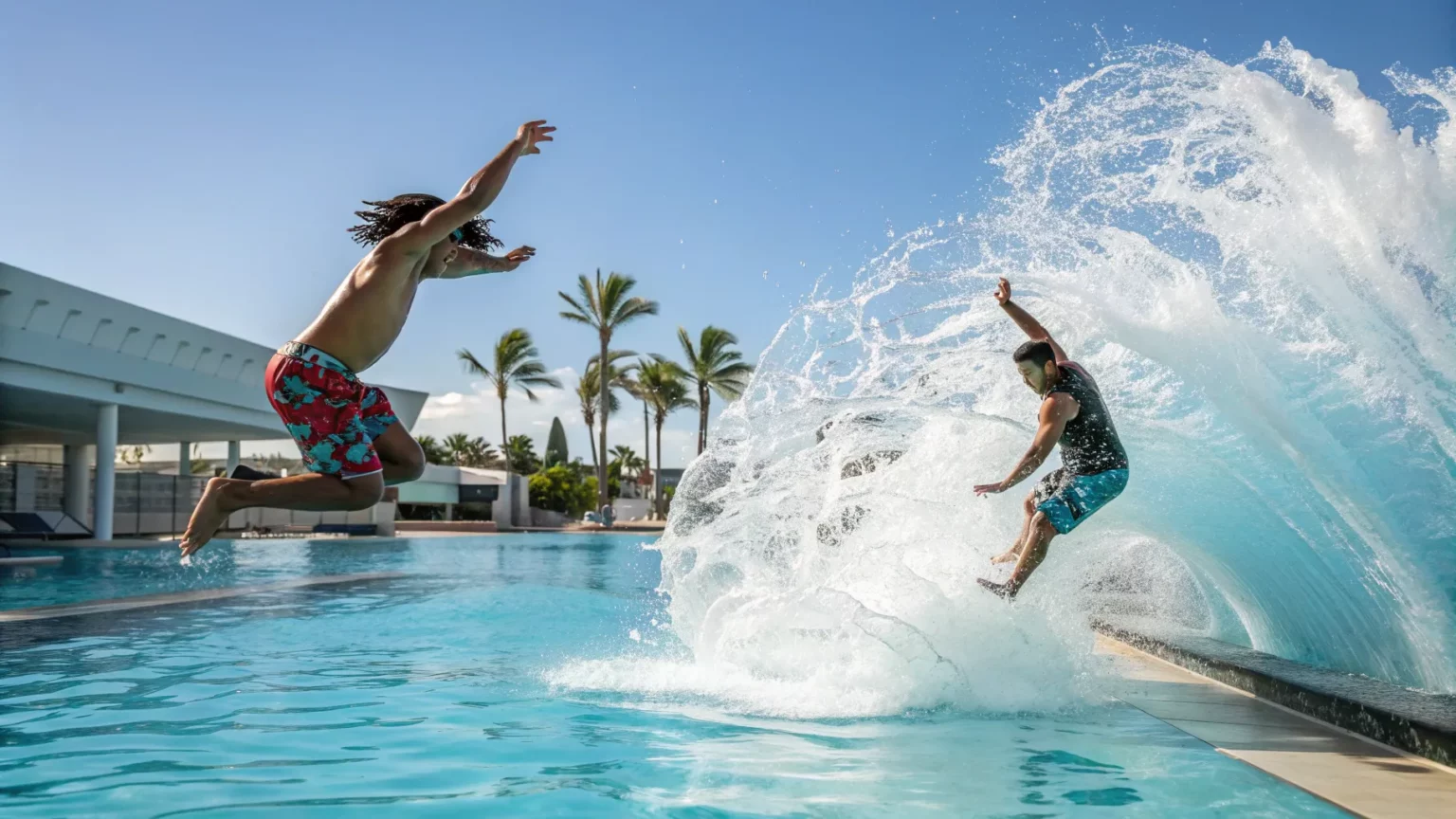
The traditional pool jumping techniques known as “manu jumps,” developed by New Zealand’s Māori and Pasifika communities, are making waves as the most effective method for creating massive water splashes, outperforming conventional diving styles like belly flops and cannonballs.
These cultural diving techniques have gained recognition for their ability to generate impressive water displacement when executed properly. The manu—which means “bird” in the Māori language—involves a specific body position and water entry technique that maximizes splash height and volume.
Cultural Origins and Technique
The manu jump originated in the island communities of New Zealand, where it has been practiced for generations among Māori and Pacific Islander populations. Unlike Western-style pool jumps that focus on body contortion or impact area, the manu emphasizes a precise entry angle and body tension to create the perfect splash.
When performing a manu, jumpers typically leap from a height with their body in a seated position, knees bent and legs tucked. As they make contact with the water, they straighten their legs forcefully while keeping their back straight, creating a powerful displacement effect that sends water shooting upward.
Rising Popularity Beyond New Zealand
What was once a localized cultural practice has begun to attract international attention, particularly through social media where videos of spectacular manu jumps have garnered millions of views. Swimming pools and water parks in New Zealand regularly host manu competitions, where participants are judged on splash height, water displacement, and technical execution.
Local swimming instructor Tama Wilson explains: “The manu is not just about making a big splash. It’s about technique, timing, and cultural connection. When done right, nothing creates a bigger water explosion.”
Science Behind the Splash
Hydrodynamics experts have taken notice of the manu’s effectiveness. The technique creates an optimal combination of downward force and water displacement that surpasses traditional jumping methods.
Key factors that make manu jumps more effective include:



- The concentrated point of impact when entering the water
- The timing of leg extension during water entry
- The vertical body alignment that channels energy efficiently
Dr. Sarah Thompson, a fluid dynamics researcher, notes: “The manu technique creates a focused energy transfer into the water column. The jumper essentially compresses a column of water downward, which then rebounds upward with tremendous force.”
Cultural Significance
For many Māori and Pasifika people, the manu represents more than just a fun water activity. It serves as a connection to cultural heritage and community traditions that have been passed down through generations.
“Learning to do a proper manu is almost a rite of passage for many young people in our communities,” says cultural educator Hemi Paki. “It’s something that brings people together at beaches and swimming holes throughout New Zealand.”
As interest in the technique grows globally, many advocates hope the recognition will come with proper attribution to its cultural origins and respect for the communities that developed it.
With summer approaching in the Northern Hemisphere, swimming enthusiasts might consider trading their belly flops and cannonballs for this more effective splash-making technique—while acknowledging its rich cultural history and the communities that perfected it over generations.