




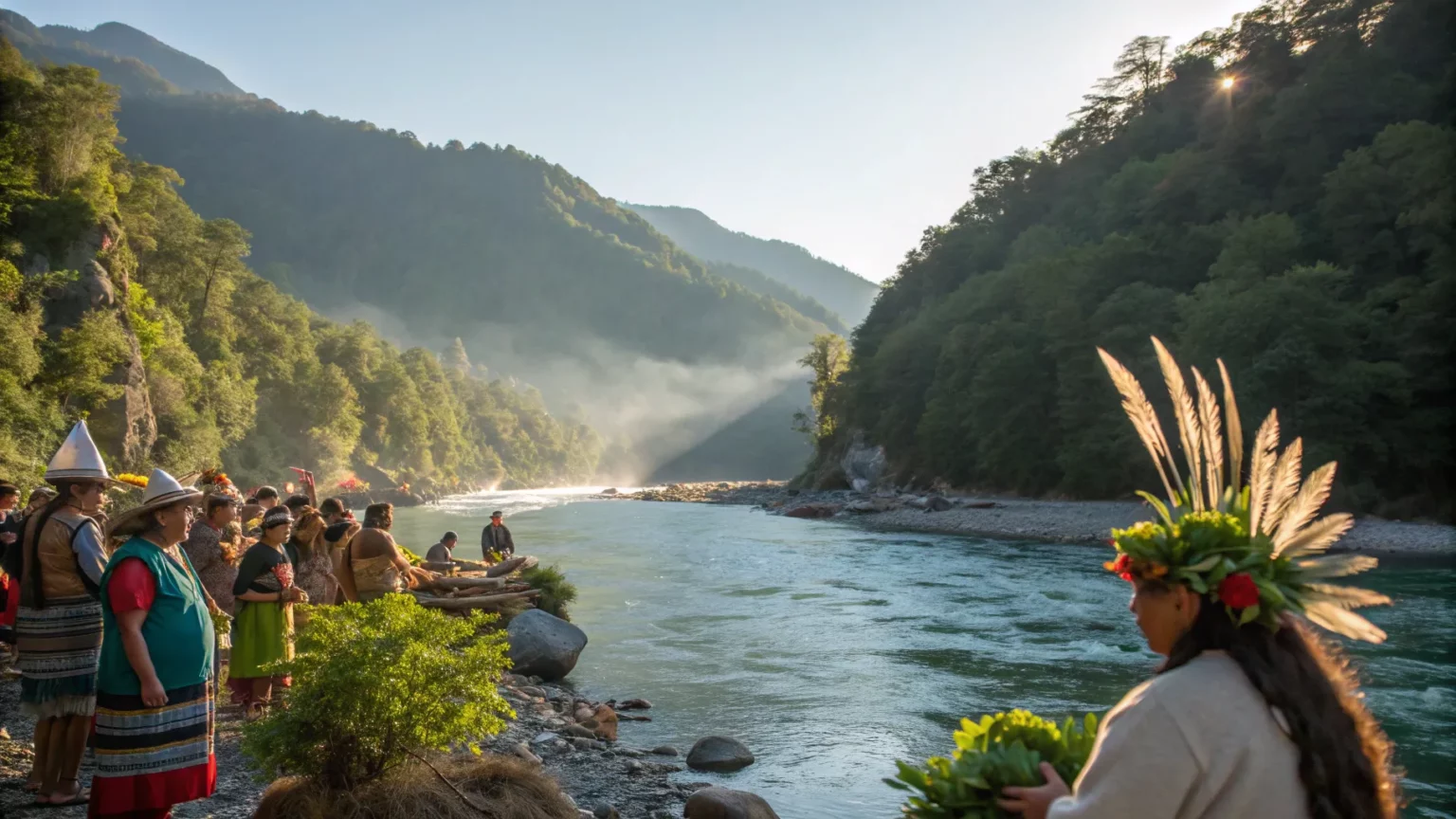
A ceremonial dip in the frigid Pilmaiquén River marked the climax of We Tripantü in southern Chile, drawing families, elders, and youth to one of the Mapuche’s most sacred sites. Held during the winter solstice in the Southern Hemisphere, the celebration stretched over days, blending prayer, song, and shared meals with a renewal rite in fast-moving waters. The return to the river signaled both cultural pride and a careful assertion of rights tied to land and water.
A Sacred Holiday In Winter
We Tripantü is the Mapuche new year and the start of a fresh cycle. It is observed in June, when the longest night gives way to slowly lengthening days. Communities gather before dawn. They cleanse in rivers or streams, then greet the rising sun, asking for health and balance in the year ahead.
Participants described the river ceremony as a promise to care for each other and the environment. The ritual is simple, but the meaning runs deep. A cold plunge is followed by warmth: firelight, drums, and shared food.
“A ceremonial dip in the frigid waters of the fast-flowing Pilmaiquen River in southern Chile was the culmination of the multiday celebration of We Tripantü.”
Heritage, Rights, and the River
The Pilmaiquén Valley carries more than scenic value for the Mapuche. It holds sites tied to ancestors, oral history, and spiritual guardians. The river’s flow is part of prayer and tradition, which makes access to its banks a matter of identity as much as ceremony.
Over recent years, debates over development and conservation have sharpened public interest in this region. Community leaders often weigh cultural survival against economic plans advanced by public and private actors. While those debates vary by project and place, the message from this celebration was steady: the river is not just water; it is a living part of community life.
Legal advances recognizing Indigenous identity in Chile have risen and stalled at different times. Yet the revival of ceremonies such as We Tripantü shows how culture persists even when policy shifts. For many Mapuche families, observance at the river is both a right and a responsibility.
Inside The Celebration
The multiday observance carries a rhythm that feels both old and new. Elders guide rituals and explain songs. Younger participants learn, record, and share on social media, bridging tradition and modern life.
- Pre-dawn prayers and songs mark the start of each day.
- River bathing symbolizes cleansing and renewal.
- Communal cooking and storytelling pass knowledge between generations.
- Drumming and dance welcome the sun after the longest night.
Attendees often describe the cold as a teacher. The shock of the water clears the mind. It focuses attention on intention and on the group standing on the shore, ready with blankets and hot drinks. The ritual connects individual will to collective care.


Why The Celebration Matters Now
Chile is reexamining how it recognizes Indigenous cultures and rights. Public debate over constitutional reforms has placed identity, language, and territory in the national spotlight. In that climate, events along the Pilmaiquén highlight a quieter current: cultural renewal through practice, not just policy.
Seasonal ceremonies also align with a wider movement to protect rivers and forests. Guardianship is not only environmental; it is cultural continuity. Keeping access to traditional sites supports community health, education, and local economies tied to crafts, food, and tourism.
Observers note that these gatherings draw more participants each year. Families travel long distances to return to ancestral places. That growth suggests a generation determined to keep rituals alive, even as daily life changes.
What To Watch Next
Future observances will likely expand, with more coordination among communities along the Pilmaiquén. There is interest in documenting oral histories and mapping cultural sites, which could inform local planning and education. Schools may incorporate lessons timed to We Tripantü, giving students a grounded way to learn language and history.
For policymakers, the message is practical. Protect the places where ceremonies occur, and cultural life thrives. For the communities, the takeaway is even simpler. Keep showing up at the river.
The We Tripantü gathering on the Pilmaiquén closed with warmth after the cold. People returned to fires and food, reflecting on the year that ended and the one beginning. The river kept running, and so did a tradition that continues to shape southern Chile’s identity.