




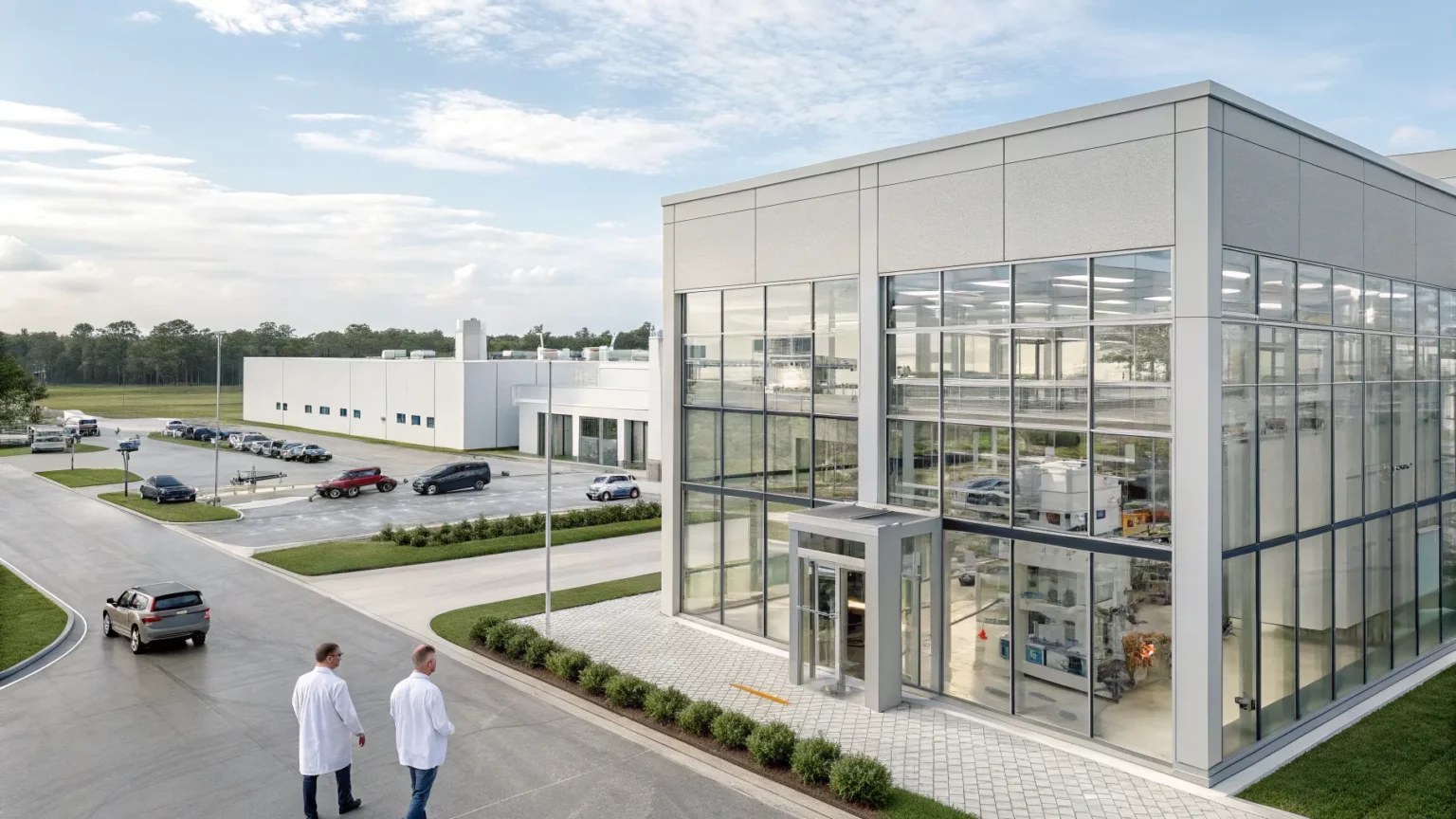
AstraZeneca is moving ahead with a new U.S. facility tied to a multi-billion-dollar push to expand research and manufacturing. The company said the site is part of a $3.5 billion investment aimed at strengthening domestic development and production. The plan points to an effort to increase supply security, speed up clinical work, and support new therapies across critical disease areas.
Why the Investment Matters
The pandemic exposed weak points in medical supply chains and made drugmakers reassess where they develop and produce medicines. U.S. leaders have pressed for more domestic capacity, and companies have adjusted by adding sites, modernizing plants, and bringing certain steps closer to patients. A large-scale investment by a global firm signals confidence in the U.S. market and its talent base.
AstraZeneca’s move aligns with a broader industry shift focused on complex biologics, next-generation cancer treatments, and advanced manufacturing techniques. These programs require specialized facilities, rigorous quality controls, and close coordination with regulators. Building or expanding U.S. sites can shorten distribution routes and reduce delays for vital products.
What the Company Says
“The facility is part of AstraZeneca’s $3.5 billion investment in U.S. research and manufacturing.”
The company’s message emphasizes scale and intent. While details about specific products or timelines were not disclosed, the focus on U.S. capacity suggests a strategy to support clinical pipelines and potential commercial launches. It also signals a plan to deepen ties with academic centers, contract partners, and regional suppliers.
Potential Benefits and Trade-Offs
New or expanded facilities can bring jobs, vendor contracts, and training programs. Local universities may see more research partnerships, internships, and grant activity. Patients could benefit from faster trial activation and better access to investigational therapies through nearby sites.
There are trade-offs. Communities often weigh traffic, construction impacts, and environmental controls. Drugmakers face pressure to manage costs, meet strict quality standards, and ensure workforce readiness for specialized roles. Policymakers will watch whether expansion supports lower shortages and steadier supply for essential medicines.
- Jobs: Skilled roles in bioprocessing, quality, engineering, and data.
- Supply: Shorter routes may reduce bottlenecks and cold-chain risks.
- Innovation: Proximity to research hubs can speed trial work.
Regulatory and Market Context
The U.S. remains the largest market for prescription medicines, but it is also highly competitive. Companies must balance investment with pricing pressure, patent cliffs, and fast-changing science. Domestic manufacturing can help during inspections and scale-ups, yet it demands large capital outlays and ongoing maintenance.
Regulators have encouraged quality upgrades and resilience planning. Expanded capacity can support surge needs for critical therapies and provide redundancy if a single site faces disruptions. The industry’s shift to more precise treatments, such as targeted oncology drugs, increases the value of flexible facilities that can pivot between small batches and new modalities.



What Comes Next
Key questions remain. How quickly will the facility come online? Which therapeutic areas will it support? How will the investment shape partnerships with hospitals, universities, and suppliers? Answers will indicate whether the $3.5 billion plan accelerates clinical timelines and strengthens supply for high-need conditions.
For communities, the near-term focus will be hiring, training, and environmental safeguards. For the company, success will hinge on quality performance, regulatory milestones, and reliable output once production starts. Competitors are making similar moves, so execution and speed will matter.
AstraZeneca’s expansion highlights a clear trend: large drugmakers are committing more resources to U.S. research and production to improve reliability and support advanced therapies. The outcome will be measured by steady supply, timely trials, and tangible benefits for patients. Watch for permitting progress, workforce announcements, and early production targets as signals of how quickly this investment translates into real-world impact.