




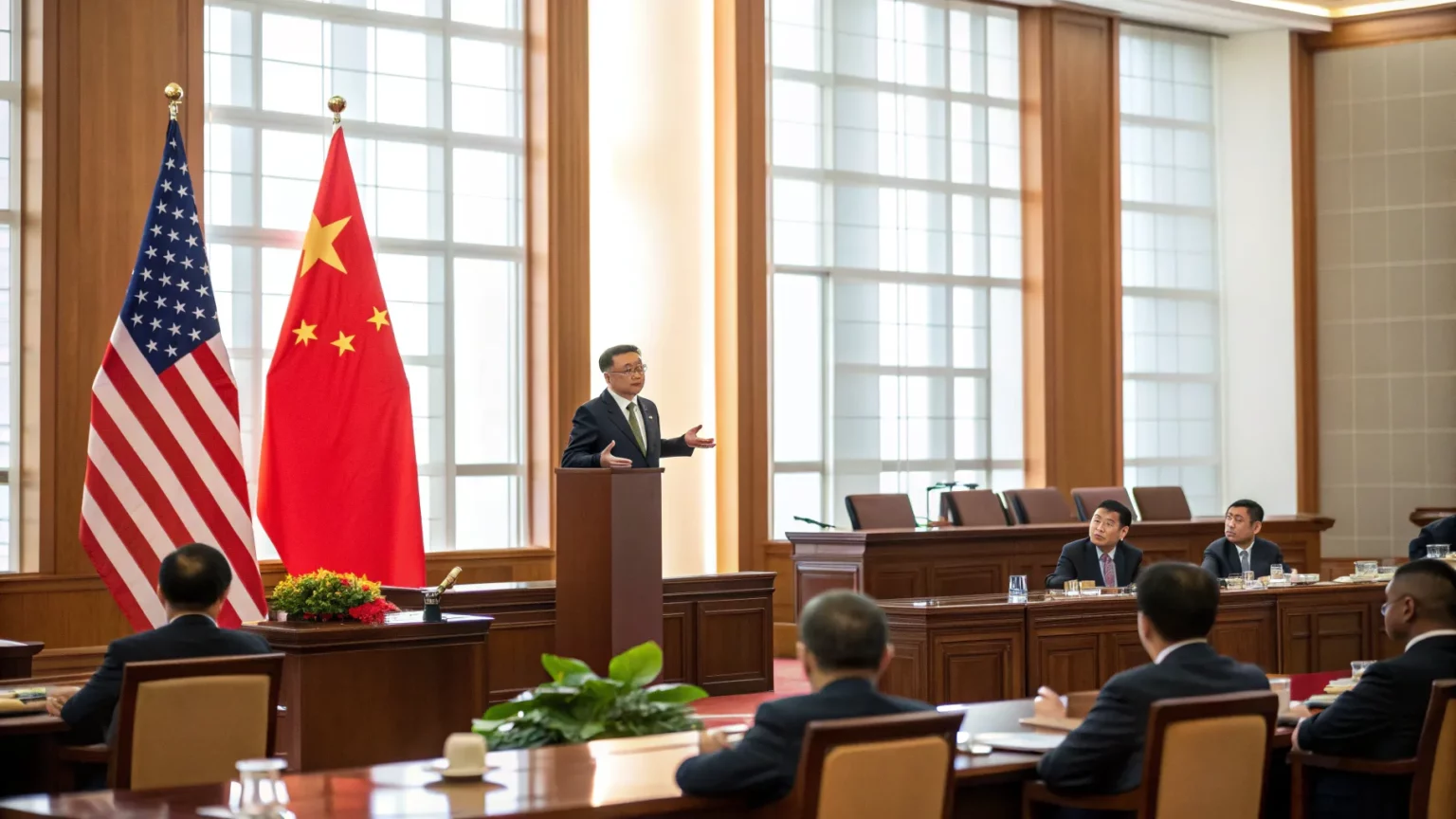
China signaled it would not yield to a threatened 100% tariff from President Donald Trump, while calling for talks to settle the dispute. The message came Sunday from Beijing, setting up a tense test of economic policy between the world’s two largest economies.
Officials urged Washington to return to negotiations and avoid a shock to trade. The statement highlights renewed friction as both sides weigh political and economic pressures at home.
Background: A Long Trade Fight
The two countries have sparred over trade since 2018, when the U.S. first imposed sweeping tariffs on Chinese goods. China responded with its own duties on American exports, including agricultural products and industrial goods.
A “phase one” deal in early 2020 paused some escalation and included Chinese commitments on purchases and intellectual property. Tensions later resurfaced over technology access, export controls, and data security. Average tariffs between the two countries remain well above pre-2018 levels, with many studies putting U.S. duties on Chinese goods at roughly 19% on average, compared with about 3% before the dispute.
A 100% tariff would mark a sharp increase. It would effectively double the cost of covered imports at the border and test the resilience of supply chains rebuilt since the pandemic.
Beijing’s Message: Stand Firm, Keep Talking
China “would not back down” in the face of a 100% tariff threat, officials said, urging the United States to “resolve differences through negotiations.”
Chinese ministries have used similar language during past flare-ups, pairing a call for dialogue with a pledge to defend core interests. The latest comments suggest Beijing is preparing countermeasures while trying to maintain a path to talks.
Policy advisers in Beijing often warn that blanket tariffs risk harming both sides by lifting costs and disrupting investment plans. At the same time, Chinese officials have been keen to show domestic audiences that they will not concede under pressure.
Economic Stakes for Both Sides
Economists say tariffs of this size would likely feed through to consumer prices, though the impact would vary by product. Retailers could face a choice between absorbing costs or passing them on.


Supply chain managers have shifted some orders to Southeast Asia and Mexico in recent years. A dramatic tariff hike could speed that trend, but many products still rely on Chinese components and tooling.
- U.S. importers may face higher landed costs and shipping delays.
- Chinese exporters could lose price-sensitive orders and margins.
- Global suppliers might see new demand but need time to scale.
Farm groups in the U.S. have been wary of retaliation, after earlier rounds saw China curb purchases of soybeans and other crops. Technology firms remain concerned about restrictions on chips and equipment, which have tightened alongside tariff actions.
Political Signals and Possible Paths
In Washington, hawkish voices argue that tough tariffs are overdue and necessary to reduce reliance on China. Business groups counter that blanket measures risk higher costs and legal uncertainty.
In Beijing, policymakers emphasize stability and export growth, even as they target higher value manufacturing. Officials are likely studying tariff exemptions, tax relief, and currency measures to cushion a shock.
Analysts outline several pathways. The two sides could open talks and seek a narrow truce that protects key sectors. They could escalate with matching duties and broader technology limits. Or they could blend tariffs with selective exemptions to reduce harm while maintaining pressure.
What History Suggests
Past rounds of tariffs showed that broad measures can shift trade flows rather than end them. Imports often reroute through third countries, while companies rework sourcing to limit duties. Inflation effects tend to be uneven, and the largest hit often falls on capital goods, intermediate inputs, and select consumer items.
Markets generally react to signals of negotiation, even if talks are difficult. Clear timelines and product lists have helped companies plan. Surprise announcements, by contrast, have caused stock swings and freight bottlenecks.
China’s latest stance points to a familiar pattern: firm rhetoric paired with an open door to talks. The U.S. has not detailed final product lists or timelines for a 100% duty, leaving room for bargaining and exemptions. Businesses should prepare for higher costs and possible delays while watching for negotiation signals. The next steps will turn on whether both capitals prioritize a deal over escalation, and whether industry pressure can shape a narrower path that limits damage to trade, prices, and investment.