




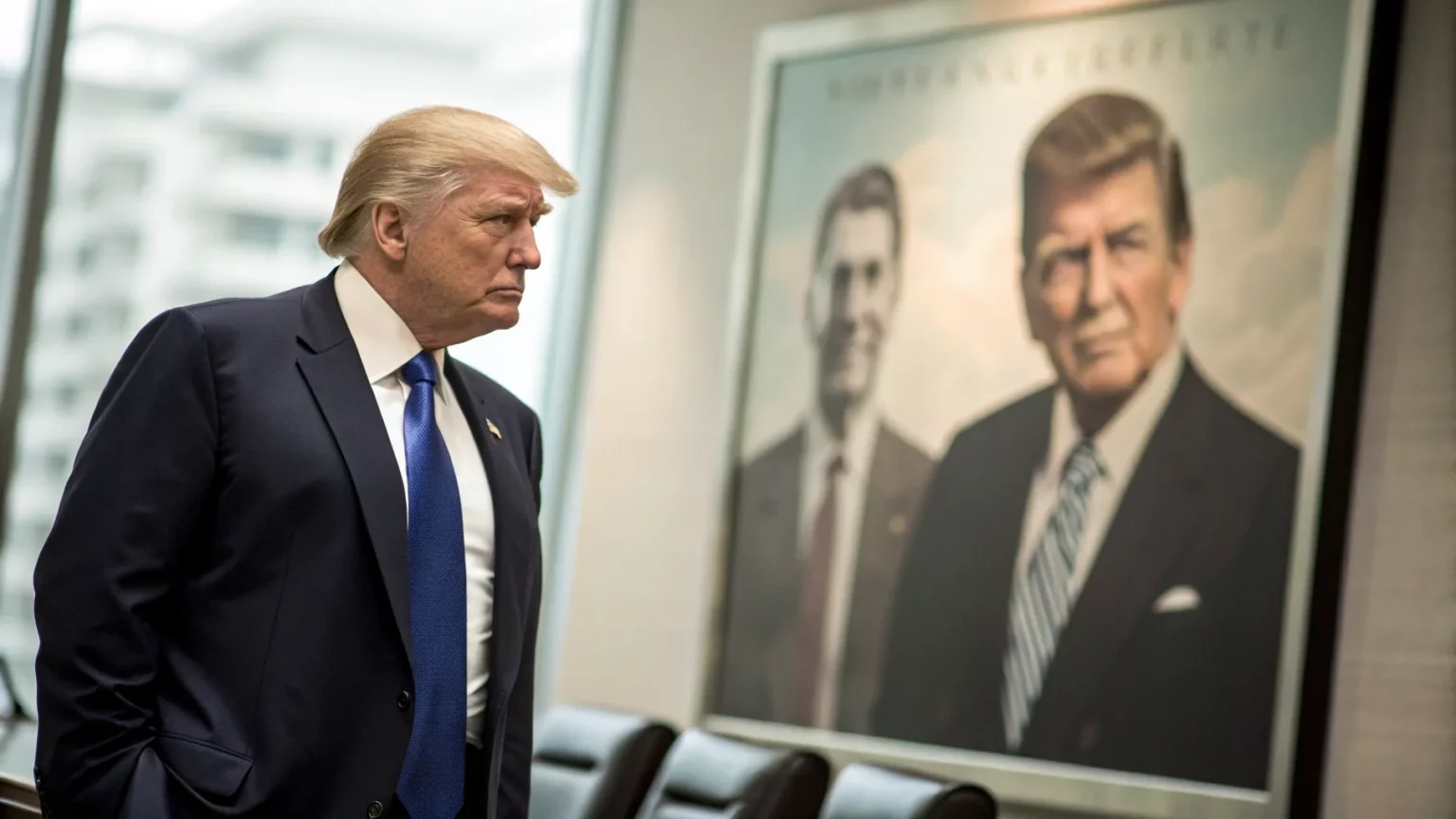
Former President Donald Trump halted talks over a planned political ad that featured Ronald Reagan criticizing tariffs, according to people familiar with the effort. The decision paused an effort to link today’s trade fights to a past Republican voice. It also reopened a long-running debate inside the party over whether tariffs help or harm the economy.
The move came as advisers weighed whether invoking Reagan’s words would sway voters who came of age under his presidency. It also highlighted the tension between a party brand built on free trade and a leader whose trade policy centers on duties and import taxes.
The Ad That Sparked a Rift
President Trump abruptly ended negotiations over an advert that used Ronald Reagan speaking negatively about tariffs.
People involved in the talks said the proposed ad used audio of Reagan warning against the costs of protectionism. The plan was simple: contrast the late president’s message with a renewed push for tariffs today. After a brief review, talks ended. No ad was released.
The choice reflects Trump’s bet that his base sees tariffs as leverage, not a liability. It also shows concern about letting a revered party figure frame the issue in less favorable terms.
A Party Split On Trade
For decades, Republican leaders promoted free markets and lower barriers. Business groups backed that line, arguing it helped keep prices down and markets open to American goods.
Trump broke from that approach. His administration imposed tariffs on steel and aluminum and levied duties on hundreds of billions of dollars in Chinese imports. He argued that foreign competitors used unfair practices and that tariffs were a tool to force change.
Supporters say the policy protected factories, especially in the industrial Midwest. They point to new investments in steel and attempts to reduce reliance on China for key goods. Critics say tariffs acted as a tax on consumers and companies, raising costs and inviting retaliation against U.S. farmers and exporters.
Why Reagan Still Matters
Reagan remains a touchstone for Republican messaging. Campaigns still invoke his speeches to reach older voters and signal party continuity. He often spoke about free trade as an engine for growth, even as his administration sometimes negotiated limits on imports in targeted sectors.



That history offers both sides material. Backers of open markets cite Reagan’s warnings that protectionism can slow growth. Tariff advocates note that past leaders also intervened when industries faced sudden shocks.
The Stakes For Tariff Policy
Tariffs filter through the economy in uneven ways. They can help a protected industry while raising input costs elsewhere. The net effect depends on how trading partners respond and how long measures last.
- Manufacturers may benefit if foreign rivals face higher costs to sell in the U.S.
- Importers can see higher prices on parts and materials, which may pass to consumers.
- Farmers risk export losses if other countries target American crops in response.
Businesses now set plans assuming trade tensions can rise quickly. Some firms have shifted supply chains or built inventory to hedge against sudden duties. Others say uncertainty adds expense that can slow hiring and investment.
Political Calculus And Messaging
Choosing not to air the ad avoided drawing a sharp contrast with Reagan on a core economic issue. It also spared a public fight over which Republican legacy should guide policy now. Campaign aides often weigh whether nostalgia helps or muddies the case they want to make to voters focused on prices and jobs.
The episode suggests advisers see limited benefit in revisiting old fault lines. Instead, the message may center on negotiation strength, reshoring, and pressure on China, themes that poll well with core supporters.
Democrats will likely paint tariffs as a hidden tax and highlight cost-of-living concerns. Republicans are split, with some lawmakers urging targeted pressure and others backing broader duties as a bargaining tool.
Trump’s decision to stop the ad talks keeps the spotlight on present policy rather than party history. It signals confidence in defending tariffs on their own terms, without Reagan as a foil. The trade debate will continue, but the next phase will be set by current prices, supply chains, and geopolitics—not a 40-year-old speech.