




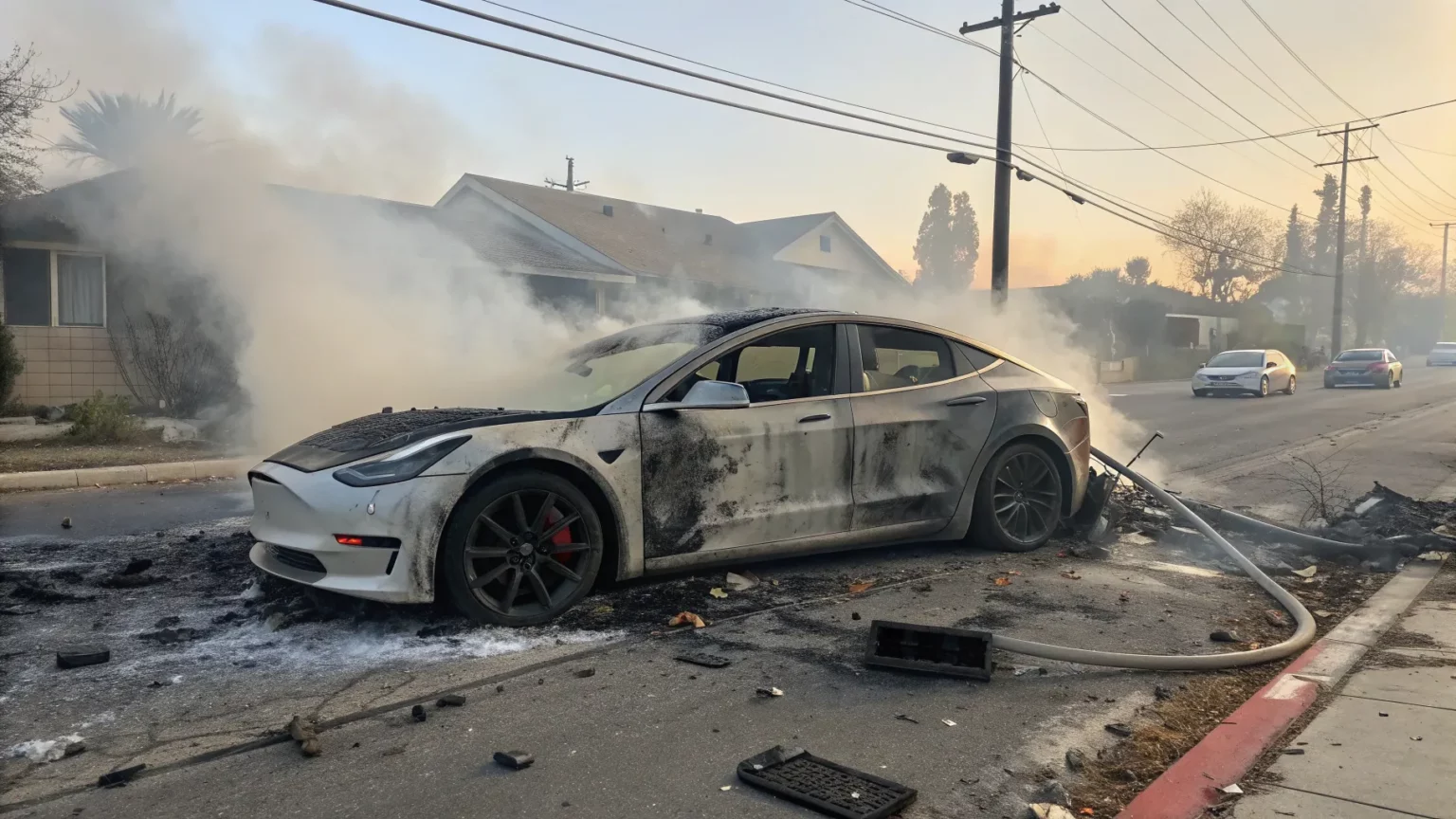
A wrongful-death lawsuit filed in federal court claims a Tesla Model 3 suddenly accelerated, struck a utility pole, and erupted in flames, killing a woman and seriously injuring her husband. The filing argues the car’s design caused the surge in speed and that its exterior door handles hindered rescue attempts by people on the scene.
The case centers on alleged defects in acceleration controls and the flush door handle design, which the plaintiffs say prevented rapid access as the fire spread. The complaint adds to a years-long debate over safety in electric vehicles and the responsibilities of automakers to anticipate rescue and escape needs during crashes.
Allegations of Sudden Acceleration
The plaintiffs argue the car took off without driver input and failed to slow before the impact. Their lawyers say this was not pedal error, but a design problem in the vehicle’s control systems. The filing highlights a chain of events that they claim began with an unintended surge and ended with a fire that trapped the occupants.
“Design flaws caused a Tesla Model 3 to suddenly accelerate out of control before it crashed into a utility pole and burst into flames,” the lawsuit alleges.
Unintended acceleration claims have surfaced before. In 2020, U.S. safety officials reviewed a petition covering hundreds of reports of unexpected acceleration across Tesla models. In early 2021, the National Highway Traffic Safety Administration (NHTSA) said it found no evidence of a defect and concluded the incidents were consistent with pedal misapplication. Tesla has echoed that view, saying vehicle logs typically show drivers pressing the accelerator.
The new lawsuit challenges that narrative, asserting the data will show a system failure, not driver error. It calls for a jury to weigh the evidence and award damages for the death and injuries.
Door Handles and Emergency Access
Beyond the acceleration claim, the suit argues the Model 3’s exterior door handles made a dangerous situation worse. The handles sit flush with the door and require a specific press and pull motion to open. According to the complaint, bystanders could not quickly operate the handles as smoke and flames rose.
This critique is not new. Tesla’s door designs have faced scrutiny in earlier crashes involving the Model S, where auto-presenting handles were alleged to fail during emergencies. Safety advocates have urged clearer labeling and more obvious mechanical overrides for first responders and the public.
Tesla provides guidance for emergency responders and points to an interior mechanical release. But in high-impact collisions, smoke, heat, and disorientation can make both time and visibility scarce. The lawsuit argues that quick, intuitive access from outside the vehicle is essential when seconds matter.

What Investigators and Courts Will Look For
Key questions now focus on data from the vehicle’s systems. Event logs typically record pedal inputs, speed, and crash dynamics. Those records could support either the plaintiffs’ design-defect theory or Tesla’s longstanding position that driver input caused the acceleration.
- Whether event data shows accelerator application without driver intent.
- How the powertrain control software responds to conflicting signals.
- If fire origin and spread were affected by crash damage to the battery pack.
- Whether door design delayed rescue attempts.
Battery fires in electric vehicles are rare relative to the size of the fleet, but they can burn hot and reignite. Fire departments have updated training for EV incidents, and NHTSA and the National Transportation Safety Board have previously urged clearer guidance on access points and cut loops for responders.
Broader Safety Debate for EVs
The case lands as EV sales continue to grow and regulators weigh new rules on driver-assistance systems, crashworthiness, and egress. Consumer groups have asked automakers to adopt more visible, standardized external releases for doors and trunks, similar to requirements for internal trunk releases in gasoline cars.
If the plaintiffs prevail, automakers could face pressure to change exterior hardware and software safeguards designed to limit unintended acceleration. Even a settlement could drive updates to owner manuals, labels, and first-responder guides.
Tesla did not immediately respond to a request for comment on the suit. In past statements, the company has said its vehicles meet or exceed federal safety standards and that its data refutes claims of unintended acceleration.
The lawsuit sets up a test of design decisions that balance sleek styling, software control, and real-world emergency needs. The court will sift through logs, expert testimony, and physical evidence to determine whether a defect caused the crash and whether the door handles impeded rescue. Whatever the outcome, the case is likely to fuel calls for clearer external access points on EVs and greater transparency on vehicle data after severe crashes. Regulators, automakers, and safety advocates will be watching for findings that could shape future design and rescue protocols.