




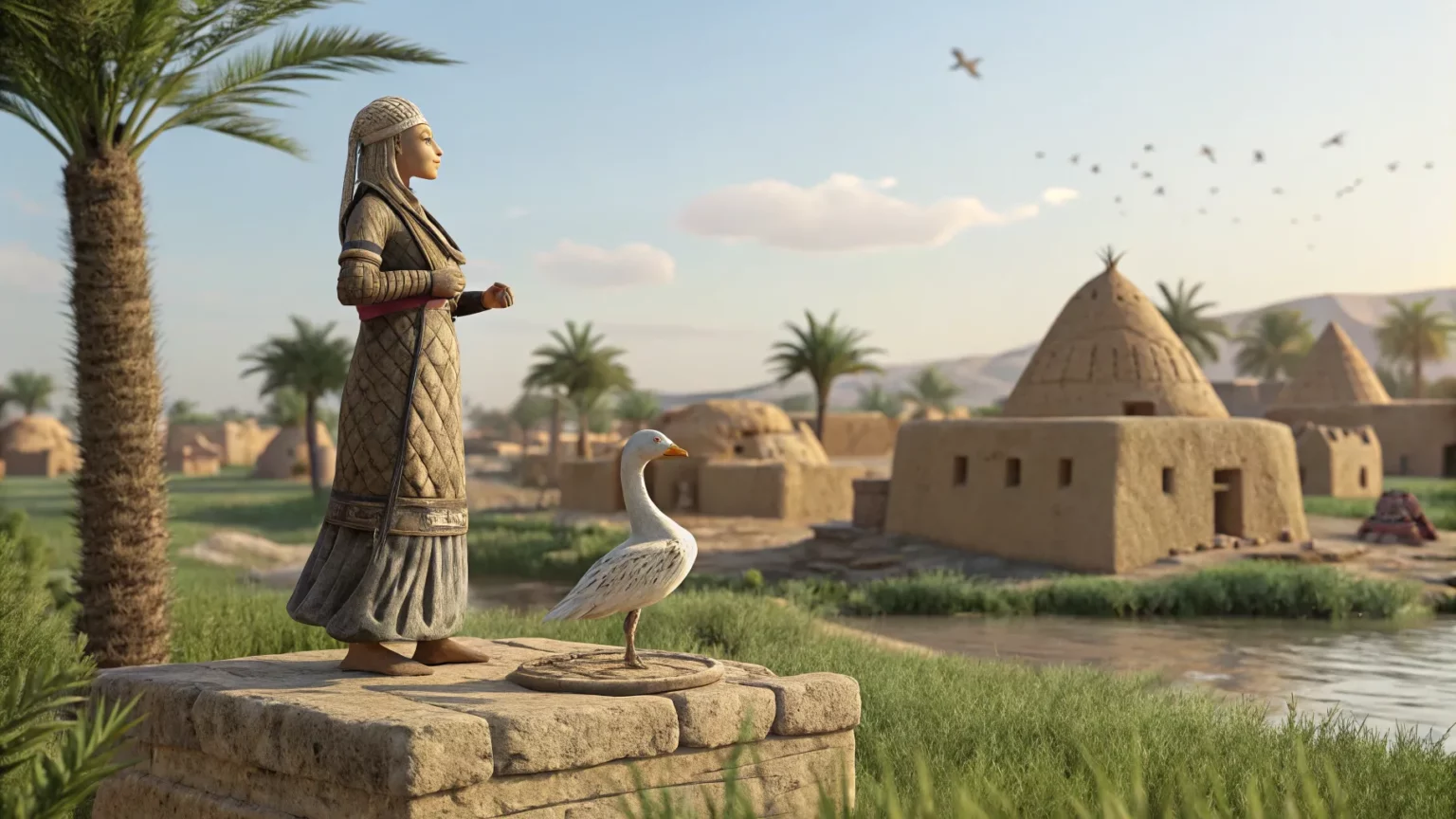
A newly analyzed figurine pairing a goose and a woman points to a turning point in how early Middle Eastern villagers expressed faith and ritual. Researchers say the crafted piece, dating to the era when settled farming communities took root, suggests a move from simple icons to more layered symbolism. The discovery adds fresh insight into who made it, what it meant, and why art and belief were changing in early village life.
Background: Early Villagers and Sacred Art
Across the Middle East, the shift from foraging to farming reshaped daily life. New villages formed, food stores grew, and social ties deepened. Archaeologists have long linked this shift to changes in ritual. Simple animal carvings and human figurines gave way to more complex scenes. These works hint at shared stories, seasonal rites, and ideas about life, death, and renewal.
The figurine at the center of the new analysis blends two figures—a goose and a woman—into a single composition. While many early sites have yielded separate animal or human figures, combined motifs are rarer. The pairing implies art was starting to carry layered meanings, tying nature, gender, and daily survival to spiritual practice.
What the Figurine Suggests
“A carefully crafted figure of a goose and a woman suggests that art reflecting spiritual beliefs entered a new phase among early villagers in the Middle East.”
Researchers point to the workmanship and design as clues. A goose signals water, migration, and the return of seasons. A woman often signifies fertility, kinship, and care. Together, they could signal a link between cycles of nature and human renewal.
Experts say such symbolism fits with early village needs. Farming communities watched seasons closely. They tracked water sources and animal patterns. Combining those themes in one image would make sense for rituals tied to planting, harvest, or healing.
Multiple Views From the Field
Some archaeologists see the figurine as evidence of shared ritual stories. To them, the pairing reflects a belief system spreading across villages through trade or marriage ties. Others are cautious. They suggest the piece could be a household shrine, a charm, or a teaching tool rather than a marker of sweeping change.
A third group offers a practical reading. They argue that a goose could stand for a local clan or a seasonal event, with the woman representing ancestry or authority. Under this view, the figurine is both sacred and social, used in rites that reinforced village order.
Reading the Craft and Materials
Details in the carving matter. Tool marks, surface polish, and wear can show how often it was handled and by whom. If traces of pigment are present, color choices may point to water, earth, or life. If the piece came from a storage pit, hearth, or burial, that context helps decode its role.


- Animal-human pairing suggests layered meaning.
- Wear patterns can reveal repeated ritual use.
- Findspot and nearby items help define function.
Comparisons with other figurines in the region may show shared styles. Similar proportions or motifs can connect villages and sketch routes of exchange. Differences in clay, stone, or size can mark local taste and technique.
Why This Matters Now
The figurine offers a window into how early villagers balanced work and worship. It shows that belief was not only personal but linked to land, animals, and seasons. It also suggests that art began to carry stories that helped communities manage risk and change.
For historians, this kind of object helps date when complex symbolism took hold. For archaeologists, it points to new questions about who made such pieces, how they were taught to carve, and how designs spread from place to place.
What Comes Next
Further study could examine the figurine’s residues for pigments or oils. Microscopic scans may reveal hidden carving steps. Soil samples from the findspot might tie the object to a specific room or ritual zone. Cross-site comparisons could test whether this pairing appears elsewhere.
Taken together, these steps can show whether the piece marks a local tradition or a wider shift in belief. Either outcome will sharpen the picture of early village life and how art helped people make sense of their world.
The goose-and-woman figurine stands as a clear sign that spiritual art in early Middle Eastern villages grew more complex. It links nature and humanity in a single scene and hints at shared stories carried through time. Watch for more analyses that place this object alongside others from the same era. They may reveal how ideas moved, how rituals formed, and how early farmers used art to bind community to season and soil.