




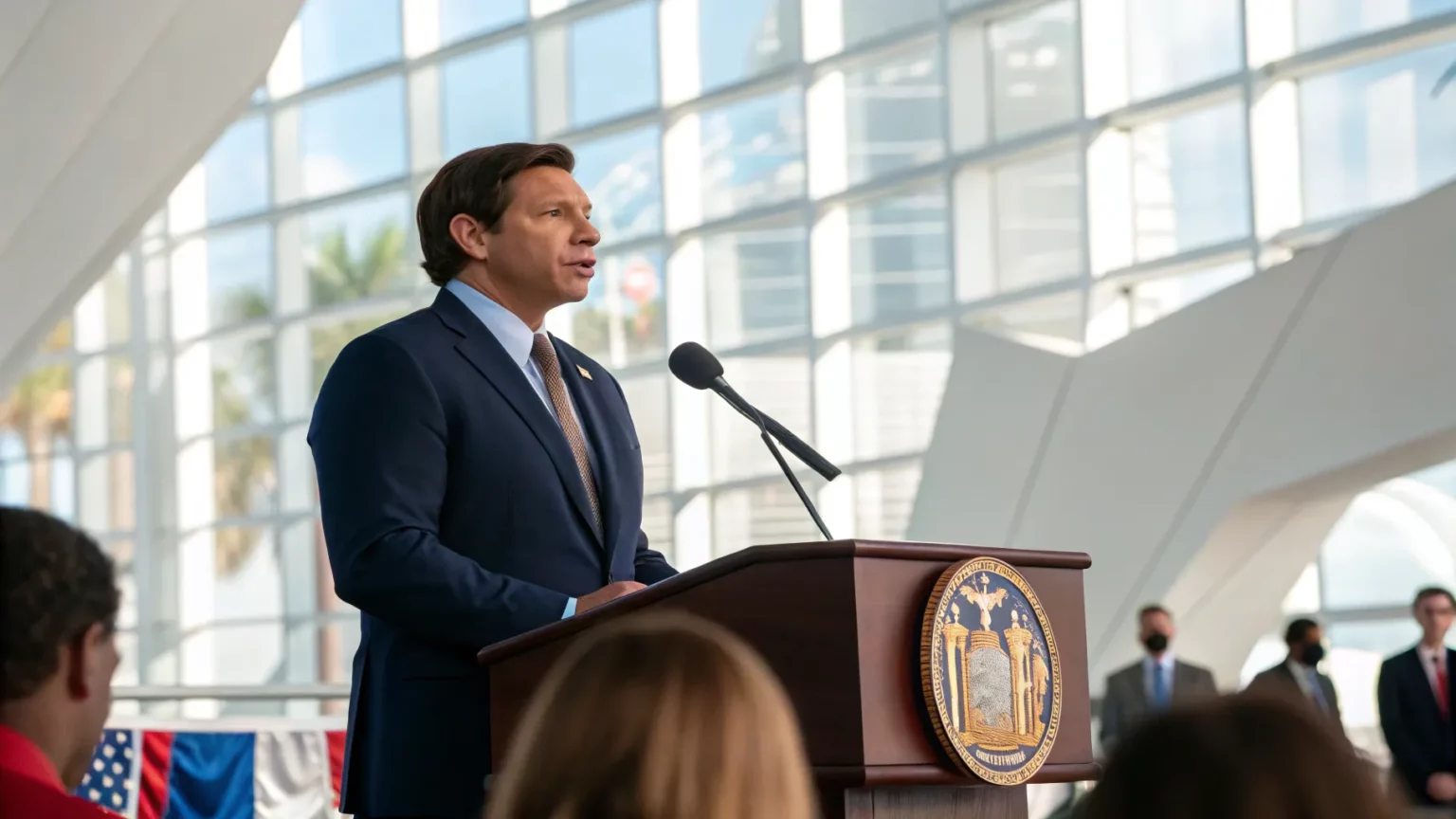
Florida Governor Ron DeSantis said the state can regulate artificial intelligence even as the White House pursues a national standard. His comments set up a fresh test of state power against federal direction on a fast-moving technology.
In recent remarks, DeSantis argued that Florida retains authority to set rules for AI within its borders. He made the statement after President Donald Trump issued an executive order seeking a unified national framework.
“Florida can regulate artificial intelligence despite President Donald Trump’s executive order to create a national AI standard,” DeSantis said.
The dispute raises questions about who sets the rules for AI in areas like consumer protection, elections, and public services. It also signals inevitable legal and policy fights as states act while federal policy takes shape.
State Power Meets Federal Direction
American federalism often allows states to move first on new issues. States have long regulated privacy, advertising, and unfair business practices. Many of those laws could reach AI systems used in housing, credit, and health care.
At the same time, a national AI standard aims to give companies consistent rules. The White House order seeks to avoid a patchwork that raises costs and confusion for firms operating across states.
Legal experts say the key question is preemption. If federal rules conflict with state laws, federal law can prevail. But the reach of an executive order can be limited without new legislation from Congress. That leaves room for states to act in areas not directly covered.
What Florida Could Regulate
DeSantis did not detail a bill or timeline. But state action could target issues already drawing bipartisan attention.
- Political deepfakes and election integrity
- Consumer protection and deceptive AI marketing
- Use of AI in schools and public records
- Law enforcement adoption and auditing
Several states have explored rules on AI-generated political ads. Others have tightened disclosure and consent rules for AI that mimics a person’s voice or image. Florida could follow those paths, citing public trust and safety.



Industry and Civil Liberties Concerns
Technology firms favor one clear standard. They warn that conflicting state rules will slow product launches and raise legal risk. Companies also worry about compliance with different disclosure or testing rules in each state.
Civil liberties groups take a different view. They argue states can respond faster to harms, such as surveillance or discrimination. They also push for stronger limits on government use of AI, including facial recognition and predictive tools.
Consumer advocates want clear disclosures when users interact with AI systems. They also seek rights to contest automated decisions that affect jobs, credit, or housing. Those protections often begin at the state level.
What the Executive Order Means
The executive order seeks national guidance and a framework that agencies and companies can follow. It signals that the federal government wants oversight across sectors rather than a scattershot approach.
But an order alone does not replace state law. Courts may have to decide where state rules stand if they overlap with federal directives. The result could be a series of cases that define the boundary between federal guidance and state police powers.
What Comes Next
Florida lawmakers may now test how far a state can go without clashing with Washington. If Florida moves ahead, other governors could follow, creating momentum for state-level action. That could push Congress to write national legislation to settle the issue.
Businesses will watch for rulemaking on deepfakes, audits, and transparency. Cities and school districts may seek clarity on AI procurement and data retention. Voters will see more activity around political content and synthetic media as the election cycle heats up.
DeSantis put the question plainly. The answer will depend on the wording of future state bills, the scope of federal action, and how courts read the conflict. For now, companies should prepare for dual tracks: a federal push for uniform rules and state measures that test the edges. The next year will show whether the two can be aligned without a legal showdown.