




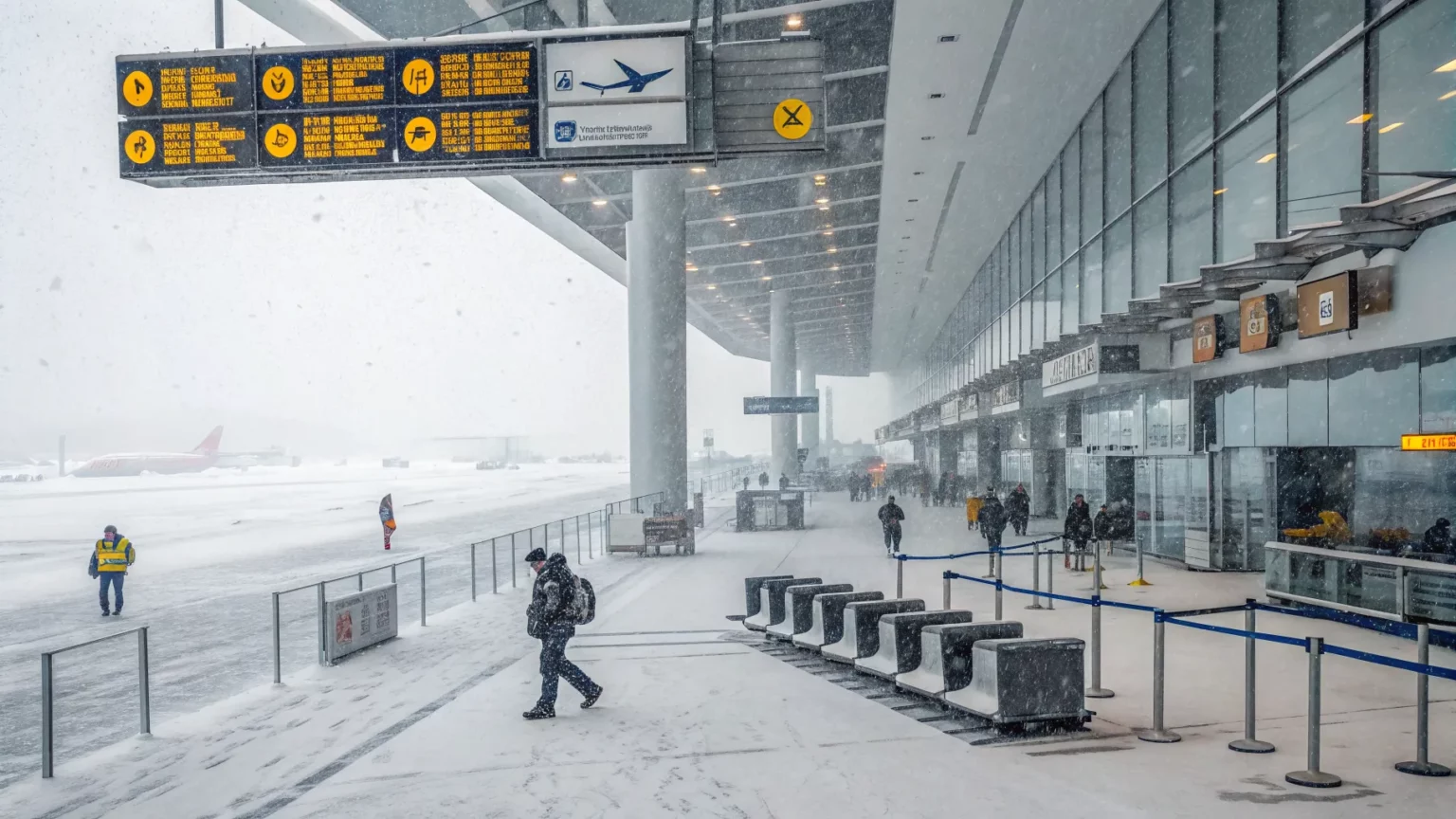
A powerful winter storm is sweeping across the Northeast, forcing airlines to cancel more than 8,800 flights and delay thousands more as heavy snow targets major travel hubs. The storm, expected to drop 1 to more than 2 feet of snow in some areas, is disrupting air travel across the country and threatening road conditions from Pennsylvania to New England.
A Northeast blizzard has forced airlines to cancel more than 8,800 flights and delay thousands more as parts of the region brace for 1 to more than 2 feet of snow.
The cancellations began early as carriers moved planes and crews out of the storm’s path. Airports serving New York City, Boston, and Philadelphia warned travelers to check flight status and plan for longer lines and limited ground transportation. The storm’s timing, overlapping with weekday commutes, raises concern for safety and recovery.
Storm Forecast and Travel Impact
Forecasters expect intense snowfall bands, strong winds, and periods of near-zero visibility. Whiteout conditions are likely for stretches of the I-95 corridor and inland hill towns. Heavy snow rates could exceed plow capacity during the peak of the storm, slowing airport and highway clearing efforts.
Airlines typically cancel flights ahead of such events to reduce stranded aircraft and cascading delays. With crews out of position and deicing times extended, schedules can take days to recover even after skies clear.
- Expect rolling delays as airports reopen runways and taxiways.
- Regional flights are often hit hardest due to shorter aircraft range and crew limits.
- Long-haul flights may face diversions and equipment swaps.
Airlines and Airport Response
Carriers are likely issuing travel waivers that allow customers to rebook without change fees. Many airlines also cap fares in affected markets to support stranded travelers. Gate agents and call centers face high demand as passengers seek new itineraries.
Airports prepare for such storms by staging deicing trucks, coordinating runway plowing, and protecting critical systems from ice. Even with full staffing, strong winds can force ground stops and limit arrivals. Ramp safety rules restrict work during peak gusts, further slowing operations.
Public transit agencies and state transportation departments often run reduced schedules during intense snowfall. Riders should expect detours and slower service, especially on bus routes and above-ground rail lines.
Passenger Options and Safety
Travel experts advise checking flight status before leaving home and using airline apps for rebooking. For essential trips, arriving early can help secure standby seats. Packing snacks, medications, and charging cables reduces stress during long waits.



Driving during blizzard conditions can be dangerous. Officials often urge people to stay off the roads during the heaviest snow to keep lanes clear for plows and emergency vehicles. If travel is unavoidable, drivers should keep fuel tanks at least half full and carry a winter kit.
- Confirm hotel availability near the airport before a late-night arrival.
- If rebooking, look for flights early in the day when recovery operations start.
- Consider alternative airports if ground travel is safe and practical.
Economic and Operational Ripple Effects
Large-scale cancellations affect more than passengers. Cargo shipments, mail, and perishable goods face delays. Airport vendors and service workers often see fewer shifts during severe weather. Businesses reliant on just-in-time deliveries may need temporary workarounds.
Airlines balance safety with cost as they reset networks. Returning aircraft to their normal routes can take several days. Crew duty-time limits and maintenance checks add further steps before full schedules return.
What to Watch Next
The biggest questions now are the storm’s exact track and the duration of heavy snow bands over key airports. If winds ease quickly and temperatures rise enough for efficient deicing, operations can ramp up sooner. If additional snow squalls linger, delays may extend into the week.
Travelers should monitor airline alerts and local weather updates. Patience will be important as crews clear runways, inspect equipment, and move planes and staff back into position. Communities across the Northeast will be digging out, and the air system will follow as the storm moves offshore.
As the cleanup begins, the focus shifts to restoring reliable schedules and protecting safety on the ground and in the air. The scale of cancellations signals a tough recovery, but a steady weather window could help airlines catch up and get travelers moving again.