




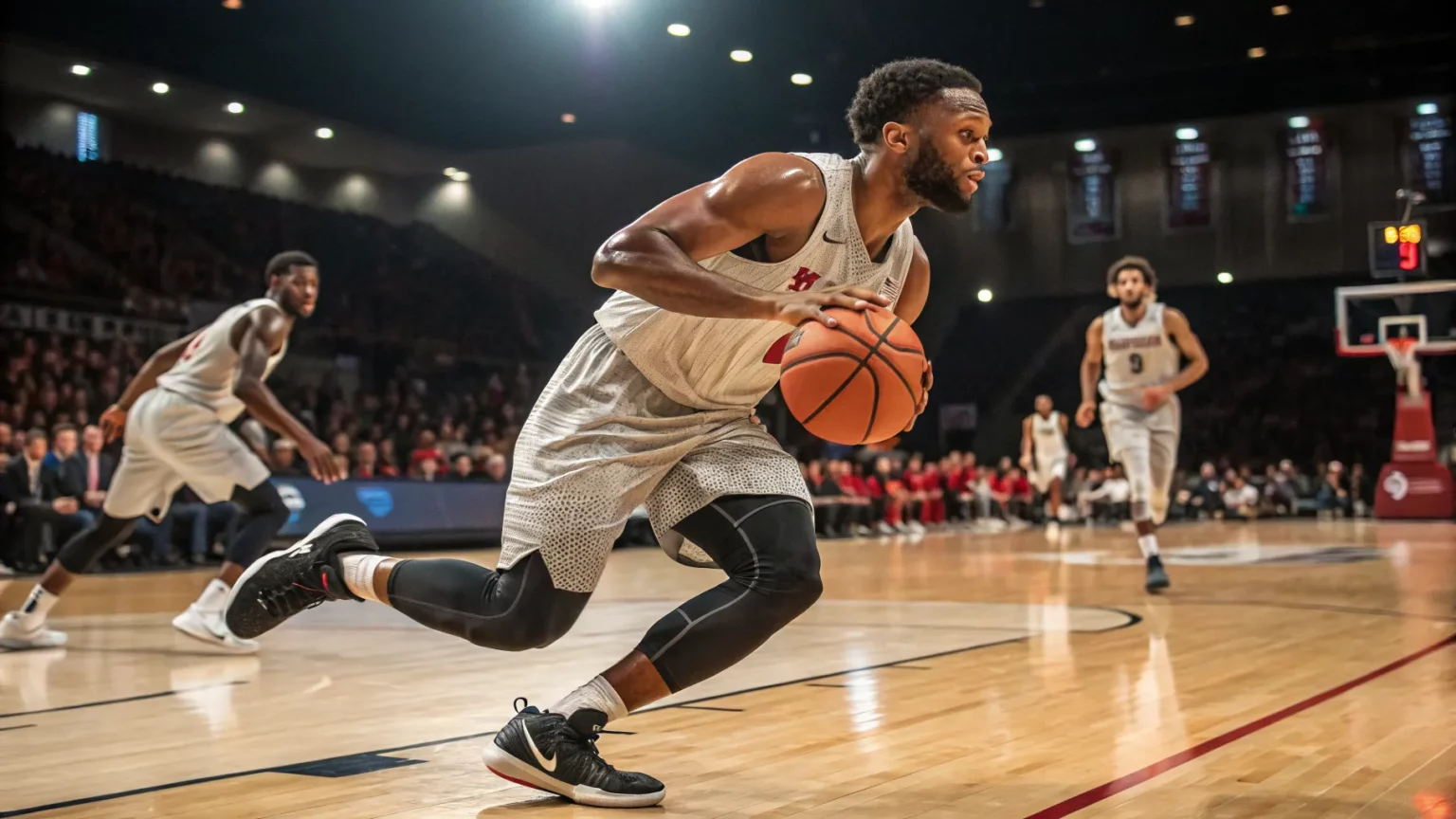
A blistering second-half surge from Terrence Hill Jr. flipped a game on its head, turning a deficit into momentum with a shooting display that left little doubt about who owned the night. Hill finished with 34 points, burying threes at a scorching clip and carrying his team when the game tightened late.
The standout guard did most of his damage after the break, when the stakes rose and every possession felt heavier. His accuracy from deep broke open defensive schemes and gave his teammates breathing room. In a tight contest, this was a timely reminder of how one player’s heater can change everything.
The Night in One Line
Terrence Hill Jr. powered the comeback with 34 points including 23 after halftime while shooting 7 of 10 from 3.
Why This Performance Mattered
Games like this often pivot on rhythm and shot selection. Hill found both in the second half. His 23 points after halftime point to more than stamina. They show high basketball IQ, patience, and a read of defensive gaps that kept widening as the threes fell.
Three-point volume and accuracy have never been more decisive. When a shooter hovers near 70 percent from deep over meaningful attempts, defenses pay a tax. Help defenders cheat wider. Driving lanes open. Rebounds tip long. That chain reaction fuels runs and, as it did here, comebacks.
Second-Half Surge, Explained
Hill’s night tracks with a common pattern in big moments: feel out the coverage early, punish it late. Early touches set the stage, but the barrage after halftime reset the game’s math. Catch-and-shoot looks, a couple of side-step threes, and the confidence to keep pulling built a scoring engine the defense couldn’t cool.
His shot profile also suggested strong off-ball movement and quick decision-making. Defenders rarely recover in time when shooters fire within the rhythm of a possession. That timeliness—rather than sheer volume—often decides the game within the game.
The Math From Deep
A 7-of-10 line from the arc creates an efficiency shock. It multiplies every possession. Even if the defense traded twos for threes for a stretch, the gap would widen with each make. Post-halftime, that pressure can feel like quicksand for the opponent.
- Total points: 34
- After halftime: 23
- Three-pointers: 7-of-10
Those numbers tell a simple story: Hill’s perimeter shooting turned a rally into a sprint. It also hints at composure. Late-game threes carry weight; they can freeze a crowd and speed up an opponent’s shot clock in their head.



What Coaches and Scouts See
Coaches see decision-making under pressure. Choosing when to hunt a three instead of forcing a drive speaks to trust in the system—and in the hot hand. Scouts watch the footwork, balance, and consistency from spot to spot. Seven makes suggest repeatable mechanics, not luck.
They also see leadership. Scoring big is one thing. Doing it as the defense keys on you is another. Hill’s second-half tally indicates he welcomed that attention and turned it into points instead of turnovers or rushed mid-range attempts.
Ripple Effects for the Team
Every heater has a supporting cast. Spacing improves, cutters eat, and secondary ballhandlers face softer contests. If Hill keeps this trajectory, opponents will shade earlier and extend farther, which means easier touches at the rim for bigs and baseline shooters licking their chops in the corners.
There’s a tactical wrinkle here as well. Expect future coverage to send top-locks on off-ball actions and more aggressive closeouts. If Hill reads those and drives or finds the next pass, the efficiency train keeps rolling even on quieter shooting nights.
What Comes Next
Consistency will be the buzzword. Defenses adjust, and the next challenge is meeting that pressure with counters: relocation threes, quick slips to punish overplays, and early-clock looks before help arrives. If Hill strings together similar performances, it shifts scouting reports and, with them, game plans.
For now, the headline writes itself. A 34-point night, capped by a thunderous second half and elite accuracy from long range, turned a tense game into a statement. The takeaway is simple: when the threes drop like that, the scoreboard listens.