




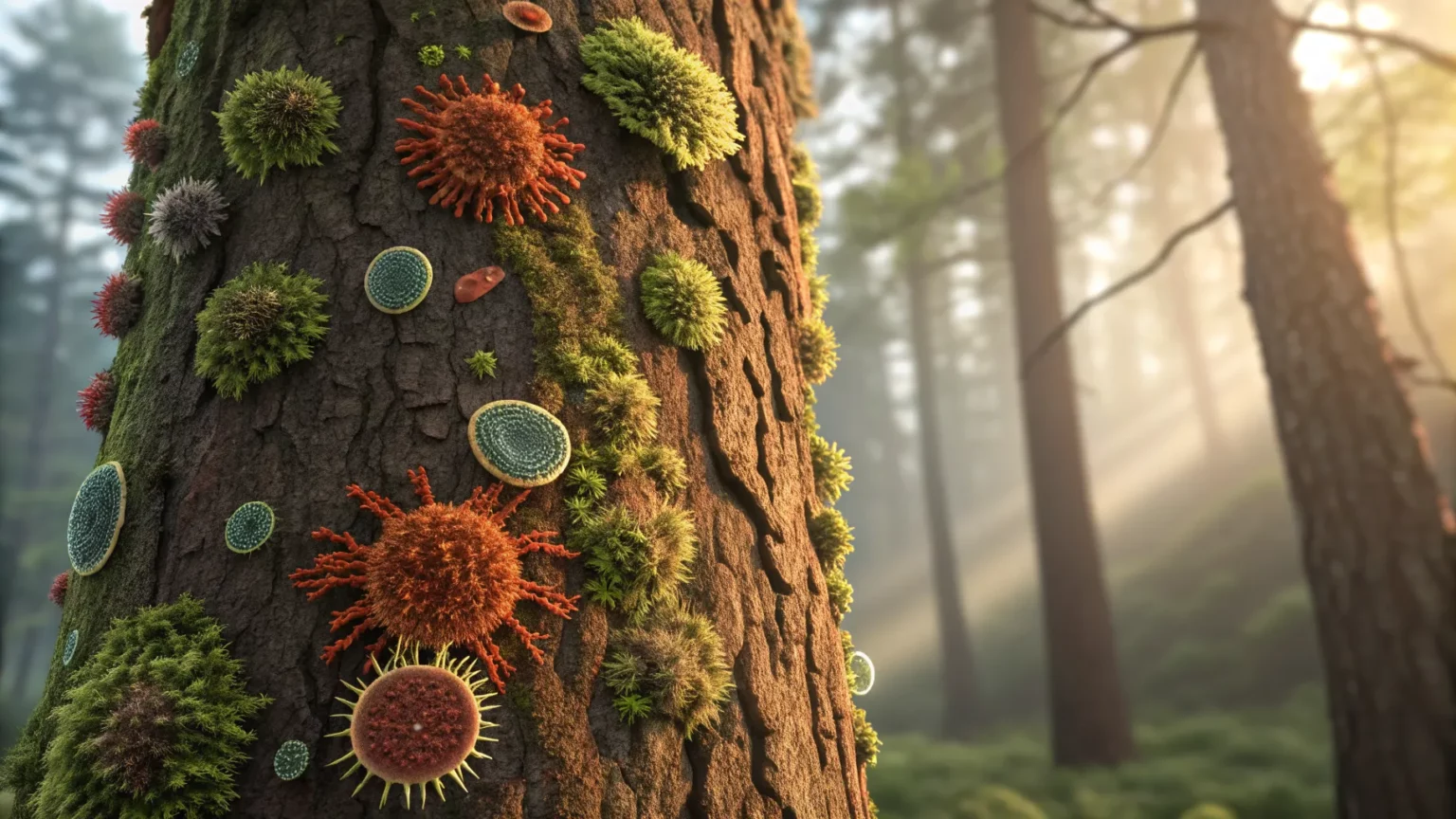
A vast, overlooked world on tree bark may be helping slow climate change. Microbes living on trunks appear to eat methane and other gases that heat the planet, hinting at a quiet climate service hiding in forests and city streets.
Researchers say these microbes thrive on gases rising from soil or seeping from tree stems. The discovery, highlighted in new field observations released this week, suggests forests do more than store carbon in wood and leaves. They may also scrub some warming gases from the air, right at the bark surface.
Background: Why Methane Matters
Methane is the second most important greenhouse gas after carbon dioxide. Over 20 years, it traps far more heat than CO2. Since 2007, global methane levels have climbed to record highs.
Major sources include oil and gas operations, livestock, and wetlands. Scientists have also shown that some trees, especially in wet areas, can release methane through their stems. That makes the new bark finding striking: the same tree that can leak gas may also host organisms that remove it.
- Methane accounts for about 30% of current global warming.
- Its atmospheric concentration is roughly 1.9 parts per million and rising.
- Methanotrophs are microbes that consume methane as an energy source.
What Scientists Are Seeing on Bark
Field teams sampling bark from different climates have found communities of microbes, including methanotrophs, that feed on trace gases. They appear most active on rough, moist bark. Urban trees also host them, hinting at a wide reach.
Hidden in plain sight, this huge community of tree-bark microbes dines on gases — such as methane — that warm Earth’s atmosphere.
Researchers describe a patchwork effect. A tree’s bark texture, moisture, and sunlight can change where microbes thrive. Mosses and lichens can shelter them and may boost methane uptake.
How Big Could the Effect Be?
The scale is still uncertain. Early estimates suggest bark microbes could remove a small share of local methane, especially near wetlands or where soil gas seeps up the trunk. In dry forests, the effect may drop.
Several factors shape the intake rate:



- Tree species and bark roughness
- Moisture after rain or dew
- Temperature and season
- Presence of mosses and lichens
- Background methane levels
Some trees can emit methane from their stems, while their bark microbes consume it at the surface. Whether the net balance is a sink or a source likely varies by site and season.
Implications for Forests and Cities
If confirmed at scale, the bark effect could change how climate models count forest benefits. Most models focus on carbon stored in wood and soils. Gas-eating microbes would add a separate, surface-level sink.
Land managers are watching for low-cost ways to boost natural sinks. Leaving moss and lichens on trunks, reducing bark damage, and planting species with rough bark in wetter zones could help. Urban foresters may also see gains. Road corridors and parks often have higher methane from leaks or traffic-adjacent soils, creating more food for these microbes.
Caution From the Lab and the Field
Scientists urge restraint until more data arrives. Lab tests can show strong methane removal, but outdoor conditions change fast. Heat waves, drought, and air pollution can stress bark communities. Trees under disease or invasive pests may also lose microbial partners.
Experts also warn that bark microbes cannot offset major methane sources. Cutting leaks in oil and gas systems and reducing waste emissions remain the fastest fixes. Forest microbes may help, but they are one part of a larger effort.
What Comes Next
Research teams are mapping bark microbiomes across regions and seasons. They are testing which species do the most work and how much methane they remove each year. Portable sensors on trunks and canopy towers could soon give clearer numbers.
If the effect proves steady, cities and conservation groups might tailor plantings to areas with higher methane exposure. That would turn ordinary bark into small, distributed filters at scale.
The early message is simple. Forests and street trees may clean more than the eye can see. As studies refine the numbers, policy makers will know whether bark-dwelling microbes deserve a place in climate plans. For now, the finding adds to the case for keeping trees healthy, protecting their living skins, and tracking one more quiet service they provide.