



A premium office used to be easy to spot. It had polished finishes, good lighting, strong coffee, and a view that made long meetings feel a little less painful. That picture has changed. In a hybrid work era, the most valuable part of a workplace is often the part people cannot see. It is the feeling that a person can sit down, think clearly, hear a call, and leave at the end of the day less drained.
For this piece, workplace design research and acoustics reporting were reviewed to better understand why sound has become such a defining part of office quality. In today’s workplaces, people are spending more time together in person again, but they still expect spaces that support focus, comfort, and everyday well-being. That shift is pushing office design beyond looks alone and toward environments that work better for the way people actually work.
Why Noise Has Become a Business Problem
Noise at work is not a small annoyance. It shapes how people feel, how well they focus, and whether the office feels worth the commute.
As companies rethink layout and employee experience, sound absorbing furniture is becoming part of the answer. It helps reduce distraction without making an office feel boxed in, which is a big reason acoustic comfort is starting to define what a premium workspace feels like.
Leesman’s workplace data shows that noise levels matter to 70 percent of employees, yet only 35 percent say they are satisfied with them. The same research found a 46-point gap in perceived productivity between people who were satisfied with workplace noise and those who were not. There was also a 45-point gap in whether employees felt the workplace had a positive effect on their overall well-being. That is a major signal for any company trying to improve employee experience without losing performance.
This helps explain a growing tension in office design. Companies want energy, teamwork, and chance encounters. Employees want those things too, but not at the cost of concentration. The office has to do both.
Hybrid work has raised the bar. People know what focused work feels like at home. Many are no longer willing to trade that away just to sit in a beautiful room that sounds like a cafe. JLL has reported that 58 percent of employees still see home as better for focused work, and more than a quarter cite office noise and the inability to focus as a reason to work from home. In other words, noise is no longer just a facilities issue. It is tied to attendance, satisfaction, and retention.
A quiet office does not mean a silent one. It means a controlled one. People can collaborate without broadcasting every detail. They can take calls without hunting for a private corner. They can think without constant interruption. That kind of environment feels calm, and calm now reads as high-end.


The New Premium Feature Is Acoustic Comfort
Design language is changing. Instead of treating acoustics as a hidden technical layer, more workplaces are building sound control into the everyday experience of the office.
That shift matters. Traditional approaches, like ceiling panels or wall treatments, still have a role, but they are no longer the full story. Employers want solutions that work without making a space look clinical or closed off. They want performance that blends into the room.
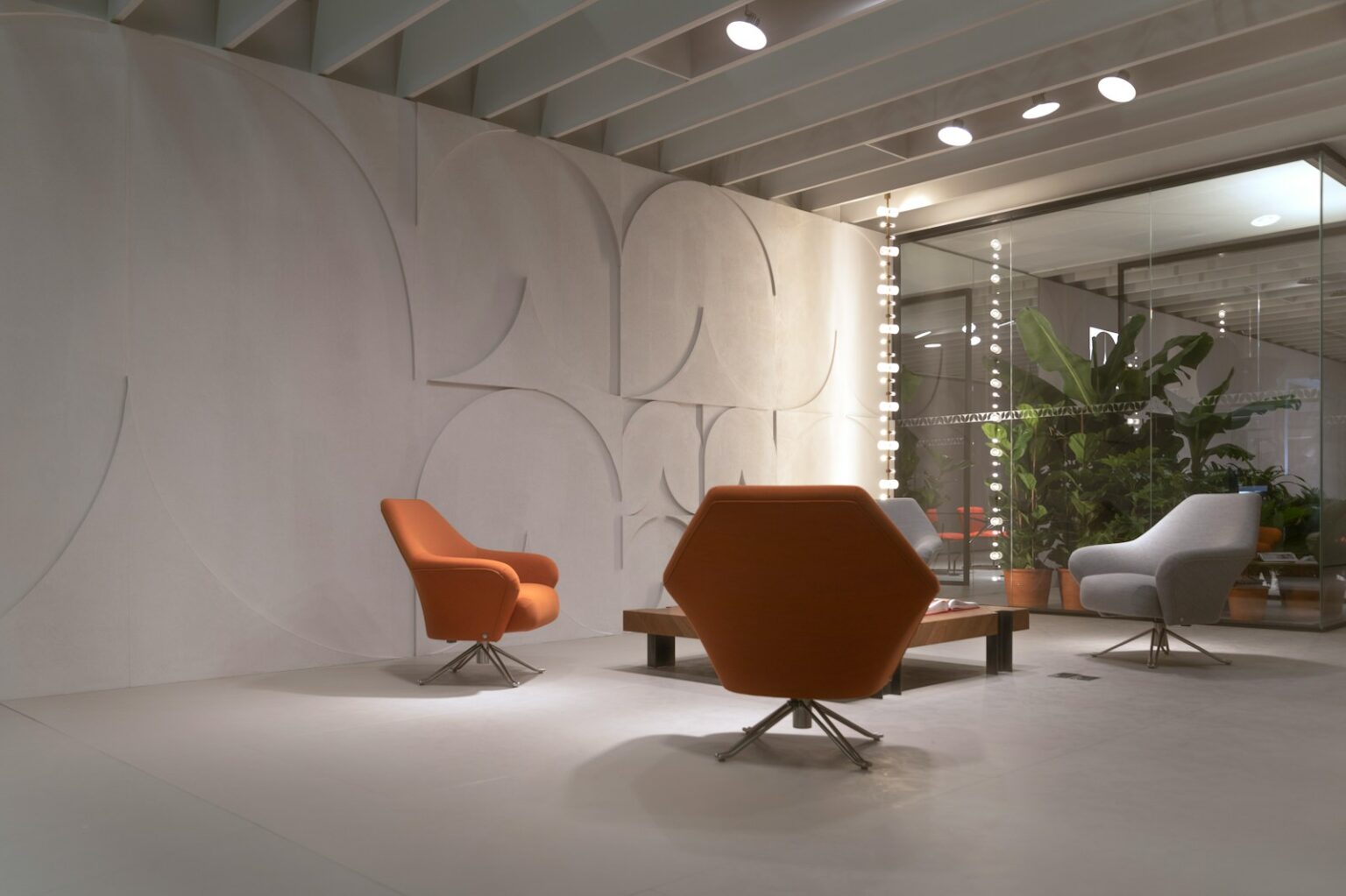
A bench, lounge piece, or workstation divider can now do more than fill space. It can shape how sound moves through the room, lower distraction, and create a sense of privacy that people feel right away, even when they cannot explain why the space feels better.
That subtlety is part of the appeal. Premium design today is less about showing off and more about removing friction. The smartest workplaces do not announce every feature. They simply work better. Acoustic comfort follows that same rule. When a room sounds right, meetings feel less tiring, phone calls feel more private, and focused work becomes easier to protect.
What Better Sound Says About a Workplace
Office design has always sent a message. It tells employees what kind of work is valued and what kind of experience the company wants to create.
An office that ignores acoustics suggests presence matters more than comfort. One that manages sound well suggests people are expected to do their best work, and the environment should support them.
That is why acoustic solutions for offices are part of a broader conversation about hospitality, wellness, and brand. A premium workspace is not just attractive in photos. It feels supportive in real life. It gives people choices, creates quiet zones without feeling rigid, and supports privacy without shutting down connection.
There is also a cultural effect. When employees do not have to fight the room all day, they tend to be more patient, focused, and less fatigued. The office feels calmer, even when it is active. That balance is one reason acoustic design now stands out as a marker of quality.
The Offices People Remember Feel Better, Not Just Look Better
The best workplaces are no longer defined by looks alone. They stand out by helping people focus, feel at ease, and work with less friction. In a time when work can happen almost anywhere, the office has to offer more than a desk. It has to feel good to be in.
That is why a quiet office now feels like a luxury. Not empty or cut off, but thoughtfully designed so people can hear what matters and tune out what does not. That may be the clearest sign of premium design today.
Photo by Jean-Philippe Delberghe: Unsplash