




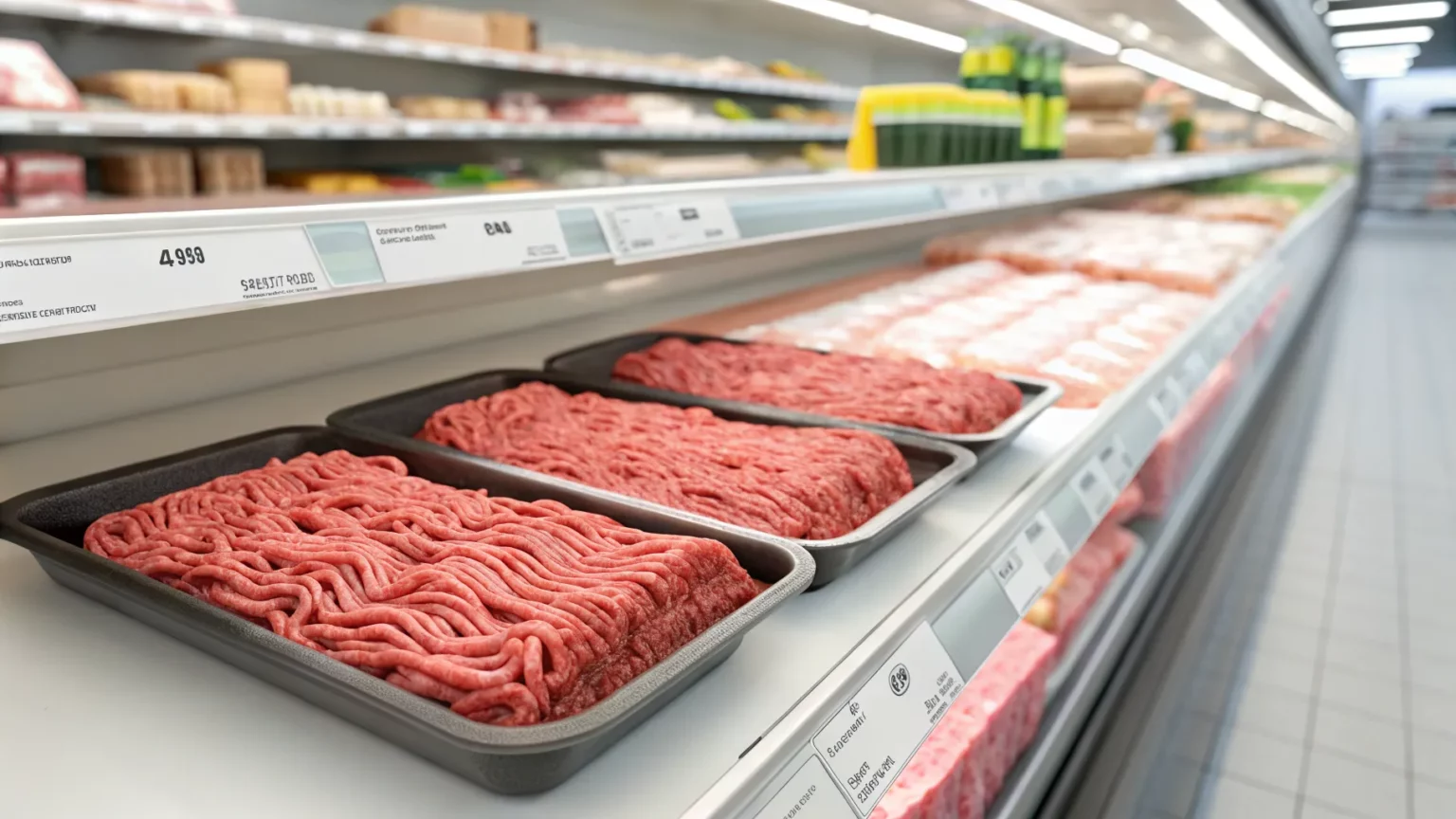
Ground beef, a staple for budget meals, is costing more at the register this year, adding pressure to household budgets already stretched by higher food costs. In January, the average supermarket price for a pound reached $6.75, up from $5.03 two years earlier. The jump is pushing families to rethink weekly menus and prompting stores to adjust promotions.
The price climb matters because ground beef is a common purchase for many households. It is used in burgers, tacos, pasta sauces, and casseroles. When it rises in price, the effect can be felt across meal planning and family spending.
The supermarket price tag of a pound of ground beef, aka the go-to for the budget-conscious, reached $6.75 in January, compared to $5.03 two years prior.
Why Prices Are Rising
Several cost pressures are likely feeding into the increase. Industry analysts point to higher feed prices, labor costs, and transportation expenses across the supply chain. Drought in key cattle regions in recent years has also affected pasture conditions and increased reliance on pricier feed. When ranchers face higher input costs, those pressures often show up later in the meat case.
Cattle herd sizes can also influence retail prices. When herds shrink due to tough weather or low profitability, the supply of beef tightens. That can lift wholesale prices, which retailers may pass to customers over time. While exact figures vary by region, the pattern aligns with broader food inflation seen across supermarkets.
Packaging and energy costs have added to the tally. Cold storage, refrigeration, and shipping are energy intensive. If fuel or electricity costs rise, meat distribution becomes more expensive, and those costs can filter through to shoppers.
Impact on Households
The price jump changes how families shop. Some shoppers are trading down to smaller pack sizes, leaner blends on promotion, or store brands. Others are shifting meals toward chicken, turkey, or plant-based proteins when they are cheaper per serving.
Meal planning is becoming more deliberate. Households are watching weekly circulars, seeking loyalty discounts, and timing purchases to match sale cycles. For many, the goal is to stretch protein across multiple dishes.
- Batch cooking and freezing sale-priced meat helps manage costs.
- Mixing vegetables, beans, or grains into recipes can reduce per-meal spending.
- Choosing higher-fat blends on discount and draining fat can lower the bill.
How Retailers and Producers Are Responding
Grocers are working to keep traffic steady by rotating discounts and offering value packs. Some are spotlighting budget-friendly recipes that use less meat per portion. In-store signage and digital coupons aim to steer shoppers to weekly deals without eroding margins across the board.



On the supply side, processors and distributors are adjusting orders and inventory. They are balancing promotional calendars with the realities of tight supply and higher operating costs. If input costs ease, retailers could pass on savings. But price changes at the shelf often lag shifts further up the chain.
Comparisons and What Could Come Next
The move from $5.03 to $6.75 per pound over two years marks a steep climb for a basic protein. Compared with other meat cuts, ground beef often shows smaller swings because it is blended from multiple trimmings. Yet persistent cost pressure has pushed even this staple higher.
Looking ahead, much depends on weather patterns, feed markets, and herd rebuilding. If ranchers begin to expand herds, supplies could improve, though that process takes time. Fuel costs and freight capacity will also shape distribution expenses. Retail competition may spur sharper promotions during key grilling seasons, offering short-term relief.
Shoppers can expect continued price sensitivity around protein. Retailers will likely promote flexible meal options, value packs, and private labels. If overall food inflation cools, ground beef could stabilize, but any gains may be gradual.
Ground beef’s price surge is a clear signal of strain across the food chain, from ranch to register. The latest figures highlight how quickly a staple can get more expensive and how shoppers must adapt. Watch for shifts in herd sizes, feed costs, and seasonal promotions to give clues about the next move at the meat counter. Until then, careful planning and smart substitutions remain the best tools for holding the line on dinner.