



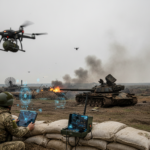

In a recent broadcast, Foundation Future Industries founder and CEO Sankaet Pathak and Trump Organization Executive Vice President Eric Trump weighed the promise and risk of battlefield robotics on the Fox Business program “Mornings with Maria.” Their discussion centered on how autonomous systems could reshape combat, the national security stakes for the United States, and rising competition with China.
The exchange came as militaries test drones, ground robots, and AI-driven decision tools at a rapid clip. It raised questions on ethics, supply chains, and how Washington can keep pace with rivals while guarding against misuse.
Why Battlefield Robots Are Gaining Ground
Robotic platforms have surged into conflict zones because they are cheap, fast to deploy, and can reduce danger to troops. Small drones spot targets and carry supplies. Loitering munitions and counter-drone tools change tactics at the front line. Ground robots clear routes and haul gear.
Supporters argue that autonomy can save lives and shorten missions. They point to improved sensing, faster targeting cycles, and constant surveillance. Critics warn of misidentification, escalation, and a loss of human judgment when seconds matter.
The debate now focuses less on if these tools will be used and more on how to set rules for them. Many defense officials say human control over lethal decisions should remain a red line. Engineers counter that jammed links and close combat may require onboard decision-making to keep systems useful.
National Security Risks and Guardrails
Pathak and Trump highlighted classic security risks: hacking, data theft, supply-chain gaps, and unreliable software updates in the field. Vulnerable code can flip a drone into an enemy asset. Untrusted chips can leak data. Poorly labeled parts can mask origin risks.
- Cybersecurity: Hardening radios, firmware, and command links against takeover.
- Data integrity: Securing mapping data, targeting files, and mission logs.
- Export control: Keeping sensitive tech out of hostile hands.
- Testing and audit: Verifying performance under jamming and GPS spoofing.
U.S. policymakers have started tightening controls on advanced semiconductors and AI accelerators bound for China. The Pentagon has also pushed for secure chips and software bills of materials on critical systems. These steps aim to slow illicit transfer while keeping domestic suppliers in the game.
China Competition and Supply Chains
Competition with China loomed over the conversation. Chinese firms dominate parts of the small drone market and key minerals used in batteries and electronics. That mix gives Beijing leverage and creates exposure for U.S. buyers dependent on foreign parts.



Washington has moved to fund domestic chipmaking, battery plants, and rare-earth processing. Allies from Europe to the Indo-Pacific are trying to diversify sourcing. Defense planners want interchangeable parts, open standards, and contracts that reward secure builds over the lowest sticker price.
A related issue is software origin. Even “off-the-shelf” systems may run code that passes through foreign vendors. Vetting and continuous monitoring are now part of most defense procurements, not a box to check at delivery.
Industry’s Role and the Path Ahead
Tech CEOs see both market demand and moral pressure. Companies that build autonomy for logistics, inspection, or mapping increasingly face dual-use choices. They must decide whether to supply defense customers and under what conditions.
Investors are watching policy signals. Clear rules on human control, data retention, and audits can guide capital. Unclear or shifting rules can slow hiring and testing. Industry groups have asked for standard templates on cyber hardening, ethics reviews, and incident reporting to speed adoption while limiting risk.
Analysts expect more trials of “attritable” drones—cheap, networked systems meant to be fielded in large numbers. That approach could change air defense economics and test how much autonomy is acceptable under fire.
What Comes Next
The central challenge is speed with safeguards. The United States wants to field useful systems quickly while keeping humans accountable and data secure. Rivals are racing too, and they may accept higher risk.
Congress will likely weigh new rules on AI in targeting, transparency on supply chains, and funding for trusted components. The Pentagon will continue to push rapid testing and red-team assessments. Industry leaders will seek stable guidance so they can plan product lines and compliance.
Pathak and Trump’s exchange underscored a simple point: battlefield robotics are moving from trial to practice. The next phase will be defined by who can scale secure systems, prove reliability under attack, and keep people in charge when it counts.