




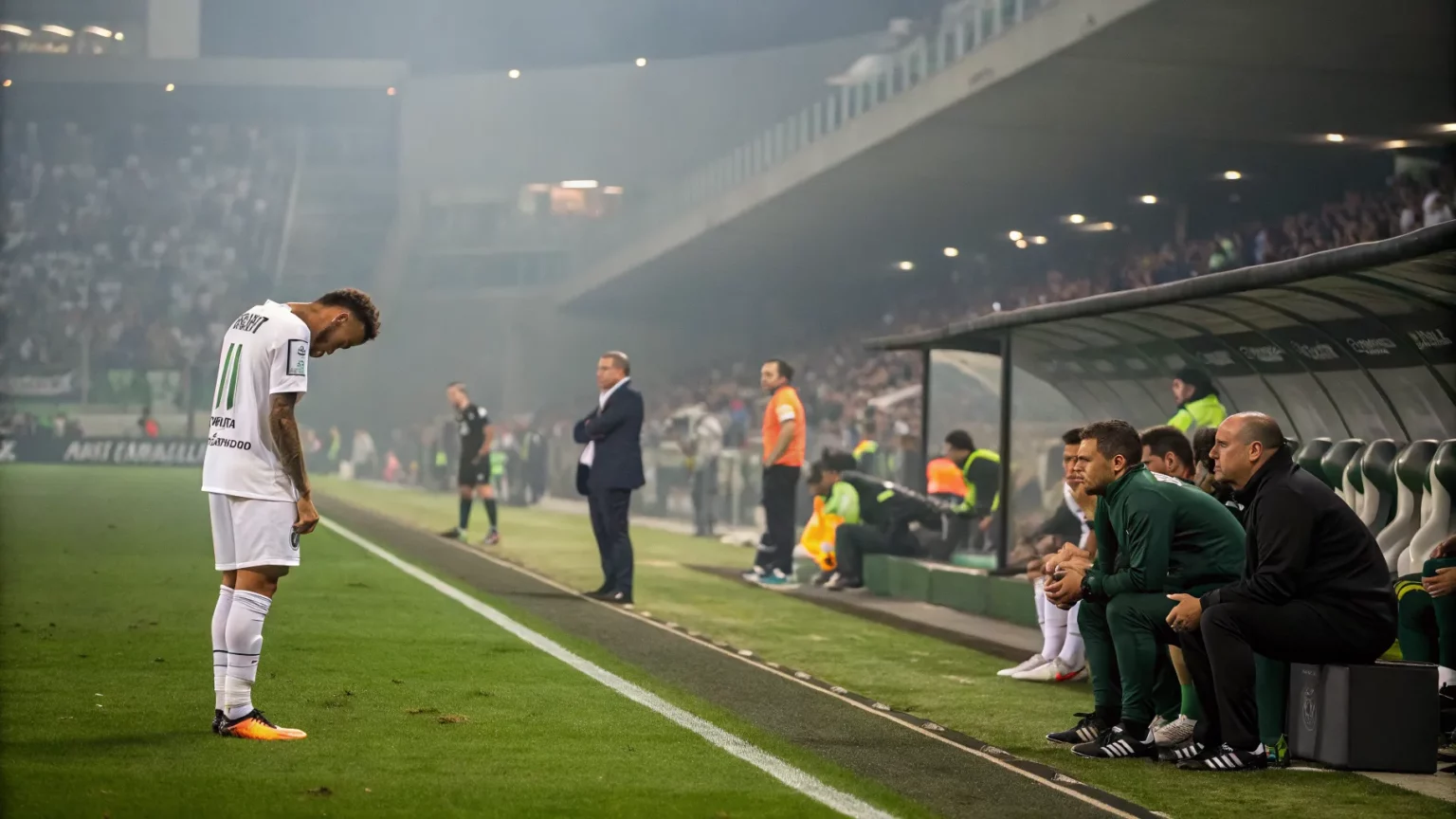
Neymar was taken off by mistake during Santos’ loss to Coritiba on Sunday, a rare game-management error that sparked confusion on the touchline and anger in the stands. The incident, which arrived as Santos chased the match, raised fresh questions about sideline communication and match-day procedures in Brazilian football.
The club fell short on the scoreboard and in execution. The timing and optics of the substitution overshadowed the result, leaving coaches, players, and fans to sort through how it happened and what it means for the weeks ahead.
What Happened On The Touchline
“Neymar was accidentally substituted during Santos’ loss to Coritiba on Sunday.”
That simple line tells a messy story. Substitutions are often routine, until they are not. On Sunday, the fourth official’s board went up and one of the world’s most recognizable players was unexpectedly called off.
Details on the mix-up remained scarce by late Sunday. It appeared to be a breakdown in coordination at the bench. Whether it was a misread number, a last-second change, or a paperwork hiccup was not immediately clear.
What was clear: the switch took Santos’ attacking plan off script at a crucial moment.
Why It Matters For Santos
Santos needed control and calm. Instead, it got disruption. Even short gaps without a focal attacker can drain rhythm and give the opponent time to reset. The team paid for that lost thread on Sunday.
For a squad managing pressure and expectations, the optics sting. Taking off a star unintentionally signals disorder. That image lingers longer than a bad pass.
Brazilian clubs live under a bright spotlight. Errors like this land harder because they feel avoidable. The fallout often reaches the locker room, the boardroom, and the terraces.



Neymar And Santos: A High-Pressure Partnership
Neymar grew up in Santos’ academy and made his name there as a teenager. That history still carries weight. Every minute he plays for the club carries an extra layer of scrutiny and pride.
His presence changes the way teams defend and the way teammates move. An unplanned exit removes that gravity. It also affects the crowd, which rides each touch and turn.
When a player of his profile leaves the field unexpectedly, it becomes the story of the night, win or lose. On Sunday, it became the story and the result.
The Mechanics Of A Mistake
Modern matches allow up to five substitutions, managed in limited windows. Communication runs from the head coach to an assistant, to the fourth official, and then to the player. There are numbers, boards, and hastily scribbled notes.
That chain is usually tight. But it can fray under stress. A wrong shirt number, a change of mind, or confusion about which window to use can cause a wrong call. Once the board is raised and the player steps off, there is little room to reverse it.
- Multiple voices at the bench can muddy instructions.
- Number-board errors can prompt the wrong player.
- Late tactical switches can outpace paperwork.
Clubs often review these incidents to refine who speaks, who signals, and when. It is process work, not glamorous, but essential to keep stars on the pitch when it matters.
What It Means For The Season
The bigger picture is about trust and timing. Santos needs both. Trust that the plan on the sideline matches the plan on the field. Timing to use changes as levers, not landmines.
For Neymar, Sunday is an unwelcome footnote. He has carried heavy expectations since his first rise at Vila Belmiro. Moments like this add noise to a season that needs clarity.
For Coritiba, the job was simpler: protect a lead and manage the clock. The chaos next door helped.
What To Watch Next
Clarity will likely come from post-match reviews and a tighter bench protocol. Fans will look for two things in the next outing: sharper substitutions and steadier control in tense periods.
If Sunday becomes a one-off glitch, Santos can move on. If it becomes a pattern, the table will show it fast.
For now, the takeaway is blunt. In close games, the smallest signals matter. On Sunday, one wrong signal tilted a night and fed a result.
Expect a short-term reset at the training ground and a long memory among supporters. The fix is simple on paper: get the numbers and the moments right. The hard part is doing it when the stadium is loud and the match is slipping away.