

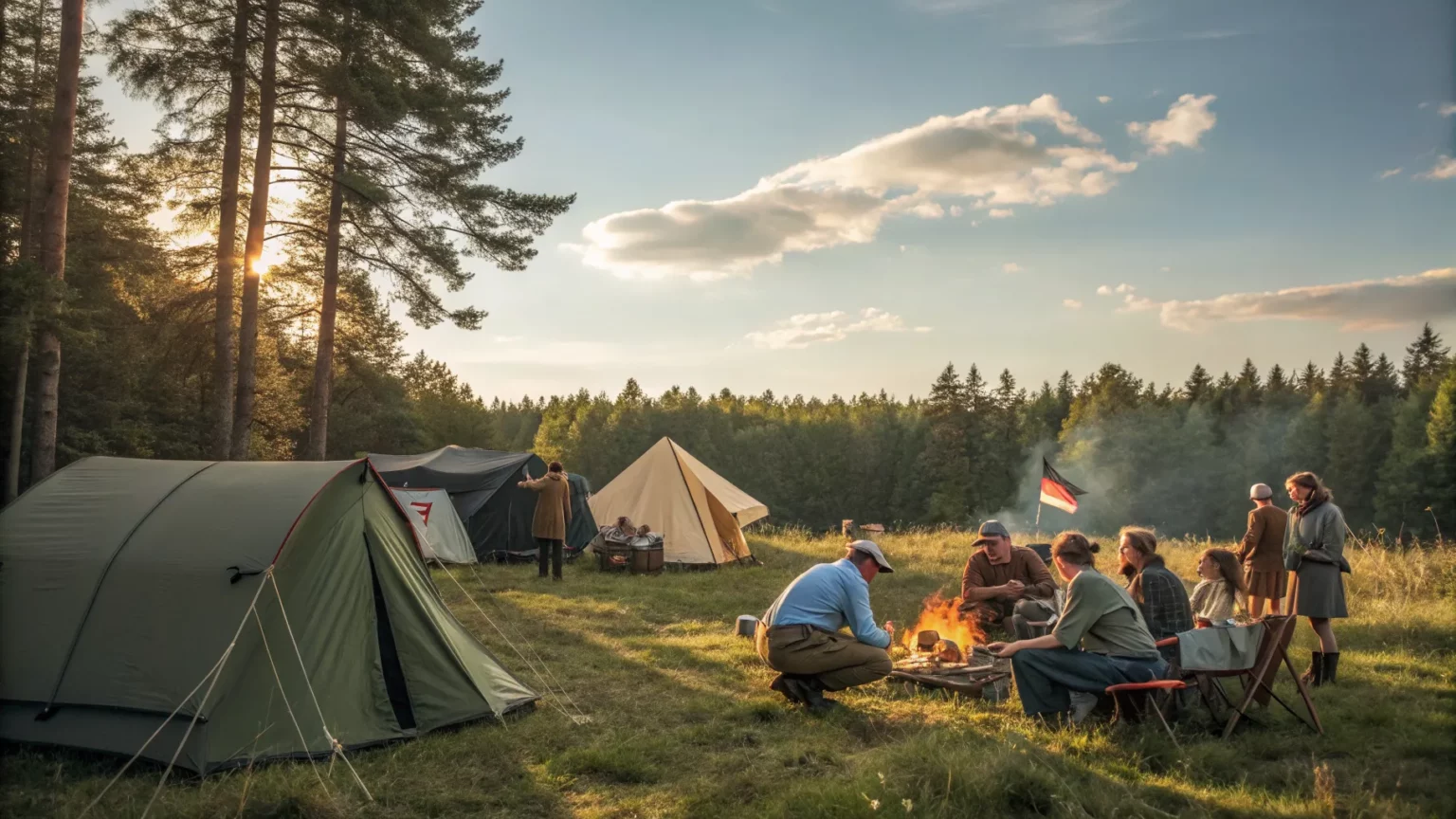
In Leipzig, a loyal circle of campers is turning memory into a twice-yearly ritual, using tents and time to stitch a shared past into the present. The gathering, set in the heart of eastern Germany, brings together about 150 families who once lived behind the Iron Curtain and now choose to remember, not rewrite, their history.
As one Associated Press report put it,
“It’s been three decades since the reunification of Germany, but camping enthusiasts from the former East Germany allow themselves twice a year to relive the past and forget about how much has changed. For most of the 150 families that meet up …”
A Nostalgic Gathering in Leipzig
The meetups are not political rallies or costume parties. They are ordinary campouts with an extraordinary backstory. Participants swap stories about summers in the German Democratic Republic (GDR), when vacations often meant a car, a tent, and a nearby lake.
Leipzig, once a center of peaceful protests that helped end the GDR, is now a natural waypoint. The city blends old industrial grit with a creative scene that draws families from across the former East.
Why Camping Still Matters
Camping was a popular pastime in the GDR. Travel to the West was blocked, and foreign trips were rare. Families made do with campgrounds, local co-ops, and lakeside plots booked months in advance.
For many, that history forged tight-knit traditions. The annual reunions keep those ties fresh. The setting is simple by design. A shared grill, familiar songs, and well-worn gear bring comfort. The modest setup is the point.
- Twice-a-year meetups reinforce community ties.
- The group includes about 150 families from the former East.
- Leipzig serves as a central and symbolic meeting place.
Balancing Memory and Modern Life
These trips sit at the edge of a broader cultural trend often called “Ostalgie,” a fondness for aspects of life in the former East. Some critics worry such nostalgia can gloss over repression and shortages. Participants say the campouts are about family, not politics.
They remember the good: shared child care, predictable routines, and neighborhood solidarity. They also acknowledge the hard edges: limited goods, surveillance, and arbitrary rules. Holding both truths is part of the practice.


Three Decades After Reunification
Germany reunified in 1990 and reshaped its economy in the years that followed. Eastern regions modernized fast, but the shift left scars. Population fell in some towns, and many young people moved west for work.
Today, the picture is mixed. Wages have climbed and infrastructure improved, yet gaps remain. That context helps explain the pull of these gatherings. They offer continuity when so much else has changed.
What These Campouts Reveal
The twice-yearly rhythm shows how memory becomes routine. Rather than museums or formal ceremonies, these meetups favor lived experience. The tents, the routes, and the recipes are all artifacts in use.
The approach is quiet but effective. Families teach children where their stories began, not as a monument, but as a weekend plan. It is history you can pack in a trunk.
Looking Ahead
The campers plan to keep meeting, even as new generations take the lead. Organizers say the goal is simple: keep the door open to anyone who wants to remember, learn, or just share a meal under the trees.
The next measure of success may be who shows up with a new tent and an old tale. If the crowd stays cross-generational, the tradition will endure. Watch for small changes—more kids at the grill, new songs by the fire—but the same message: the past still lives here, one campsite at a time.