



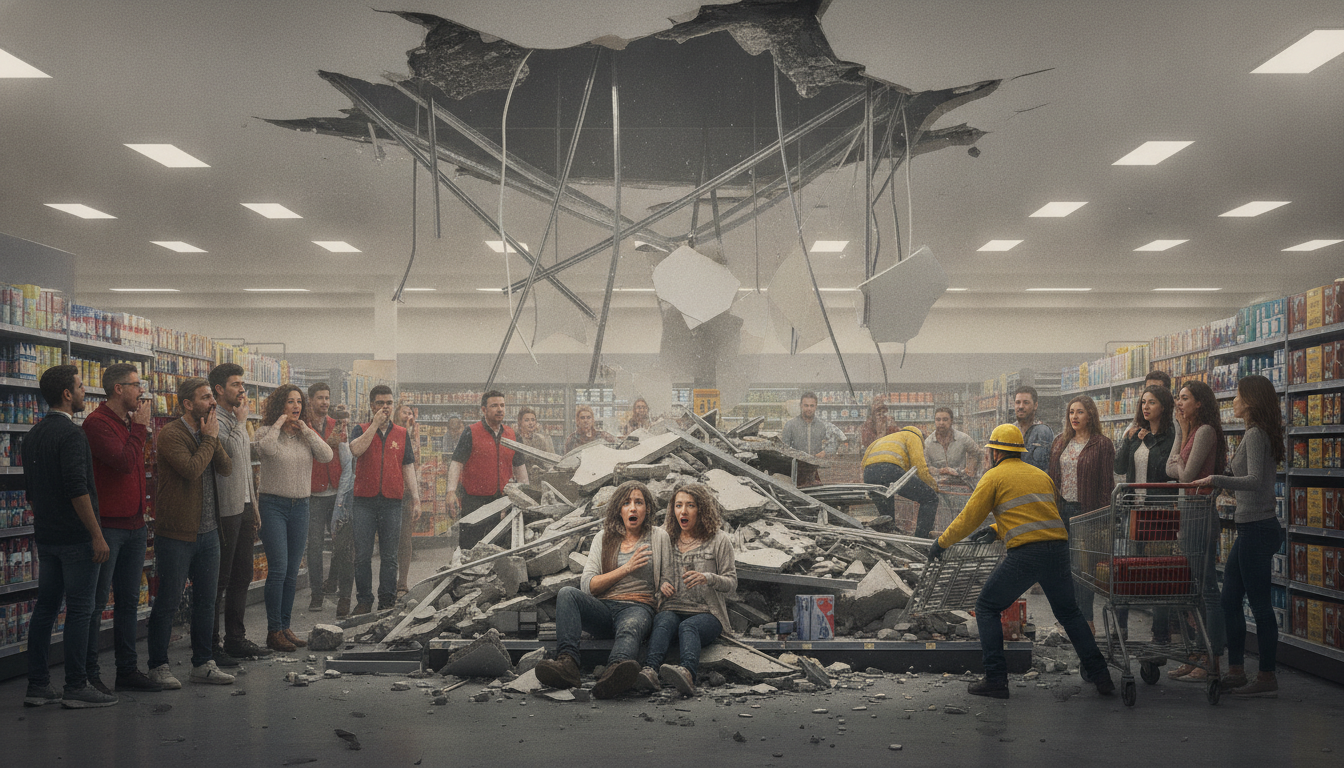
A routine shopping trip turned tense when part of a store ceiling fell, briefly trapping two people as dozens looked on. Store-goers described a sudden crash, dust, and confusion as the scene unfolded. First responders arrived within minutes, helping to free those stuck and check for injuries. Authorities said the incident is under review to find the cause and to determine whether the building is safe.
Witnesses reported that the store was busy at the time. The building was evacuated and inspected as a precaution. Early accounts suggest debris came down over an aisle, pinning two people until help arrived. Most shoppers were able to exit on their own.
“There were 27 people inside the store when the ceiling came down, temporarily trapping two.”
What Happened Inside the Store
Shoppers said the collapse was sudden. Overhead panels and light fixtures reportedly dropped, leaving rubble on the floor and blocking a narrow path. People near the area shouted for help, while others moved away to avoid falling debris. Employees led customers to exits as alarms sounded.
No official tally of injuries had been released at the time of reporting. The two people who were trapped were freed and assessed by medics. The store remained closed for cleanup and inspection.
Emergency Response and Investigation
Fire crews and building inspectors are examining the site to learn what failed. Investigators typically look for signs of water damage, overloaded ceiling structures, or maintenance gaps. They also review recent weather patterns and any ongoing work near the affected area.
Structural engineers often inspect the roof deck, sprinkler lines, and HVAC units after a collapse. Leaks, corrosion, or vibrations from equipment can weaken support over time. Inspectors will likely check maintenance logs and interview staff about any prior warnings, such as sagging tiles, stains, or unusual noises.
Safety Concerns for Shoppers and Staff
Ceiling failures, while rare, highlight common risks in busy retail spaces. High foot traffic, stacked inventory, and large mechanical systems add weight and stress to overhead structures. Aging buildings face added pressure from humidity, storms, and temperature swings.
Customers and workers can reduce risk by reporting visible leaks, bulging tiles, or flickering lights near damp areas. Store managers generally review these reports and schedule quick fixes, like drying, reinforcement, or replacing water-damaged materials.



- Report ceiling stains, leaks, or sagging right away.
- Avoid standing under active leaks or bowed panels.
- Follow staff instructions during alarms or evacuations.
Industry Context and Possible Liability
Retail chains often carry insurance that covers building damage and injuries. Liability can hinge on maintenance records and whether known hazards were addressed. If contractors recently worked in the area, investigators will look at installation methods and materials used.
Past cases show that water intrusion is a frequent factor. Minor leaks can soak insulation, adding hidden weight. Over time, fasteners may loosen. If a drop ceiling is involved, clips and grids can buckle under added load. Routine inspections aim to catch these issues early.
What This Means for Building Owners
Property owners may face repair orders or required upgrades after a collapse. Inspectors can mandate a full structural review, especially if there are signs of repeated leaks or deferred maintenance. Tenants may be asked to adjust where heavy displays sit or to improve access to ceiling areas for repair crews.
Experts say a simple checklist can help: look for moisture, check above-ceiling equipment supports, and verify that roof drains are clear. Preventive steps are often less costly than emergency repairs and closures.
For shoppers, the store’s reopening will depend on inspection results and any needed fixes. For staff, retraining on evacuation routes and hazard reporting may follow. The key question now is why the ceiling failed and how to prevent a repeat.
Authorities are expected to release more details after the structural review. For now, the initial facts point to a narrow escape: many people inside, two briefly trapped, and a response that kept a bad situation from getting worse. The final report should show whether upkeep, weather, or equipment played the larger role—and what changes will be required before the doors open again.