


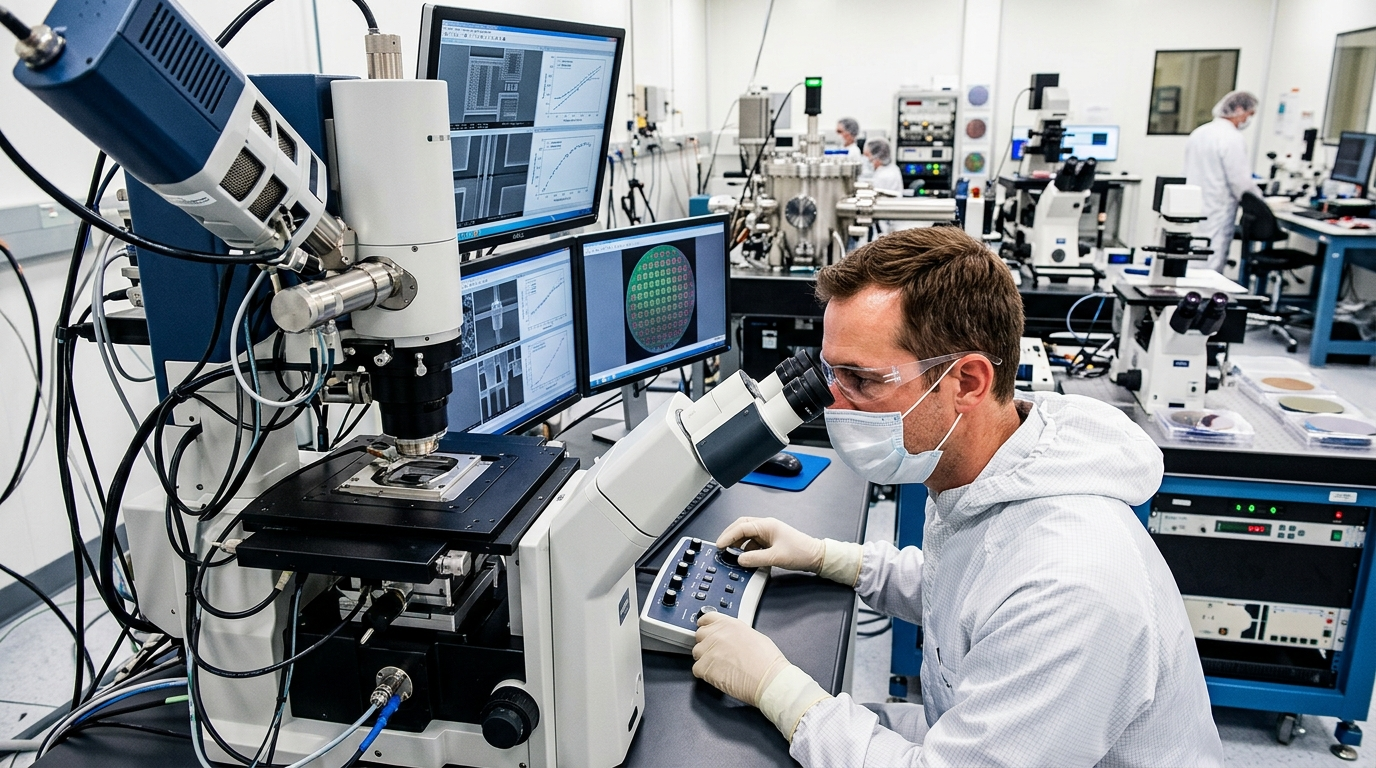
Hamish Carr Delgado is working at the nanoscale to reduce the energy demands of chips used in artificial intelligence data centers.
The materials science and engineering PhD student is studying how very small material changes could improve chip efficiency. His research addresses a growing concern for AI computing: advanced systems require large amounts of energy to operate.
Delgado’s work focuses on the physical materials inside chips rather than AI software. By examining structures at the nanoscale, he is seeking ways to make computing hardware use electricity more efficiently.
AI Growth Raises Energy Questions
AI data centers rely on large groups of chips to train models and process user requests. These chips perform many calculations, often running for long periods.
That activity consumes electricity and produces heat. Cooling systems then require more energy to keep equipment within safe operating temperatures.
Energy-efficient chips could reduce both demands. Even a small efficiency gain may matter when repeated across many processors in a data center.
The challenge is growing as organizations deploy larger AI systems. More computing capacity can support stronger performance, but it can also increase operating costs and strain electricity supplies.
Why Nanoscale Materials Matter
A nanometer is one-billionth of a meter. At this scale, researchers can study and adjust the structures that control how electricity moves through a chip.



Materials science examines how a material’s structure affects its behavior. For chip research, that can include electrical flow, heat movement, durability and manufacturing performance.
Delgado’s project links these material properties to the practical needs of AI data centers. Its stated goal is more energy-efficient chips, with nanoscale engineering serving as the route to that result.
Several issues shape this kind of research:
- Chips must complete calculations while limiting wasted energy.
- Materials must manage heat during heavy workloads.
- New designs must remain reliable under repeated use.
- Laboratory results must eventually work at production scale.
Potential Gains and Practical Limits
Greater chip efficiency could help data center operators lower electricity use for each computing task. It could also reduce cooling needs and operating expenses.
Yet efficiency improvements do not guarantee lower total energy consumption. If AI use grows faster than chips improve, overall demand may still rise.
New materials and nanoscale designs also face practical tests. They must be manufacturable, affordable and compatible with chipmaking processes. Performance in a research setting does not always transfer quickly to commercial production.
For that reason, Delgado’s work forms one part of a wider effort. Data centers can also cut energy use through software optimization, improved cooling and careful selection of computing equipment.
Research Connects Materials to AI Infrastructure
Delgado’s project shows how AI development depends on fields outside computer science. Materials researchers can influence how much energy future systems need before software begins running.
The work also shifts attention from model performance alone to the infrastructure supporting it. Faster AI systems may bring economic and scientific gains, but their energy costs remain an important measure of progress.
The next questions concern measurable efficiency gains, production feasibility and durability. Those results will help determine whether nanoscale research can move from the laboratory into working data centers.
As AI computing expands, chip efficiency will remain a key engineering target. Delgado’s research points to a direct strategy: improve the materials at the smallest scale to address energy use across much larger facilities.