



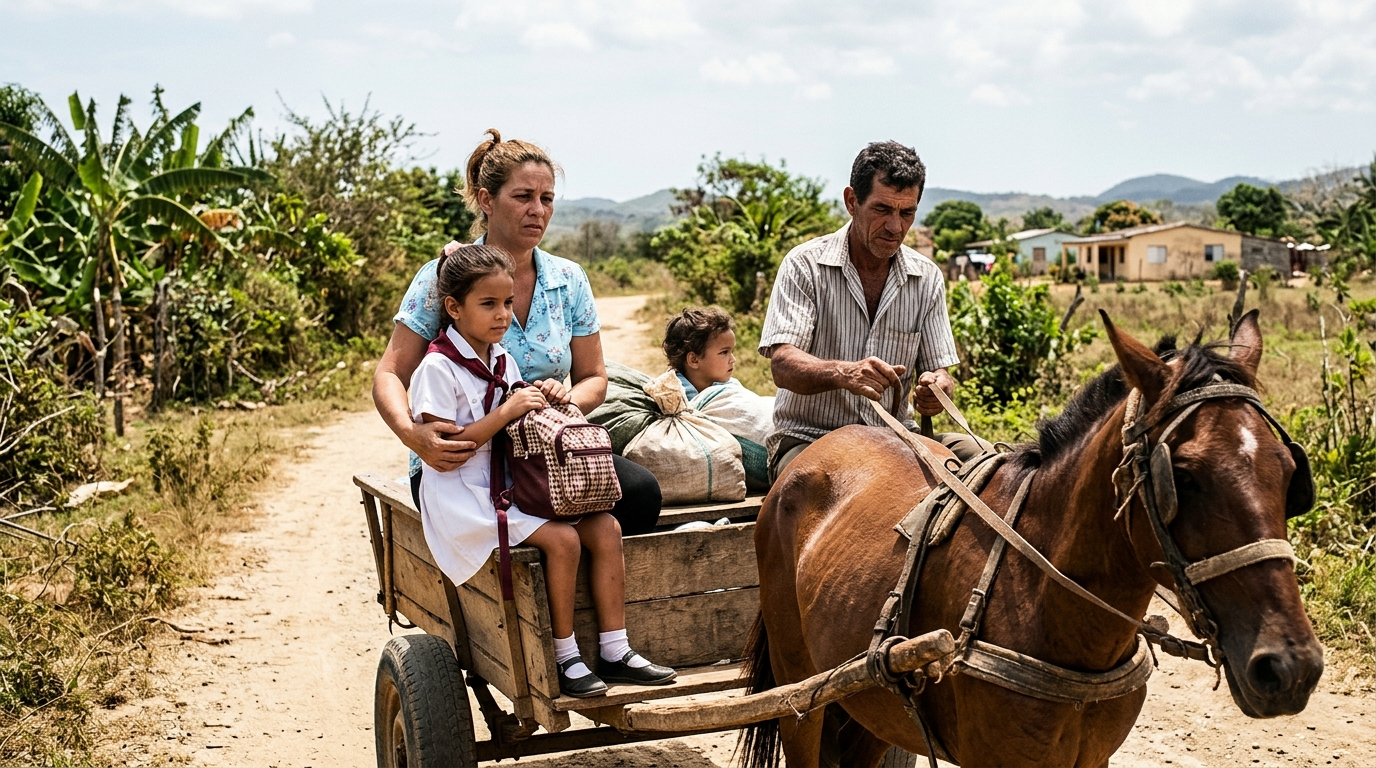
A Cuban family used a borrowed horse and cart to take a daughter to school Tuesday after thieves stole and killed the family’s own animal. The journey from Las Minas showed how Cuba’s deepening crises are disrupting basic routines, including the start of classes.
The Barroso family rose at dawn to prepare for the trip. Their experience turned an ordinary school morning into a difficult transport effort that required help from another owner.
A Difficult Start to the School Term
Tuesday marked the first day of classes for many students across Cuba. For the Barroso family, getting one child to school depended on transport that was no longer readily available.
The family hitched a cart to the borrowed horse before setting out. The early start reflected the extra time and planning needed when household transport is lost.
No details were provided about the distance to the school or the availability of public transportation in Las Minas. Still, the reliance on a horse-drawn cart indicates that animal transport remains important for some families.
Horse Theft Creates Wider Harm
The theft carried consequences far greater than the immediate loss of an animal. Thieves killed the Barroso family’s horse for an unspecified purpose, leaving the household without a key means of transportation.
In rural communities, a horse can support several daily needs. Its loss may affect school travel, work, shopping and access to services. Replacing such an animal may also be difficult during a period of worsening economic strain.
- The family lost its own horse to theft.
- A borrowed animal made the school journey possible.
- The trip required the household to begin preparing at dawn.
The incident also raises concerns about property crime and household security. Families that depend on animals face both financial loss and practical isolation when theft occurs.


Cuba’s Crises Reach Daily Life
The Barroso family’s experience offers a close view of how national hardship can affect education. A school may be open, but attendance still depends on transport, fuel, household income and community support.
The account described Cuba’s crises as deepening, though it did not provide national figures or identify each cause. The family’s journey nevertheless shows how broad pressures can reach individual homes.
Borrowing the horse also points to the role of informal support. Neighbors, relatives and other animal owners may help households maintain essential routines when formal services are limited.
That support provided an immediate answer, but it did not replace what the family lost. Continued dependence on borrowed transport could make future school trips uncertain.
Education Access Depends on More Than Classrooms
The start of classes is often measured through school openings and enrollment. The Barroso family’s trip highlights another measure: whether students can physically reach their classrooms.
Transport problems can place added pressure on parents and children. They may cause longer journeys, missed lessons or greater dependence on others. Those risks can grow if a household has several students or competing work duties.
For the Barroso family, Tuesday’s ride represented both determination and vulnerability. Their daughter reached the start of school because another horse was available, not because the family’s transport problem had been solved.
The key issue now is whether that temporary arrangement can continue. Cuba’s education system may begin a new term, but families facing theft and economic stress will need reliable ways to keep children attending after the first day.