




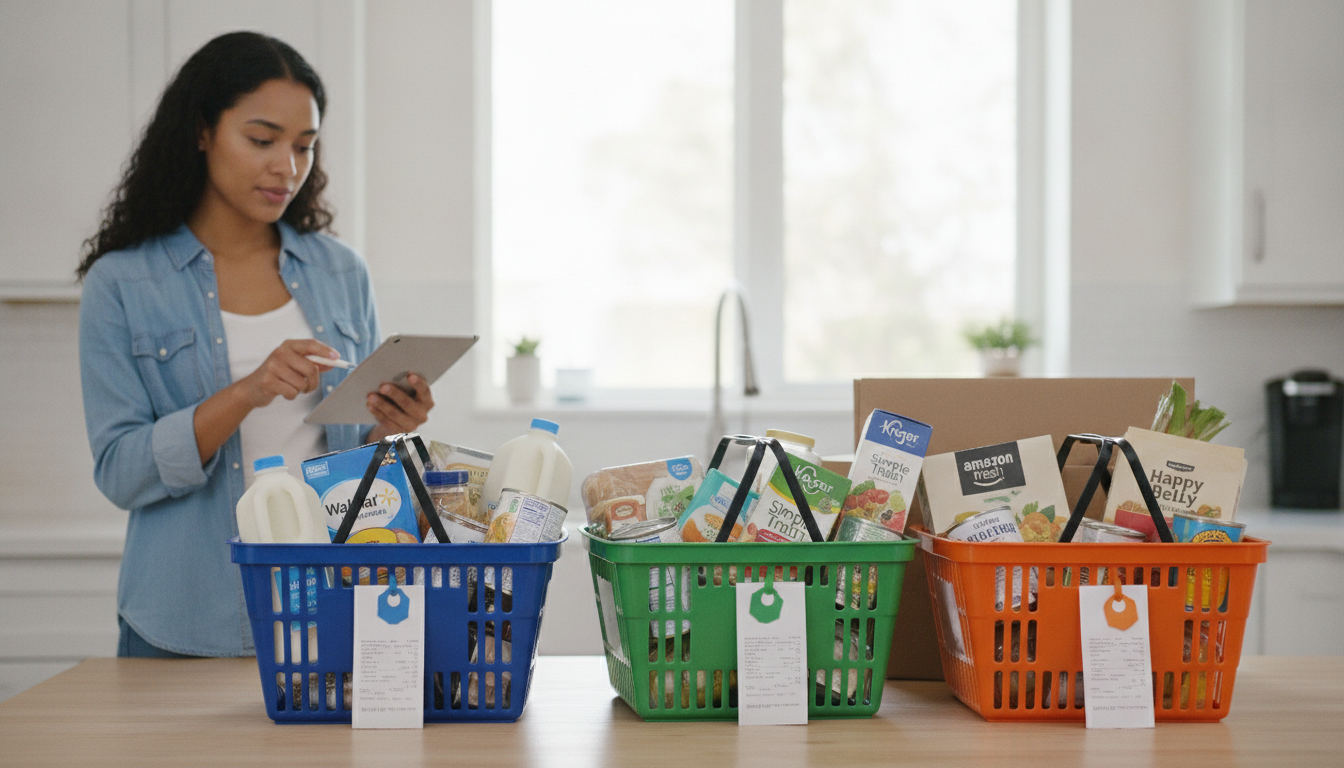
A shopper ran a real-world price test across Walmart, Kroger, and Amazon, checking the same list of staples as Walmart promotes new rollbacks. The comparison comes as households watch grocery budgets and retailers compete on price and convenience. The question was simple: which basket is cheapest, and what factors change the final bill?
The exercise took place in recent weeks, covering common items such as milk, eggs, cereal, produce, and pantry goods. It tested in-store prices at Walmart and Kroger and online pricing for Amazon. The goal was to see whether Walmart’s rollbacks beat rivals or whether delivery fees, promotions, and private labels tip the scale elsewhere.
“I brought the same shopping list to Walmart, Kroger, and Amazon to see which has the best grocery prices, especially amid Walmart’s rollbacks.”
Background: Price Pressures And Promotions
Grocery bills have been a focus for families since pandemic-era shocks and supply chain swings. Retailers have leaned on price cuts, coupons, and digital deals to keep traffic. Walmart has marketed rollbacks, Kroger has emphasized loyalty discounts, and Amazon has used digital convenience and subscription perks.
Price rollbacks are temporary reductions. They help headline value and reset shopper expectations. Loyalty programs often require app activation or a store card. Online orders can add service fees and tips that change the bottom line.
Methodology And Scope
The shopper used a single list, with the same sizes and closest matching brands. Store brands were used when branded items differed. In-store shelf prices were compared with Amazon’s list prices and any visible digital discounts available to the general public.
Taxes, delivery charges, and membership fees can shift totals. The test noted these add-ons to reflect the final amount paid, not only item subtotals. Results can vary by region and time of day because promotions change.
What The Basket Comparison Suggests
Walmart’s rollbacks often lowered headline items like cereal or pasta. That helped the overall basket. Produce prices varied by season and store specials, which could flip individual line items.
Kroger’s loyalty discounts narrowed gaps on several packaged goods. Without the loyalty price, the basket was higher. With it, the basket became more competitive, especially for Kroger private labels.



Amazon’s shelf pricing on pantry staples was sometimes close. But service fees and delivery tips raised the final bill unless bundled with a larger order. Convenience and time savings can offset that for some shoppers.
Why Prices Differ Across Retailers
Each chain pushes a different lever. Walmart leans on scale and rollbacks to drive traffic. Kroger uses loyalty pricing and private brands to reward frequent shoppers. Amazon targets convenience and delivery speed.
Private label strength matters. Store brands can undercut national brands, especially during promotions. Sourcing and regional supply also affect produce and meat pricing.
- Rollbacks reduce list prices for limited periods.
- Loyalty discounts require digital activation or a store card.
- Delivery adds service fees, which raise the final total.
Industry Impact And Shopper Trade-Offs
Price tests like this reflect a wider shift. Shoppers are mixing stores, timing trips to promotions, and switching to private labels. Retailers answer with targeted discounts and subscription perks.
The result is a tighter fight on essentials. Small differences on core basket items can decide where a family shops. Digital coupons and app-exclusive prices add another layer.
What To Watch Next
More promotions are likely as chains compete for traffic. Seasonal shifts will change produce costs. Fuel rewards and credit card tie-ins can sweeten totals for some shoppers.
For many households, the best value may come from a hybrid approach. A base trip to the lowest everyday-price store, plus timed buys at a second retailer for hot deals, can lower the monthly bill. Large online orders can make delivery fees more manageable.
The early takeaway from the basket check is clear. Walmart’s rollbacks help on headline items, Kroger’s loyalty pricing tightens the race, and Amazon’s convenience has a cost unless fees are diluted. Shoppers who compare, plan, and use store brands stand to save the most. Watch for changing promotions, because this price battle is far from settled.