




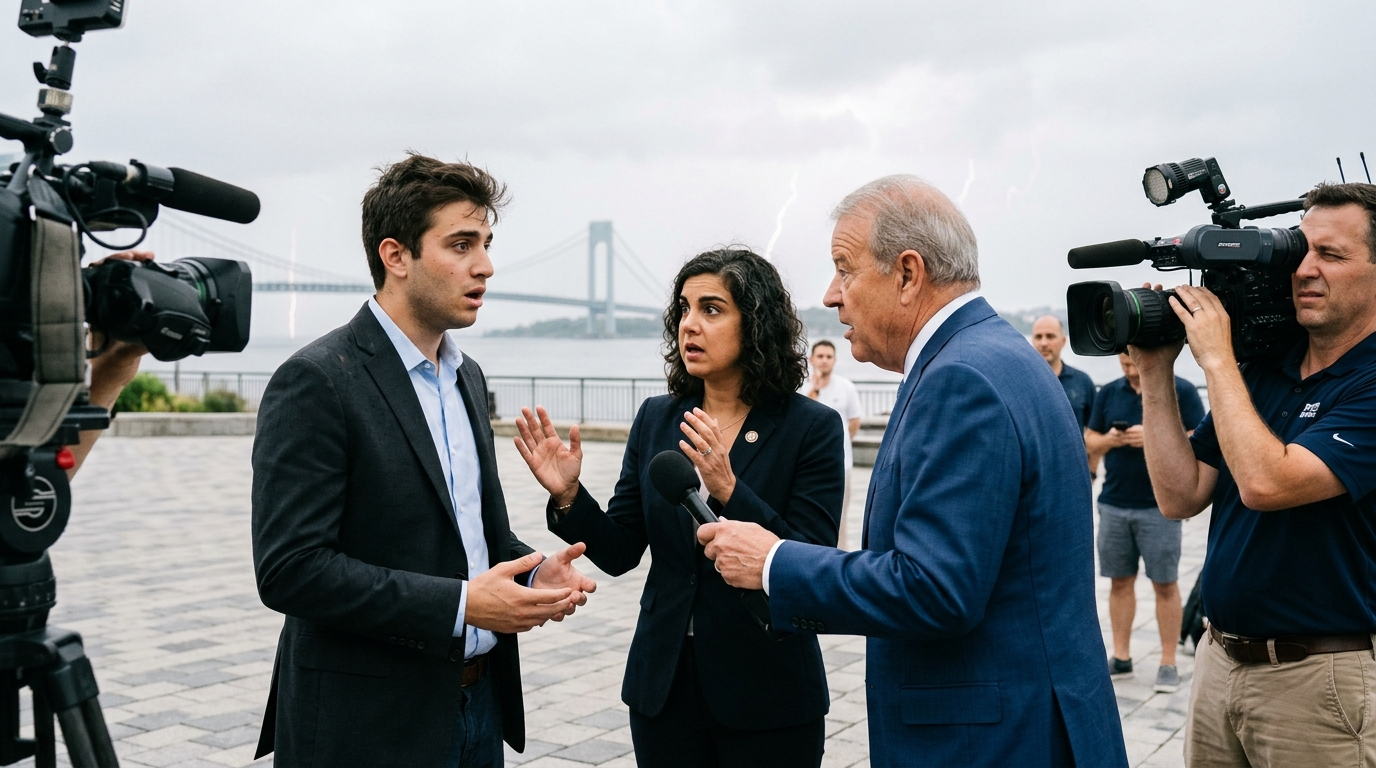
Thomas Fahmy, a staff member for Rep. Nicole Malliotakis, survived a lightning strike on Staten Island, prompting astonished reactions from the congresswoman and television host Stuart Varney.
Footage of the incident captured the sudden danger Fahmy faced. His survival turned a frightening weather event into a personal account of chance, resilience and emergency awareness.
A Close Call Caught on Video
Fahmy described surviving the strike as a “miracle.” Malliotakis and Varney reacted to the footage while discussing how narrowly he escaped a potentially fatal outcome.
The available account does not provide details about Fahmy’s injuries, medical treatment or the exact location of the strike. Still, the incident shows how quickly lightning can threaten people outdoors.
Fahmy described his survival as a “miracle.”
Malliotakis represents parts of New York City, including Staten Island. The episode gained added attention because it involved a member of her staff and was recorded on video.
Lightning Risks Can Develop Quickly
Lightning can strike during severe storms and may reach people even when heavy rain is not falling directly overhead. Open spaces, tall objects, trees and exposed structures can increase danger.
A direct strike is not the only threat. Electrical current can travel through the ground or move from a nearby object to a person. Lightning may also pass through wiring, plumbing and other conductive materials.
Public safety guidance generally advises people to enter a substantial building or enclosed vehicle when thunder is heard. Small shelters, covered porches and isolated trees do not offer reliable protection.



- Move indoors as soon as thunder is audible.
- Avoid open ground, rooftops and isolated trees.
- Stay away from windows, plumbing and wired equipment indoors.
- Call emergency services after a strike and begin first aid if it is safe.
Survival Does Not Rule Out Injury
People who survive lightning may face burns, heart problems, hearing damage or neurological symptoms. Some effects may appear later, making medical evaluation important even when a person initially seems alert.
Lightning victims do not retain an electrical charge. Bystanders can safely touch them and provide aid. Immediate cardiopulmonary resuscitation may save a person whose breathing or heartbeat has stopped.
Fahmy’s experience also illustrates the growing role of video in public awareness. Dramatic footage can make a familiar weather warning feel immediate. However, it cannot show every medical consequence or explain why one person survives while another does not.
A Reminder to Act Before the Storm
The reactions from Malliotakis and Varney centered on the extraordinary fact of Fahmy’s survival. His own description reflected the same sense of disbelief and gratitude.
The broader lesson is practical. Lightning emergencies leave little time for decisions once a storm arrives. Early shelter, attention to weather alerts and prompt medical care remain the clearest safeguards.
Fahmy’s survival offers a fortunate ending to a dangerous event. It also serves as a warning that thunder should trigger action, not delay.