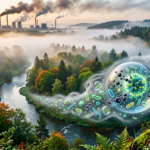


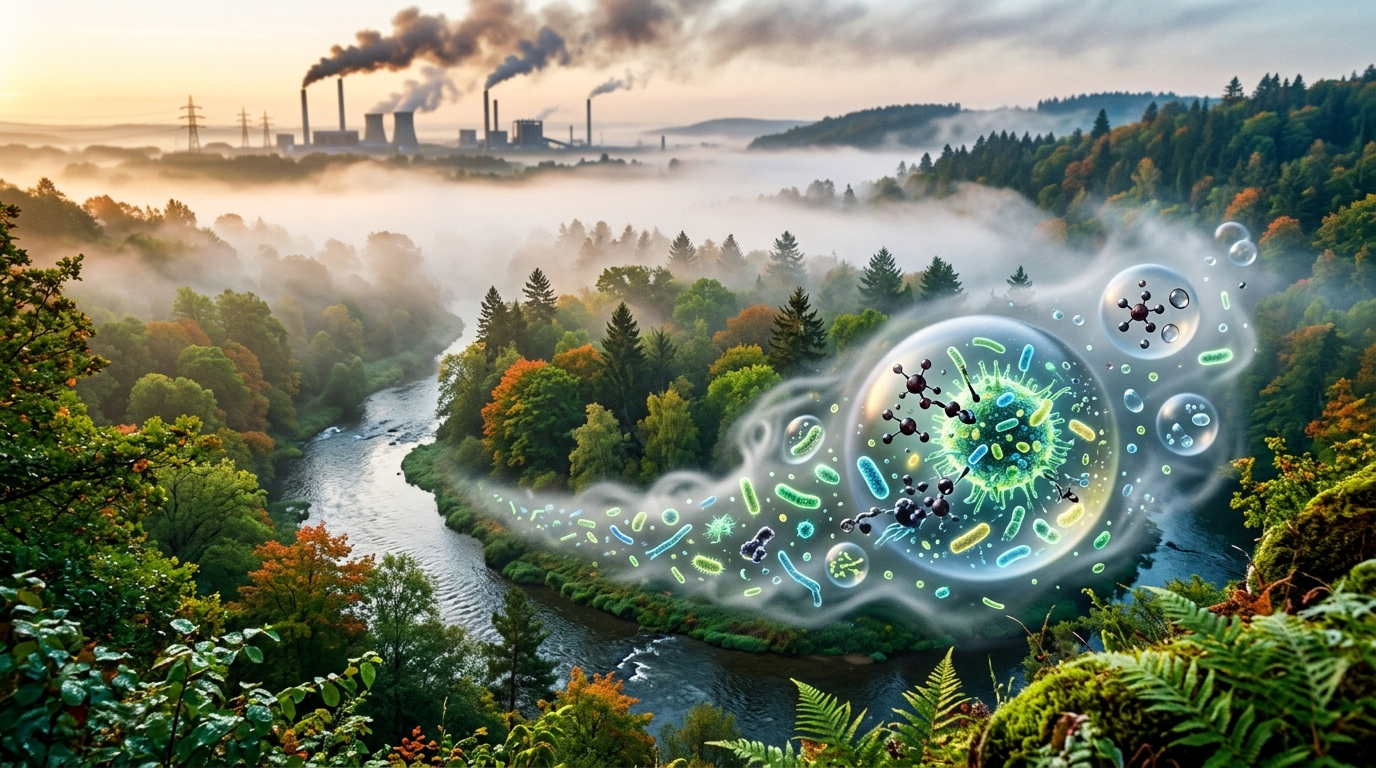
Living microbes inside low-lying fog clouds may remove toxic air pollutants, including formaldehyde, offering a possible natural route for improving air quality.
The finding links two often separate areas of research: atmospheric chemistry and microbial life. It suggests fog is not just suspended water. It can also act as a temporary habitat where organisms interact with airborne chemicals.
“Low-lying fog clouds host living microbes.”
The discovery may change how scientists assess pollution in fog-prone areas. Chemical reactions are known to occur inside fog droplets. Living organisms could add another process that affects how long some pollutants remain in the air.
Microbes Inside Fog Droplets
Fog forms when water vapor condenses into tiny droplets near the ground. Those droplets can collect bacteria, other microbes, dust and chemicals from the surrounding air.
Some captured organisms remain alive inside this wet environment. Their presence matters because living microbes consume and alter chemicals as part of their normal activity.
Fog can therefore serve as both a collector and a processing zone. It gathers substances from the air, while microbial and chemical reactions may change those substances before the droplets evaporate or reach the ground.
A Possible Defense Against Formaldehyde
Formaldehyde is a toxic air pollutant that can come from combustion, industrial activity and chemical reactions in the atmosphere. Exposure can irritate the eyes, nose and throat. Higher or prolonged exposure presents greater health concerns.
The reported ability of certain fog microbes to remove formaldehyde is the clearest public-health implication. These organisms may reduce some pollution within cloud water by using or breaking down the chemical.


“Some of them can remove toxic air pollutants, such as formaldehyde.”
That result should not be read as evidence that fog makes polluted air safe. The amount removed is not specified, and microbial activity may vary with temperature, moisture, acidity and the mix of organisms present.
What Scientists Still Need to Measure
Several questions will determine how important the process is outside controlled observations:
- How quickly do the microbes remove formaldehyde?
- How much pollution can they process during one fog event?
- Which microbial species perform the removal?
- Do they create safer or harmful byproducts?
Researchers would also need to compare biological removal with sunlight, rainfall and nonliving chemical reactions. Those processes already influence the lifetime and movement of airborne pollutants.
The finding presents fog as an active biological environment rather than a passive weather event. If further studies show that microbial removal occurs at meaningful rates, air-quality models may need to account for it.
For now, the result offers cautious good news. Tiny organisms suspended in fog may provide a limited natural cleaning service. Future measurements must show its scale, reliability and effect on human exposure.