



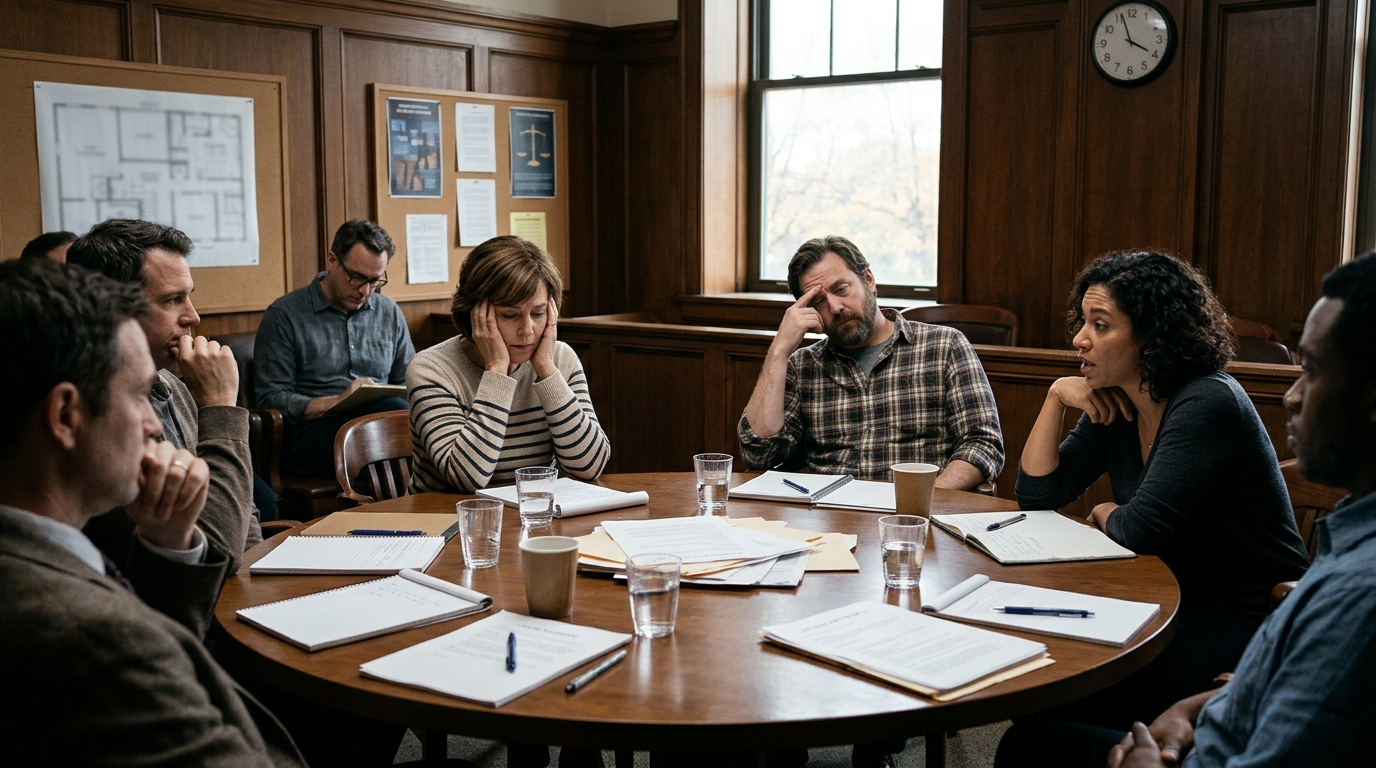
Jurors reported Monday that they were deadlocked in the case of former Stoughton police officer Matthew Farwell over Sandra Birchmore’s 2021 death.
The report left Farwell’s legal fate unresolved and raised the prospect of further jury instructions, more deliberations, or a mistrial. The available information did not specify the vote count, the charges being considered, or how long jurors had deliberated.
Deadlock Halts a Final Decision
A deadlocked jury cannot reach the agreement required for a verdict. The outcome does not mean jurors found Farwell guilty or cleared him of wrongdoing.
Judges often respond by asking jurors to keep working. They may also repeat key legal instructions and urge the panel to review the evidence without abandoning sincerely held views.
If the disagreement persists, the judge may declare a mistrial. Prosecutors could then decide whether to seek another trial, depending on the charges, the court’s rulings, and other legal factors.
Jurors said they were “deadlocked” while determining Farwell’s fate over Birchmore’s death.
The report did not explain what divided the jury. Without further information from the courtroom, no conclusion can be drawn about whether the split favored conviction or acquittal.
A Death Under Legal Scrutiny
Birchmore died in 2021, and the case later placed Farwell, a former Stoughton police officer, before a jury. His past role in law enforcement adds public interest to the proceedings.
Cases involving former officers often receive close attention because they test public confidence in police accountability and the justice system. Still, Farwell is entitled to the same legal protections as any defendant, including the presumption of innocence unless guilt is proven.



The narrow set of confirmed facts leaves several central issues unanswered:
- The exact division among jurors
- Whether the judge ordered more deliberations
- Whether a mistrial was requested or declared
- What procedural step will follow
What a Hung Jury Could Mean
A hung jury ends deliberations without a verdict only if the judge decides the panel cannot reach agreement. A jury’s initial statement of deadlock does not always end a trial.
Continued deliberations can produce a verdict after jurors reconsider testimony, exhibits, and the judge’s instructions. Courts must also avoid pressuring jurors into changing their views simply to end the case.
If no verdict is possible, a mistrial would leave the underlying case unsettled. A later trial could require witnesses to testify again and both sides to present their evidence to a new jury.
Any retrial decision would depend on the prosecution and future court proceedings. An acquittal, by contrast, would generally end the case on the counts decided by the jury.
For now, the deadlock marks a pause rather than a final result. The next key development will be the judge’s response and whether jurors resume deliberations, return a verdict, or are dismissed without one.