



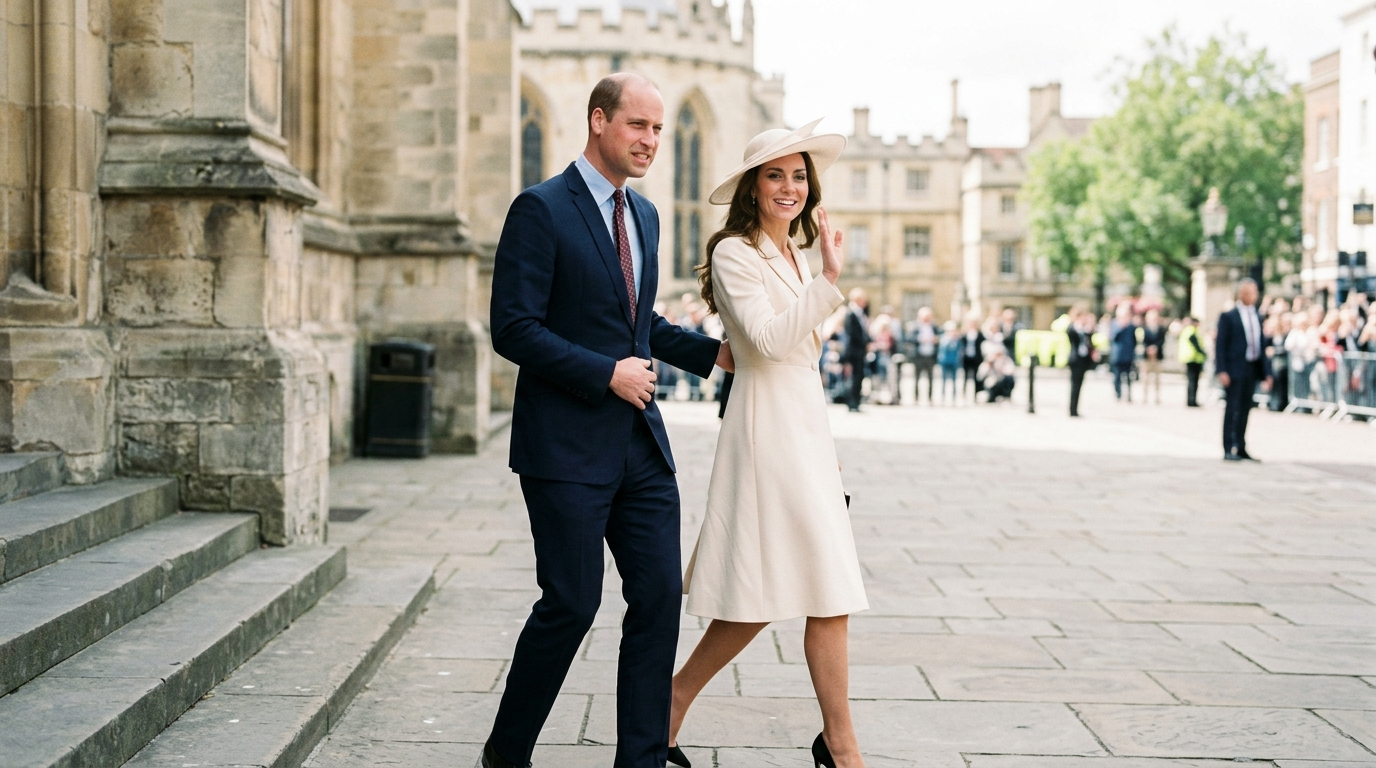
The Prince and Princess of Wales appeared cheerful during a recent public appearance, yet claims about subtle tension have renewed debate over reading royal body language.
The couple were described as “all smiles” for the cameras. However, an unnamed body language expert suggested that less obvious behavior may tell a different story. No specific gestures, setting, date, or supporting evidence were provided with the assessment.
That gap matters. A photograph may capture a split second, while video offers only a narrow view of a longer event. Smiles can reflect warmth, courtesy, concentration, or the demands of a formal engagement.
Why Royal Gestures Draw Scrutiny
Members of the Royal Family carry out public duties under close media attention. Their posture, eye contact, and expressions are often treated as clues about relationships or private emotions.
The Prince and Princess of Wales receive especially intense interest because of their senior roles. Even routine appearances can produce detailed commentary about where they stand, how often they smile, or whether they mirror each other’s movements.
“While the Prince and Princess of Wales may have appeared to be ‘all smiles’ for the cameras, as a body language expert, here are all the subtle signs in their behaviour you may have missed.”
The statement invites readers to look past the visible smiles. Yet it does not identify the alleged signs or explain how they were assessed. Without those details, the claim remains an interpretation rather than a verified account of the couple’s feelings.
Body Language Has Clear Limits
Nonverbal behavior can add context to communication, but it is not a reliable shortcut into someone’s mind. The same gesture can have several explanations.
- Crossed arms may signal discomfort, cold weather, or simple habit.
- Limited eye contact may reflect distraction, protocol, or nearby activity.
- A brief expression may be a reaction to something outside the camera frame.
Public events also shape behavior. Royal engagements involve schedules, security instructions, receiving lines, photographers, and repeated greetings. These pressures may affect posture and facial expressions without revealing anything about a marriage.



Camera selection adds another complication. Editors and social media users often choose the most striking frame from hundreds of images. One awkward moment can then appear more meaningful than the full sequence supports.
Interest Meets a Need for Caution
Supporters of body language analysis argue that patterns can offer useful observations, especially when video shows repeated behavior over time. Such commentary can help viewers notice interaction styles that spoken remarks do not capture.
Critics warn that certainty is often overstated. An expert cannot confirm a person’s private thoughts from a smile, hand movement, or glance alone. Cultural habits, health, fatigue, and the setting can also alter behavior.
For royal coverage, the fairest approach is to separate observation from conclusion. A report may accurately note that a smile faded or that the couple stood apart. It should not present those details as proof of conflict without confirmation.
The latest commentary says more about public fascination with the Waleses than it proves about their relationship. Future appearances will bring fresh images and fresh theories. Readers should watch the full context, not just the freeze-frame, before accepting a hidden story behind the smiles.