



A movie’s giant Greenland iceberg may deliver a gripping threat, but the idea that one drifting mass could suddenly endanger millions is scientifically weak.
Greenland does produce enormous icebergs, and collapsing ice can trigger destructive local waves. Yet a single iceberg would not cause an instant global flood. Its effects would depend on its size, location, speed, and how it entered the ocean.
How Greenland Creates Giant Icebergs
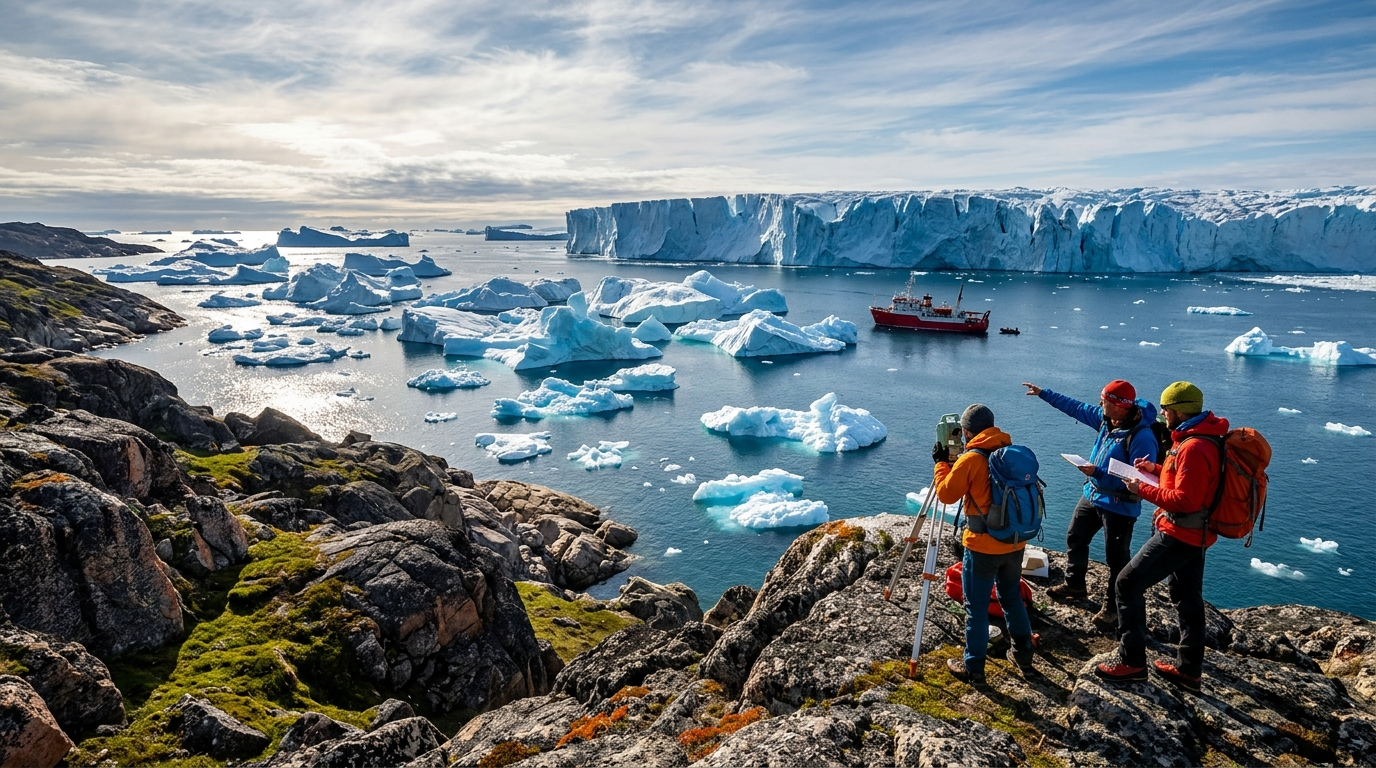
Greenland holds a vast ice sheet that rests mostly on land. Glaciers carry some of that ice toward coastal fjords, where pieces break away through a process called calving.
Some Greenland icebergs are large enough to threaten ships and offshore equipment. Ocean currents can also carry them far from their source. That makes the movie’s basic image plausible.
The scale of the danger is a different matter. Icebergs drift with currents and winds rather than racing across oceans like powered vessels. Most also break apart and melt as they move into warmer water.
Scientists track large bergs with satellites because their routes can change. Warnings and shipping restrictions can reduce the danger, although smaller fragments may remain hard to detect.
Local Waves Pose the Clearest Threat
The most credible disaster would occur during calving or a sudden collapse. A huge mass striking a narrow fjord can displace water and create powerful waves.
Such waves could hit nearby communities, boats, ports, or tourism operations. Greenland has experienced landslide-driven waves, showing how sudden displacement can become deadly along steep coasts.



Still, this would be a regional hazard, not a wave that maintains its destructive height across an entire ocean. Fjord shape, water depth, and the volume entering the water would control the outcome.
- Calving can generate dangerous waves near the glacier.
- A drifting iceberg can damage vessels and offshore structures.
- Breakup may release many smaller, less visible ice pieces.
- One iceberg cannot rapidly flood distant coastal cities worldwide.
Why Melting Would Not Trigger Sudden Flooding
Once an iceberg floats, it already displaces nearly its own weight in seawater. Melting therefore causes little direct change in sea level, much like melting ice in a glass.
The comparison is not exact because freshwater and seawater have different densities. Even so, the resulting global change from one berg would be tiny.
The larger climate concern is the loss of Greenland’s land-based ice. When that ice enters the ocean, it adds water that was not previously displacing seawater.
If Greenland’s entire ice sheet melted, global sea level would rise by roughly seven meters. That is not expected to happen at once. It would unfold over a very long period, while continued ice loss can still add to damaging sea-level rise this century.
A Plausible Threat Needs the Right Setting
A scientifically credible story could place a major collapse near a settlement, port, or crowded vessel. It could also focus on disrupted shipping and a field of dangerous ice fragments.
Imperiling millions would require a wider chain of events, such as prolonged ice-sheet loss, higher seas, and stronger coastal flooding. A lone iceberg would not be enough.
The movie premise contains a real concern but compresses time and magnifies scale. Greenland’s ice loss matters because of its steady global impact. The immediate danger from a giant berg would remain concentrated near coasts, ships, and the place where the ice first entered the sea.